المخزون

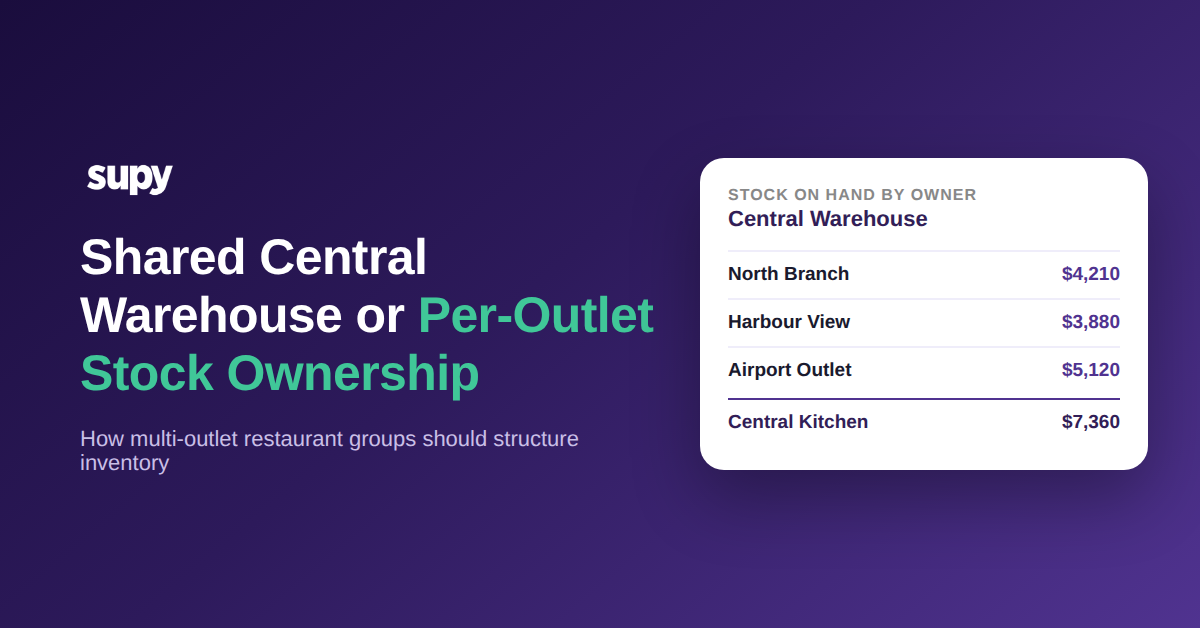
Shared Central Warehouse or Per-Outlet Stock Ownership: How Multi-Outlet Restaurant Groups Should Structure Inventory

Shared central warehouse stock ownership by outlet

Who Owns the Stock in a Shared Warehouse, and Why It Is a Real Choice

Per-outlet inventory ownership in a shared central warehouse means the stock sitting in one physical building is tracked as belonging to specific outlets, not to the building. You have two clean models. In the warehouse-owns model, the central warehouse buys, holds and issues stock to outlets like an internal supplier. In the outlets-own model, each outlet buys its own stock and the warehouse only lends shelf space. Picking the wrong one shows up as broken costing.

The choice is real because the two models produce different journal entries, different reports and different day-to-day workflows. It is not a naming preference you can reverse later without re-keying months of history. Most groups back into one model by accident, discover its limits a year in, and then try to bolt the other model on top. Deciding on purpose, before you scale, is far cheaper than migrating ownership records after the fact.

Comparison table of the warehouse-owns and outlets-own inventory models for a shared central warehouse


When the Warehouse Should Own the Stock

The warehouse-owns model fits vertically integrated groups: the central warehouse or commissary buys in bulk, holds the inventory as its own, and supplies the outlets as if it were an external vendor. Outlets raise orders to the central kitchen, the central kitchen confirms, ships and delivers against a delivery note, and the value moves from the warehouse books to the outlet books on receipt. This is exactly how Supy central kitchen orders work: branches send orders to the central kitchen, demand is consolidated per item across branches, and the central kitchen confirms, ships and delivers with delivery notes and internal billing.

Choose this model when the warehouse genuinely acts as a supplier: it negotiates its own pricing, carries stock nobody has ordered yet, and needs its own margin or transfer price. Vertically integrated operators, groups running an owned wholesale layer that supplies their restaurants, and any structure where the warehouse should show its own stock value all belong here. The trade-off is that every movement to an outlet is an internal transaction with a price on it, so you are running a small wholesale business inside your group and reporting it as one.

Process flow of the warehouse-owns model: branch order, warehouse confirms, ship with delivery note, received at outlet


When Each Outlet Should Own Its Own Stock

The outlets-own model fits groups where outlets buy directly from suppliers and the central warehouse is shared storage, not a vendor. Here the warehouse owns nothing. Stock is co-mingled on the same shelves but tracked per outlet, and the operator needs outlet-level ownership without generating internal sales transactions every time something moves. This is the structure operators most often ask for and most often cannot find, because many systems assume the building that holds the stock must also own it.

In this model, stock moves between outlet-owners as an inter-location transfer rather than a sale. Supy central kitchen to outlet stock transfers and inter-location transfers handle this directly: a transfer is raised, the receiving outlet must accept it before stock updates, and the quantity adjusts automatically on both sides with no internal invoice. Choose this model when outlets keep their own supplier relationships and their own margins, when a shared warehouse exists mainly to consolidate deliveries and storage, and when you never want an internal sale sitting between two of your own sites.

Process flow of the outlets-own model: outlet buys direct, stored in shared warehouse, transfer raised, receiver confirms, stock adjusts both ends


Where Both Models Break Without Confirm-on-Receipt and Per-Outlet Reporting

Neither model survives loose tracking. The first failure is phantom stock: a transfer is raised out of one outlet books but never confirmed into the other, so the same goods show on two sets of books at once and both counts look wrong at month end. In an eight-outlet group sharing one warehouse, a handful of unconfirmed transfers is enough to put several thousand dollars of stock in two places at the same time. A transfer path where the receiver has to accept before stock updates closes this gap, because nothing adjusts on either end until both sides agree the goods arrived.

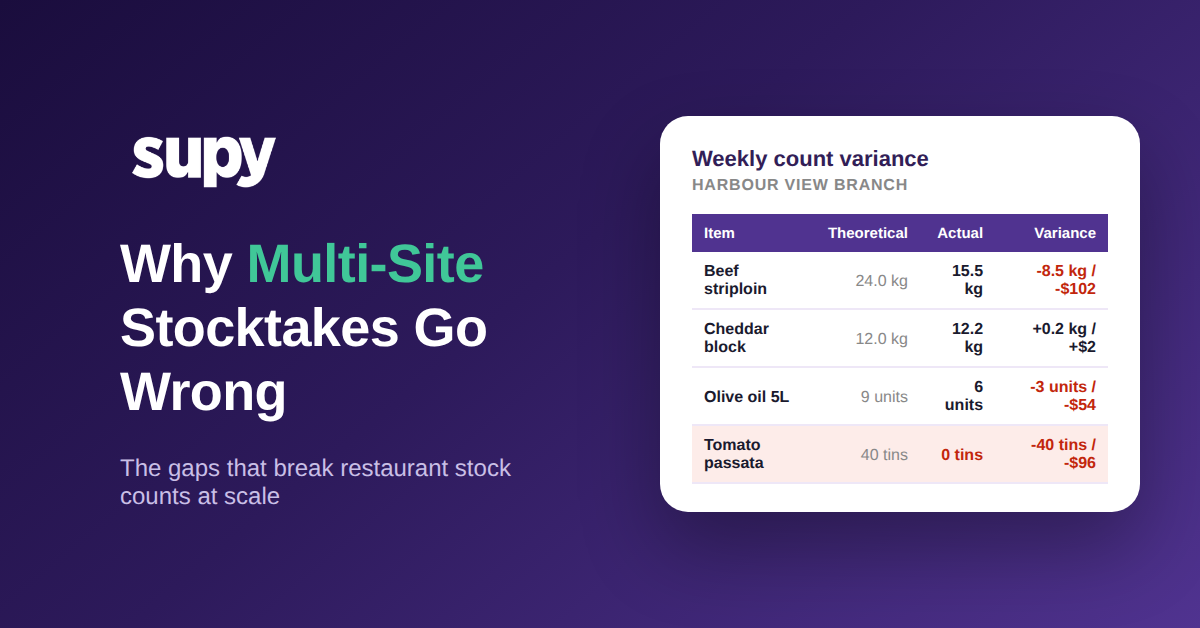
The second failure is reporting that stops at the group level. If you cannot see consumption against theoretical usage and ordering volume per outlet, you cannot tell which site is over-ordering, which is bleeding waste, and which is quietly subsidising another through the shared warehouse. Per-outlet variance reporting is the payoff that makes ownership worth tracking at all. Supy dashboards show theoretical-versus-actual variance and usage by site and by item, and its multi-location inventory visibility reports stock on hand per location, so each outlet numbers stand on their own no matter whose stock shares the shelf.

Stat callout showing 6,400 dollars of stock double-counted across outlets from unconfirmed transfers


Choosing Your Model: Match Ownership to How You Actually Buy

Choose the warehouse-owns model when the central warehouse buys and resells to your outlets, carries its own unallocated stock, and needs its own stock value and margin. Choose the outlets-own model when outlets buy direct, keep their own supplier terms, and the warehouse is only shared storage. If you are unsure, follow the money: whoever holds the supplier relationship and the buying risk should own the stock, and the other party should only ever see transfers, never internal sales.

Decision matrix mapping the supplier relationship and warehouse margin to the warehouse-owns or outlets-own model


Before you commit, pressure-test any system against three questions in a demo. First, can stock be tracked per outlet inside one physical warehouse without forcing an internal sale on every movement? Second, does an inter-location transfer require the receiving side to confirm before stock updates on either end? Third, can you pull consumption, theoretical usage and variance for a single outlet, not just the group? A platform that clears all three, and that connects to your existing systems through its 75+ integrations, can support either model as you grow. One that fails any of them will quietly pick your model for you, and it will pick the one that breaks your reporting.

Book a Demo with Supy - per-outlet inventory ownership in a shared central warehouse

Ready to optimize your restaurant operations?

مدونة

رؤيتنا التشغيلية

Your questions 
answered

Everything you need to know about Supy — from setup to integrations, pricing, and daily use. If it’s not covered here, just ask.

ما المقصود بملكية المخزون لكل منفذ في مستودع مركزي مشترك؟
+

تعني ملكية المخزون لكل منفذ أن المخزون المخزَّن فعلياً في مستودع مركزي مشترك واحد يُتتبَّع باعتباره ملكاً لمنافذ فردية لا للمستودع ذاته. يمكن للبضاعة أن تجلس مختلطةً على الأرفف ذاتها، لكن النظام يعرف أي منفذ يمتلك كل كمية وكل وحدة قيمة. يُتيح ذلك لمجموعة المطاعم توحيد التخزين والتوصيل دون دمج أرقام الجميع في رصيد واحد. وهو البديل عن نموذج ملكية المستودع، حيث يحتفظ المستودع المركزي بالمخزون ويمتلكه ويصدره إلى المنافذ بوصفه مورّداً داخلياً.

متى يجب أن يمتلك المستودع المركزي المخزون بدلاً من المنافذ؟
+

يجب أن يمتلك المستودع المخزون عندما يعمل فعلاً بوصفه مورّداً لمنافذك. يعني ذلك أنه يشتري بكميات كبيرة، ويحمل مخزوناً لم يطلبه أحد بعد، ويتفاوض على التسعير الخاص به، ويحتاج إلى قيمة مخزون وهامش خاصين به. المجموعات المتكاملة رأسياً والمشغّلون الذين يمتلكون طبقة جملة توفّر المنافذ يناسبهم هذا النموذج. فيه، كل حركة إلى منفذ هي معاملة داخلية بسعر محدد، فأنت بذلك تدير فعلياً عملاً صغيراً بالجملة داخل مجموعتك. إذا لم يأخذ المستودع أي هامش واقتصر على تجميع التسليمات، فإن نموذج ملكية المنافذ يناسبه في الغالب بشكل أفضل.

كيف يمتلك كل منفذ مخزونه الخاص إذا كان مختلطاً في مستودع واحد؟
+

يمتلكونه عبر التتبع لكل منفذ على حدة بدلاً من الفصل المادي. يجلس المخزون معاً على الأرفف المشتركة، لكن كل كمية مسجَّلة باسم المنفذ الذي اشتراها، فالملكية سمة بيانية لا حجرة تخزين منفصلة. عندما ينتقل مخزون من منفذ إلى آخر، يُسجَّل كتحويل بين المواقع لا كعملية بيع: يُرفع التحويل، يؤكده المنفذ المستلم، وتتعدّل الكمية تلقائياً على الجانبين دون فاتورة داخلية. يحافظ هذا على سلامة قيمة مخزون كل منفذ وتكلفته، مع السماح للمجموعة بمشاركة مستودع واحد ومجموعة واحدة من التسليمات.

لماذا يُحسَب المخزون غير المؤكَّد مرتين عبر المنافذ؟
+

يحدث الإحصاء المزدوج عندما يغادر تحويل سجلات منفذ واحد دون أن يؤكد المنفذ الآخر استلامه. إذا خُصم المخزون عند الإرسال وأُضيف فقط عند التأكيد، يبقى التحويل غير المؤكَّد معلقاً: فقد غادر دفاتر المُرسِل لكنه لم يصل بعد إلى دفاتر المُستقبِل، أو يظل في كليهما معاً حسب طريقة ترحيل النظام له. عبر عدة منافذ، يتراكم ذلك بهدوء ليبلغ آلاف الدولارات من المخزون في المكان الخطأ، وتصبح كلتا عمليتا الجرد الشهري خاطئتين. قاعدة التأكيد عند الاستلام، حيث لا يُحدَّث شيء حتى يتفق الطرفان، تغلق هذه الثغرة.

هل يمكنك التحول من نموذج ملكية المستودع إلى نموذج ملكية المنافذ لاحقاً؟
+

يمكنك ذلك، لكنه أكثر إرباكاً بكثير من الاختيار الصحيح منذ البداية. يغيّر التحول بين النماذج طريقة تسجيل كل حركة، فالمعاملات التاريخية وتقييمات المخزون والتقارير بُنيت جميعها على الافتراض القديم وكثيراً ما يجب إعادة إدخالها أو إعادة صياغتها. تحتاج المنافذ التي كانت تُفوتَر داخلياً في ظل نموذج ملكية المستودع إلى إعادة بناء سجلات ملكيتها، وأي تحويلات أو طلبات مفتوحة يجب تسويتها وفق الهيكل الجديد. الأمر قابل للتنفيذ خلال عملية ترحيل مُخططة بتواريخ قطع واضحة، لكنه ليس إعداداً تُغيّره بتهاون. الاختيار المقصود قبل التوسع أقل تكلفة بكثير.

هل يجب تسجيل نقل المخزون بين المنافذ كعملية بيع؟
+

لا. في نموذج ملكية المنافذ، يُعدّ نقل المخزون بين منفذين من منافذك الخاصة عملية نقل بين المواقع، لا عملية بيع. يعيد النقل ببساطة تعيين ملكية المخزون الموجود من منفذ إلى آخر بالتكلفة، دون أي إيراد أو هامش أو فاتورة داخلية. يهمّ هذا لأن تسجيل الحركات الداخلية كمبيعات يُضخّم إيرادات المجموعة ويُشوّه تكلفة البضاعة لكل منفذ. لا معنى للبيع إلا في نموذج ملكية المستودع، حيث يعمل المستودع المركزي بحق بوصفه مورّداً ويحتاج إلى هامش خاص به. طابق نوع السجل مع من هو المالك الفعلي للمخزون ومن يتحمل مخاطر الشراء.

كيف يمكن إعداد تقارير الربحية لكل منفذ عند استخدامهم مستودعاً مشتركاً؟
+

يمكنك إعداد تقارير لكل منفذ من خلال إبقاء الملكية والاستهلاك والتباين منفصلةً على مستوى المنفذ رغم مشاركة المبنى الواحد. يعني ذلك تتبع المخزون المتوفر لكل موقع، ومقارنة الاستهلاك بالاستخدام النظري لكل منفذ، وحجم الطلبات لكل منفذ، بدلاً من الاقتصار على المستوى الإجمالي للمجموعة. بهذه البيانات يمكنك معرفة أي موقع يُبالغ في الطلب، وأيها يفقد هامشه بسبب الهدر، وأيها يُموّل موقعاً آخر بصمت عبر المستودع المشترك. إعداد التقارير على مستوى المجموعة فقط يُخفي كل هذا. إعداد تقارير التباين لكل منفذ هو العائد الحقيقي الذي يجعل تتبع الملكية مجدياً، لذا تأكد من قدرة المنصة على إنتاجه قبل الالتزام بها.

هل أنت مستعد لتطوير عملياتك؟

انضم إلى أكثر من 3500 مُشغلي مطاعم يخفضون التكاليف، ويبسطون العمليات، ويتخذون قرارات أكثر ذكاءً مع Supy