The Role of Automation in Reducing Food Waste Across Multi-Location Chains
According to the UNEP, people around the world waste about 30% of all food created for human consumption – nearly 1 billion meals a day! It’s no surprise then that food waste is a growing challenge in the restaurant industry. For multi-location restaurants in particular, inefficient means of managing inventory and production can lead to spoilage that leads to significant waste. Beyond these ethical and environmental concerns, however, food wastage also has a direct impact on your business’ profitability.
As a result, many automation technologies have emerged on the market as a transformative solution to this issue. By leveraging tools like automated inventory systems or food monitoring systems, restaurants can streamline their operations and make data-driven decisions that minimize waste.
- But How Bad is the Food Waste Problem, Really?
- Enter Inventory Automation
- The Role of Food Monitoring Systems in Reducing Waste
- Setting Up an Automated Supply Chain
- Case Studies of Successful Automation in Restaurants
- Overcoming the Challenges of Setting Up Automated Systems in Multi-Location Chains
- Future Trends: AI and Advanced Automation in Food Waste Management
- Supy's Role in Integrating Automated inventory and Food Monitoring Systems
- Conclusion
- About Supy
Despite its many advantages, implementing automation technologies in multi-location chains isn’t as easy as it seems. It can be quite tricky to standardize automation processes across multiple restaurant sites and train staff to adopt these new systems. Yet in today’s article we’ll show you how the potential benefits of automated inventory far outweigh these hurdles, offering solutions that can save costs, improve efficiency, and promote sustainability. In this blog we’ll explore how the key areas of inventory automation and food monitoring can transform your restaurant’s food waste management systems.
1. But How Bad is the Food Waste Problem, Really?
According to the UNEP’s 2024 Food Waste Index Report, global food waste is a huge problem, with 1.05 billion tonnes of food wasted annually. Forty percent of this wastage can be attributed to the food service and retail sectors. The report also found that about 13% of all food is often lost in the supply chain itself before it ever reaches its retail destination. Such alarming figures highlight the magnitude of inefficiencies in our food systems. In a world where nearly a third of the global population faces food insecurity, such levels of waste are unconscionable.
For multi-location restaurant chains, the challenges presented by food waste are compounded. Poor inventory management across multiple sites often leads to overstocking and spoilage. Similarly, an inconsistent system of ordering and food preparation can further exacerbate waste. A lack of clear and concise communication between restaurant locations can also get in the way of any sincere attempts at waste reduction.
The consequences of such mismanagement cannot be ignored. A high level of waste directly corresponds to higher costs of production, particularly for perishable inventory. Moreover, the environmental toll of wasted food damages a brand’s reputation, especially as sustainability becomes a key consumer concern.
2. Enter Inventory Automation
The automated inventory management process refers to the use of advanced technologies to streamline and optimize your automated inventory management software. This kind of approach is designed to minimize chances of manual data entry, improve accuracy, and enhance your restaurant’s operational efficiency. Stripped to its core, automated inventory management systems keep track of your inventory data to make sure you always have the right amount of ingredients available at the right time.
Some core features to look out for in an automated inventory management system include:
- Automated Inventory Tracking: For the real-time monitoring of stock levels using IoT-enabled devices and integrated software.
- Predictive Analytics: These use AI-powered tools to analyze historical data and market trends to forecast all of your inventory needs.
- Replenishment Systems: With automated inventory alerts and order placements, you can make sure your stock is always replenished in time, thus avoiding overstocking and shortage issues.
Each of these features has been made possible by installing smart sensors, cloud based software, and AI driven systems at your restaurant. The sensors are used to track storage conditions, such as temperature and humidity, to prevent spoilage while a centralized platform helps give restaurant owners and managers a unified view of their inventory across multiple locations. Finally, AI can be used to accurately forecast each location’s demands and make dynamic adjustments to one’s inventory.
Integration into Multi-Location Operations
Should you decide to ultimately install an inventory automation system across your multi location restaurant chains, you should be able to:
- Monitor inventory levels across multiple locations from a single dashboard.
- Reduce waste through better demand prediction and order consolidation.
- Enhance communication with suppliers for more efficient procurement.
Thus by reducing discrepancies and inefficiencies, inventory automation empowers restaurants to operate more sustainably and profitably.
3. The Role of Food Monitoring Systems in Reducing Waste
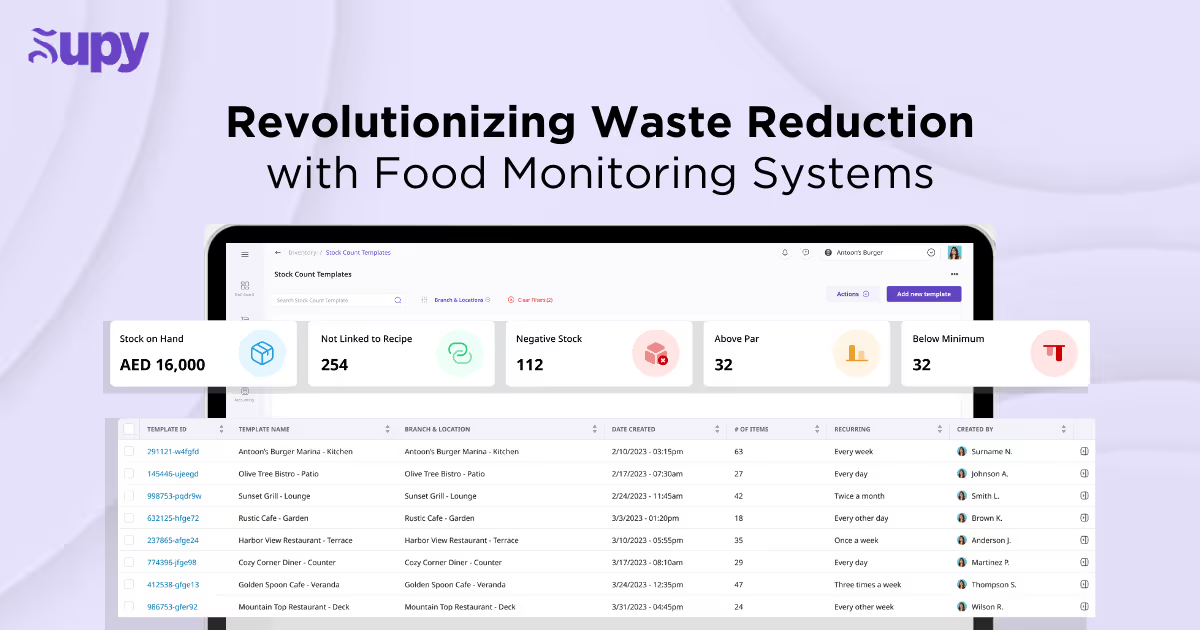
Similarly, food monitoring systems also make use of advanced technologies like sensors and IoT-based tools to reduce food waste across several restaurant locations. These systems are designed to provide real-time data on various parameters such as temperature, humidity, and product freshness, to make sure your inventory is always stored under optimal conditions. The great advantage of IoT-enabled devices is that they can track your food’s quality at every stage of the supply chain, from procurement to storage, alerting staff when deviations occur that might compromise freshness.
Real-Time Tracking
A food monitoring system with real-time tracking contains a very important feature for minimizing food spoilage. With sensors embedded into your refrigeration units, you can monitor and maintain consistent temperatures, reducing the risk of perishable items spoiling due to unexpected equipment malfunctions. Many food monitoring systems will also notify operators about products nearing expiration so that they can take proactive measures to reallocate surplus stock or use them up in daily special items.
How Food Monitoring Systems Provide Enhanced Visibility into Stock Supplies
The enhanced visibility provided by many food monitoring systems on the market allows managers to make smart, data-driven decisions for restaurants across multiple locations. For instance, you could make use of the system’s consolidated dashboards to compare wastage patterns across multiple branches. This helps us identify inefficiencies across your restaurant and can be used to refine your procurement strategies.
Ultimately, the integration of food monitoring technologies can help you boost operational efficiency, reduce costs associated with waste, and promote an overall system of sustainability.
4. Setting Up an Automated Supply Chain
Another segment of the food industry that is being revolutionized by the process of automation is supply chain management. With tools like centralized inventory systems and automated replenishment software, you can easily streamline your procurement and distribution processes while helping create overall more efficient workflows.
How Automation Keeps Stock Levels in Check
One key advantage of automation is its ability to prevent overstocking and understocking. With state-of-the-art inventory automation systems designed to monitor stock levels in real time, you can rest assured that your orders are being placed at the right place at the right time. Many automated systems will also use predictive analytics tools to analyze your business’ historical trends, as well as external factors such as seasonality or special promotions, to optimize inventory across each restaurant location.
How Predictive Ordering Systems Can Revolutionize Your Supply Chain
Many modern predictive ordering systems use machine learning algorithms to anticipate your restaurant’s future inventory needs. For instance, one restaurant chain may use predictive ordering to identify surges in demand for certain ingredients and items during the holidays and thus adjust their procurement schedules accordingly. By automating this process, restaurants avoid the pitfalls of guesswork, ensuring smoother operations and reduced waste!

5. Case Studies of Successful Automation in Restaurants
In this section, we’ll go over two real world examples of major corporations that have successfully used automated processes to manage their waste.
1) Chipotle and Its Smart Waste Management System
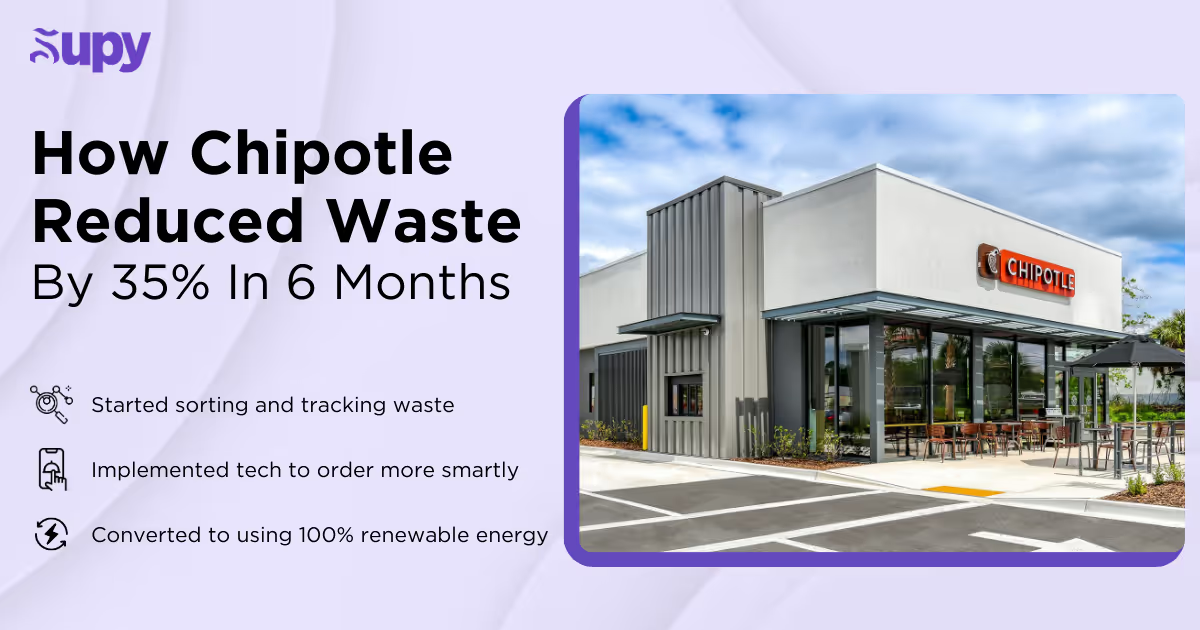
Recently, the Chipotle Mexican Grill implemented a smart waste management system designed to automatically track, sort, and repurpose its food waste into energy. The initiative led to a 35% reduction in Chipotle’s food waste within six months! By using digital systems to monitor and manage waste, the company managed to significantly reduce its environmental impact while cutting costs and improving efficiency. Initiatives like these align with the company’s sustainability goals and position them as an environmental leader of the restaurant world.
2) The Comprehensive Sustainability of Starbucks
Another leader in the realm of waste reduction and management is the beloved coffee giant, Starbucks! In a pilot program, the company used data analytics and automated monitoring systems to track their waste and adjust purchases accordingly. This initiative has contributed to reduced food waste and cost savings, supporting the company’s broader goal of halving food waste by 2030. Starbucks' approach exemplifies how automation can enhance operational and environmental outcomes simultaneously.
6. Overcoming the Challenges of Setting Up Automated Systems in Multi-Location Chains
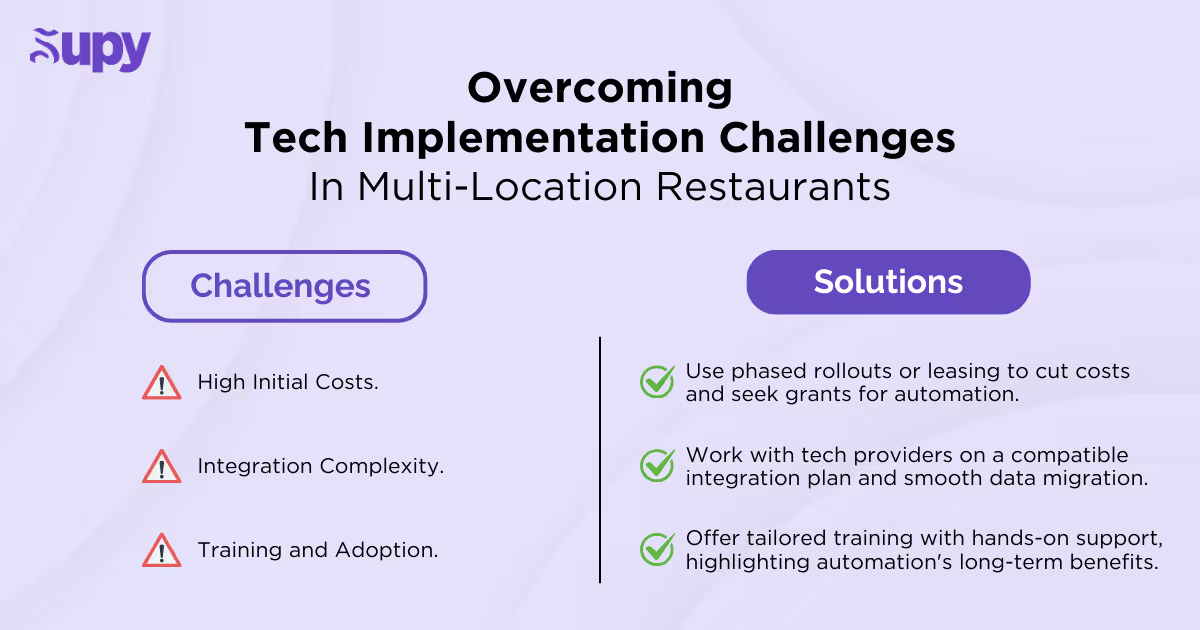
Implementing automated systems in multi-location chains offers transformative benefits, but it’s not without its challenges. Here’s how to address the most common hurdles:
High Initial Costs
Automating operations across multiple sites can involve significant upfront costs, including hardware (e.g., sensors, smart storage systems), software licenses, and infrastructure upgrades. These costs increase with each additional location, making them a daunting investment for small-to-medium-sized chains.
Solution: Consider phased rollouts to distribute costs over time or explore leasing options to reduce financial strain. Evaluate financing options, such as grants or industry partnerships, to make automation more accessible.
Integration Complexity
Integrating automation systems into existing workflows across multiple locations can be challenging. Issues such as software compatibility, inconsistent data management, and disruptions during implementation can slow progress.
Solution: Develop a clear integration plan in collaboration with your tech providers. Prioritize systems that offer robust compatibility with your current tools and ensure a seamless data migration process. Regular check-ins during the rollout can help address issues proactively.
Training and Adoption
For automation to succeed, employees must be trained to use the tools effectively, interpret data insights, and adjust workflows to align with new systems. Initial resistance or dips in productivity are common as teams adapt.
Solution: Implement a tailored training program with hands-on sessions and continuous support. Break training into manageable phases to avoid overwhelming staff, and foster a culture that emphasizes the long-term benefits of automation to boost engagement and confidence.
By addressing these challenges strategically, multi-location chains can unlock the full potential of automation, paving the way for greater efficiency, cost savings, and streamlined operations.
7. Future Trends: AI and Advanced Automation in Food Waste Management
There are several emerging technologies today, like AI-based predictive analytics and robotics, that are revolutionizing the food waste management landscape. AI-driven systems can analyze vast amounts of historical sales data, weather patterns, and consumer preferences to forecast demand with incredible accuracy. According to the paper “Global food loss and food waste: Extent, causes, and prevention” by Gustavsson et al., this minimizes overordering and reduces food spoilage, a significant contributor to waste in the F&B sector. AI is also used to monitor ingredient shelf life and provide alerts for items nearing expiration, helping reduce waste from perishables.
The Role of Blockchain in Traceability and Waste Accountability
Of late, the role of blockchain technologies in food waste management is gaining traction, particularly in the areas of enhancing traceability and waste accountability. Blockchain offers a secure, transparent system for tracking ingredients from suppliers to restaurants, enabling better oversight of food quality and storage conditions across multiple locations. According to Tian, F ("An agri-food supply chain traceability system for China based on RFID & blockchain technology"), this transparency helps pinpoint inefficiencies, such as suboptimal delivery practices or poor inventory management, that contribute to food waste. Moreover, blockchain's ability to maintain tamper-proof records ensures accountability, which is essential for improving sustainability practices and building consumer trust.
Visualising the Future of Automation in the F&B Sector
Looking ahead, the future of food waste management will increasingly integrate artificial intelligence, robotics, and blockchain into a single cohesive and intelligent ecosystem. Smart kitchens may utilize IoT sensors to monitor real-time inventory and food quality across locations, while robotics can handle tasks like sorting, packing, and composting waste, further automating workflows. These innovations will reduce human error, streamline operations, and enhance food waste reduction efforts. As these technologies mature, multi-location chains will benefit from even more efficient, sustainable, and profitable practices.
8. Supy's Role in Integrating Automated inventory and Food Monitoring Systems
Supy offers several comprehensive services designed to help you in your journey to restaurant management. Our expertise in the food and beverage industry means we understand the unique challenges you face and can provide tailored solutions to meet your needs.
Here’s how Supy is designed to help:
- Live Data: With Supy’s live data feature, an automated system allows you access to your information anywhere, all day. Manage your waste, optimize your restaurant operations, and fetch data from multiple sales channels or point-of-sale systems on the go!
- Centralized Data Storage: Instead of having multiple servers installed at every business location, why not store your data remotely on the cloud for a more convenient business experience? With all your relevant data backed up on the cloud, restaurant owners and managers can proactively manage their waste, optimize their restaurant operations, and expand their sales channels with confidence.
- Real-Time Reporting & Forecast Analytics: Supy’s forecasting tools are designed to use historical data to predict future needs, helping you to plan your operations better and order ingredients more accurately. By analyzing past sales and consumption patterns, these tools can estimate how much of each ingredient will be required for a given period. This foresight allows you to adjust orders pre-emptively, reducing the likelihood of surplus stock that could become waste.
9. Conclusion
In conclusion, automation technologies play a pivotal role in transforming how multi-location chains manage food waste. Through solutions like effective inventory management and food monitoring systems, restaurants can accurately track inventory, predict demand, and reduce excess stock. Automated tools help prevent overordering and minimize spoilage by providing real-time data on ingredient usage and freshness, significantly cutting down food waste. This approach not only enhances operational efficiency but also helps achieve sustainability goals by ensuring that resources are used efficiently, reducing waste, and supporting cost savings.
To stay updated on the latest trends on sustainability in restaurants, sign up for Supy's newsletter. And for a more hands-on approach, why not book a free demo? To learn more about digital checklists for restaurants, you can also click here.
Together we can pave the way towards reducing food waste in the restaurant industry!
10. About Supy
Supy is the best restaurant management software platform tailored for multi-branch restaurants and franchises. With features like real-time inventory tracking, smart procurement systems, and advanced analytics, Supy helps restaurants manage their various demands effectively and provides the tools restaurants need to thrive in a dynamic industry.
For the latest expert insights, download Supy’s ebook: The Ultimate Guide to Reducing Food Costs in Multi-Branch & Enterprise Restaurants.
Ready to find out more? Schedule a demo with Supy today and take the first step towards a streamlined, profitable future.