Revolutionizing Restaurant Chains with Stock Management Innovations
Have you ever wondered if your current inventory system is holding back your restaurant's potential? With 43% of small restaurant chains diligently tracking stock yet struggling with inefficiencies, and another 21% operating blindly without any stock visibility, it’s clear that traditional methods just aren’t cutting it anymore.
You're exactly where you need to be if you're ready to step into the future of inventory management. This article will delve into:
- The Current Landscape of Stock Management in Restaurants
- Emerging Technologies in Inventory Management
- Case Studies of Restaurants Using Advanced Inventory Management Technologies
- 5 Ways to Improve Inventory Management with Advanced Technologies
- Integrating Inventory Management with Other Restaurant Operations
- Future Trends in Restaurant Inventory Management
- Conclusion
- About Supy
Ready to transform how you manage your inventory? Let’s dive in.
1. The Current Landscape of Stock Management in Restaurants
In 2023, a significant 54% of restaurant operators flagged inventory costs as their principal concern, highlighting the urgency for more efficient inventory management trends and solutions. Traditional inventory management methods, often cumbersome and error-prone, underscore the struggles that restaurants face:
- Manual Processes: Reliance on manual stock takes and data entry leads to errors and inefficiencies. This often results in excess inventory, which ties up capital and increases the risk of spoilage.
- Spreadsheet Dependencies: Many establishments still use basic spreadsheets that require constant updates and provide no real-time insights. These tools lack the sophistication needed for effective warehouse management, where items must be tracked and reordered at optimal times.
- Lack of Integration: Systems for inventory, POS, and supply chain management often operate independently, complicating data consistency and accessibility. The adoption of distributed inventory management systems can bridge these gaps, ensuring a synchronized flow of data across all platforms.
- Time-Consuming Audits: Manual reconciliations are necessary to align actual stock levels with recorded data, consuming valuable time that could be spent elsewhere. Implementing vendor managed inventory systems could alleviate this burden by enabling suppliers to maintain inventory levels, reducing the frequency of audits.
- Over-Ordering and Waste: Without precise tracking, restaurants frequently over-order or mismanage stock, leading to increased waste and costs. By integrating advanced tracking systems, restaurants can significantly cut down on unnecessary orders and better manage their resources.
These traditional methods, characterized by their reactive nature, are ill-suited to the fast-paced and precision-driven world of modern restaurant management. This is why it is essential to leverage technological advancements to create seamless supply chain experiences.
2. Emerging Technologies in Inventory Management
In the dynamic world of restaurant operations, embracing cutting-edge technologies is key to maintaining efficiency and profitability. Modern inventory management technologies not only streamline processes but also provide actionable insights that drive better business decisions. Here's a deeper look at how these technologies are reshaping inventory management processes in restaurants:
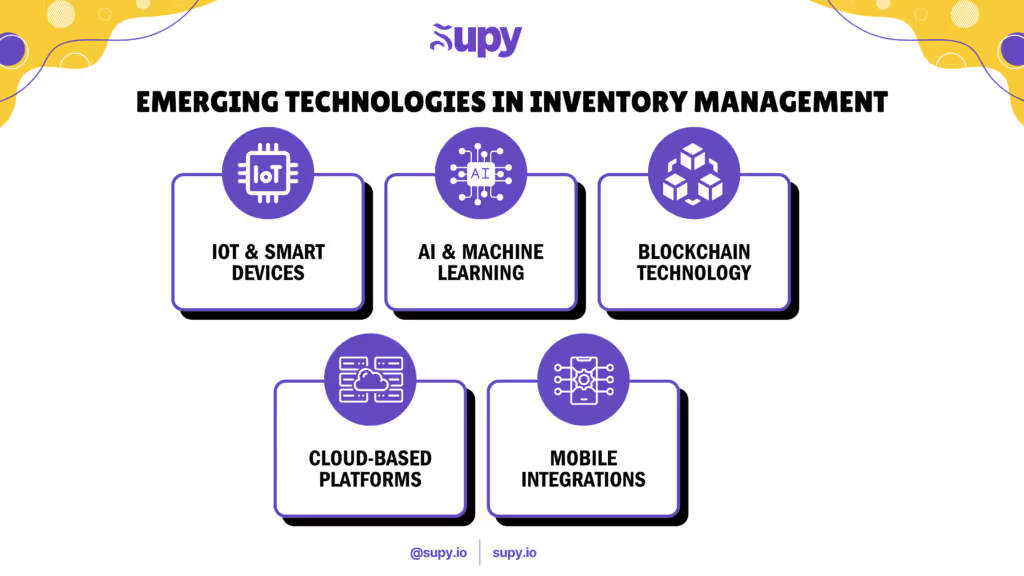
IoT and Smart Devices
The Internet of Things (IoT) extends its reach into inventory management through smart devices that automate and record data in real-time.
For instance, IoT-enabled refrigerators can monitor and report inventory levels, along with temperature data, ensuring perishable items are stored safely and used before expiration.
Smart scales automatically update inventory lists as ingredients are used, reducing waste and ensuring accurate order placements. This level of automation minimizes manual entry errors and provides a continuously updated view of stock levels, optimizing inventory models for managing inventory more efficiently.
AI and Machine Learning
Artificial intelligence (AI) and machine learning stand at the forefront of predictive analytics in inventory management. These technologies analyze vast amounts of historical data, including past consumption patterns, peak business hours, and even weather forecasts, to predict future demand with high accuracy. This proactive approach helps restaurants manage inventory effectively, balancing optimal inventory levels perfectly against anticipated demand.
Blockchain Technology
Blockchain introduces an unprecedented level of transparency and security in supply chains. This technology records every transaction on a secure and immutable ledger, providing restaurateurs with a verifiable trail of their inventory's origin, handling, and storage.
This is particularly valuable for establishments committed to quality and sustainability, as it allows them to verify the authenticity of their ingredients and ensure compliance with health regulations and ethical standards.
Cloud-Based Platforms
Cloud-based inventory management systems offer robust scalability and flexibility, crucial for multi-location restaurant chains. These platforms integrate seamlessly with existing POS and ERP systems, allowing for a unified view of inventory data across all outlets.
Real-time data syncing ensures that inventory levels are always up-to-date, facilitating immediate decision-making and operational adjustments as needed. Moreover, cloud platforms enable data-driven strategies, which standardize food quality and portion control across locations.
Mobile Integration
The integration of mobile technology with inventory management systems empowers staff and managers to stay connected to their inventory regardless of location. Users can conduct inventory checks, update stock levels, or place orders directly from their mobile devices. This mobility is beneficial for managers overseeing multiple locations, providing flexibility to manage operations on the move, ensuring that every decision is informed by the latest data.
This integration across different platforms also plays a significant role in economic order quantity (EOQ) models, helping to reduce transportation costs by optimizing how and when inventory is replenished, keeping a keen eye on the latest inventory management trends for continuous improvement.
3. Case Studies of Restaurants Using Advanced Inventory Management Technologies

Exploring real-world applications of advanced inventory management technologies reveals how significantly they can impact restaurant operations. Here are two compelling case studies from restaurants that have successfully implemented these technologies, showcasing the benefits and transformative potential they offer.
Case Study 1: Farm-to-Table Bistro Utilizes Blockchain for Transparency
Problem: A farm-to-table bistro faced challenges in maintaining the transparency of its own supply chain processes. The restaurant prided itself on offering locally sourced and organic ingredients, but verifying the authenticity and handling of these ingredients was complex and time-consuming.
Solution: The bistro implemented a blockchain-based tracking system to monitor the journey of each ingredient from farm to kitchen. This inventory management software provided a tamper-proof record of the origin, transport, and storage conditions of their products.
Results: The blockchain system not only bolstered the restaurant's reputation for authenticity and quality but also enhanced customer satisfaction. Diners appreciated the transparency, knowing exactly where their food came from and how it was handled, leading to increased customer loyalty and higher sales.
Additionally, the restaurant was able to streamline its compliance with health and organic certification standards, reducing administrative burdens and focusing more on customer experience.
Case Study 2: Pinza! Streamlines Operations with Inventory Management Technology
Problem: Pinza! faced significant challenges with large variances and profit losses due to inconsistent recording of events such as invoices, wastage, and transfers. Compiling monthly reports from data aggregated across 13 kitchens and various operations was inefficient, taking days of work from a full-time employee.
Solution: Pinza! revamped its back-of-house operations by implementing a robust inventory management system, integrating it directly with their POS system, delivery aggregators, and accounting software. They conducted full onboarding, including the implementation of accurate recipes, item catalogs, supplier details, and initial stock counts for all kitchens, centralizing all data on the platform.
Results: The implementation of the new system allowed Pinza! to begin operation with zero delays, thanks to comprehensive integrations with existing tools. They achieved an 85% reduction in variance due to regular updates of stock counts, wastage, and invoices through the system's mobile app and its user-friendly, training-free design.
Furthermore, the instant access to real-time analytics and interactive dashboards across all kitchens led to a 9% increase in profitability, providing a clear operational overview and immediate actionable insights. The effective management of inventory movement throughout the supply chain helped optimize stock management, reducing waste and enhancing efficiency.
4. 5 Ways to Improve Inventory Management with Advanced Technologies
Advanced technologies significantly enhance inventory management in restaurants, making operations more efficient and sustainable. Here’s how these technologies can be strategically applied:
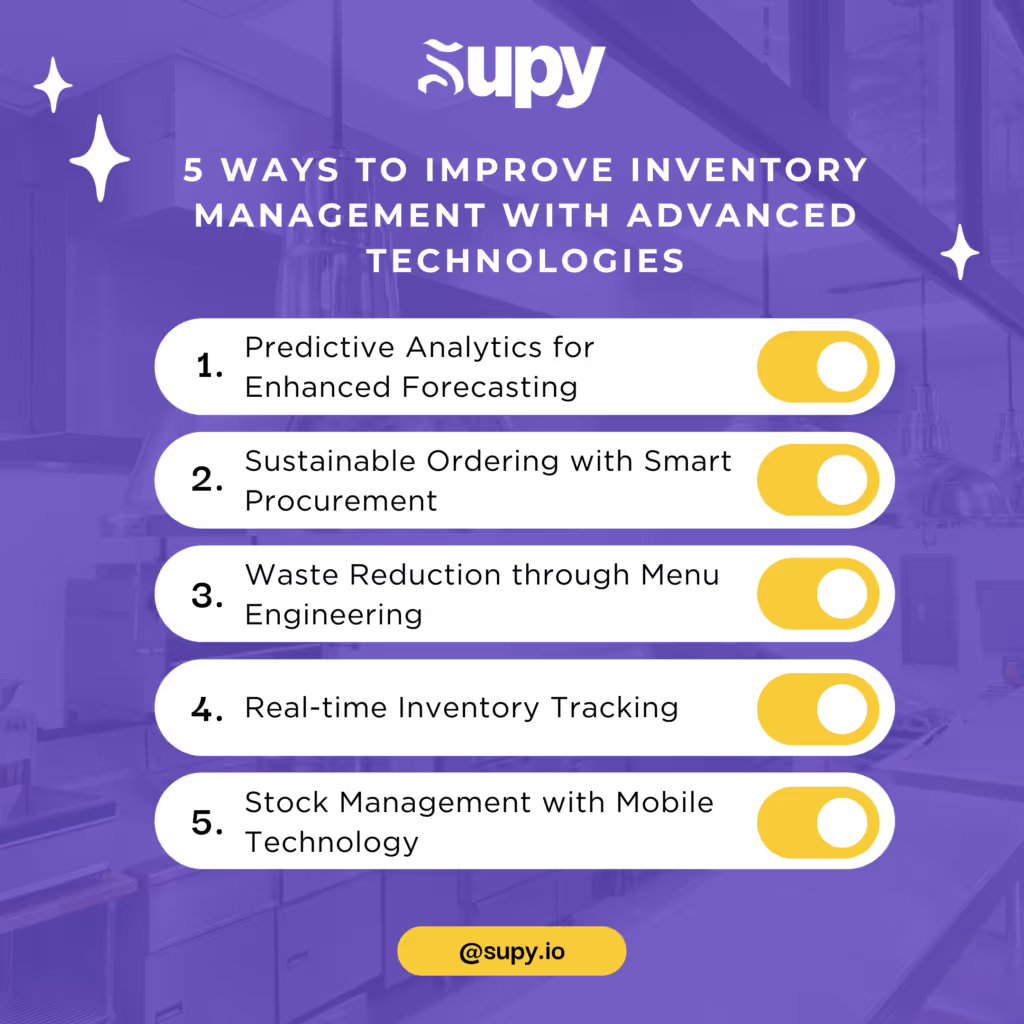
Predictive Analytics for Enhanced Forecasting
Using predictive analytics can optimize stock levels by forecasting customer demand based on past sales data, seasonal trends, and real-time events. For instance, a restaurant near a sports complex might adjust inventory based on game schedules.
Supy's Tip: To maximize efficiency during peak events, consider adjusting your order quantities based on a combination of weather forecasts and upcoming local activities, a method proven to refine predictive accuracy.
Sustainable Ordering with Smart Procurement
Smart procurement optimizes the ordering process with real-time data analysis, helping maintain optimal stock levels and reducing waste. By integrating supplier performance analytics, restaurants can ensure efficient ordering.
Supy's Tip: Engage in quarterly reviews with your suppliers to negotiate better terms based on your order history and forecasting needs. This proactive approach not only secures better prices but also strengthens supplier relationships, ensuring more reliable service and quality.
Targeted Waste Reduction through Menu Engineering
Menu engineering helps in designing menus based on customer preferences to reduce waste. Analyzing sales data allows restaurants to focus on high-demand items.
Supy's Tip: Implement a 'flexible menu' strategy where certain ingredients are used across multiple dishes. This approach minimizes waste by ensuring that surplus stock from one dish can be utilized in another, enhancing overall ingredient usage efficiency.
Real-Time Inventory Tracking
IoT devices provide continuous monitoring and updating of inventory, reducing errors and minimizing inventory costs.
Supy's Tip: Utilize IoT sensors in storage areas to track temperature and humidity. Maintaining optimal conditions for perishable goods can significantly reduce costs, extend their shelf life and reduce spoilage rates, thus cutting down on waste and costs.
Proactive Stock Management with Mobile Technology
Mobile apps integrated with inventory management systems enable proactive management. Managers can monitor and update stock levels from anywhere.
Supy's Tip: Schedule regular training sessions for your staff to ensure they are fully proficient in using mobile technology for inventory management. Well-trained staff can react swiftly to stock discrepancies and updates, thereby maintaining a smoother operation and preventing issues before they escalate.
5. Integrating Inventory Management with Other Restaurant Operations
Effective inventory management extends beyond simple stock checks, weaving into nearly every facet of restaurant operations to enhance overall efficiency and cohesion. Here’s how integration can streamline your entire operation, with practical examples and tool recommendations:
- POS Systems: Integrating inventory management with POS systems like Revel Systems ensures real-time data sync, enabling precise stock tracking and automatic reorder alerts. Each sale directly affects inventory counts, providing instant insights into stock levels and helping businesses manage their resources more effectively while preventing unexpected shortages.
- Supply Chain Management: Integrating inventory systems with supply chain management tools such as BlueCart helps streamline procurement, ensuring timely restocking and tracking supplier performance. This synchronization facilitates bulk purchasing and automated reorders, significantly reducing manual efforts and errors.
- Financial Software: Linking inventory systems with financial software like QuickBooks offers a comprehensive view of expenses, profits, and cost management. Automated invoicing and expense tracking streamline financial processes, reducing administrative workload and improving accuracy in financial reporting.
- Customer Relationship Management (CRM): By integrating inventory management with CRM systems like Salesforce, restaurants can better track inventory related to customer preferences and consumption patterns, enhancing customer satisfaction through personalized service.
- Real-Time Data Analytics: Utilizing real-time data analytics in inventory management, such as with Supy.io, allows for continuous monitoring and immediate adjustments in stock levels. This optimizes the overall efficiency of inventory control and ensures that restaurants can quickly adapt to changing demand.
6. Future Trends in Restaurant Inventory Management
As technology continues to advance, the future of inventory management in the restaurant industry looks promising, with several emerging trends set to redefine how operations are conducted. Here are some key stock and inventory management trends to watch:
- Enhanced AI Capabilities: The evolution of AI will lead to even more precise predictive analytics and automation, minimizing human intervention in the inventory management process. Enhanced AI will not only predict stock requirements but also recommend menu changes based on seasonal availability and cost efficiency, helping restaurants adopt more effective inventory strategies.
- Sustainable Practices: With an increasing focus on sustainability, inventory systems will integrate more eco-friendly practices. This includes reducing food waste through smarter procurement, utilizing local suppliers, and incorporating sustainable packaging. These sustainable inventory practices are essential for restaurants aiming to minimize their environmental footprint.
- Advanced Integration: Future inventory systems will offer even deeper integration capabilities, creating a seamless ecosystem that connects all facets of restaurant operations. This will ensure real-time data flow across all platforms, from inventory managers to suppliers to POS systems, enhancing operational efficiency and decision-making. Omni-channel inventory management will become a standard, providing a unified approach across various sales and supply channels.
- Blockchain for Traceability: The application of blockchain technology will expand, providing comprehensive traceability and ensuring quality control throughout the supply chain industry. This will be particularly beneficial for restaurants focusing on organic and locally sourced ingredients, offering consumers transparency and trust in their food sources.
- Mobile and Wearable Tech: The use of mobile and wearable technology will become more prevalent, enabling staff to manage inventory through voice commands and augmented reality. These advancements will streamline stocktaking and order placement, making the entire process more intuitive and efficient. Automated guided vehicles (AGVs) may also become part of warehouse automation, moving inventory seamlessly and reducing manual labor.
- Omni-Channel Inventory Management: With the rise of online ordering and delivery services, omni-channel inventory management will become crucial. Restaurants will need to track inventory across multiple sales channels, ensuring that they can meet customer demand without overstocking or understocking.
- Demand Forecasting: Improved demand forecasting methods will leverage AI and big data to predict market trends and customer needs more accurately. This will help restaurants maintain optimal stock levels, reducing waste and ensuring that popular items are always available.
- Warehouse Automation: The future will see increased use of warehouse automation technologies such as automated storage and retrieval systems (ASRS) and automated guided vehicles (AGVs). These technologies will enhance efficiency, reduce errors, and lower labor costs in inventory management.
7. Conclusion
As the restaurant industry continues to evolve, the necessity for ongoing innovation in inventory optimization and stock management becomes increasingly critical. Advanced technologies streamline operations, significantly boost efficiency, reduce waste, and improve customer satisfaction.
Utilizing tools that offer integrated solutions like predictive analytics and real-time tracking enables restaurant chains to effectively navigate the complex demands of today's market.
By incorporating these innovative practices, restaurants can not only meet but exceed customer expectations, maintaining competitiveness in a rapidly changing industry. The commitment to technological advancements is essential for any restaurant chain looking to thrive in the modern culinary landscape.
8. About Supy
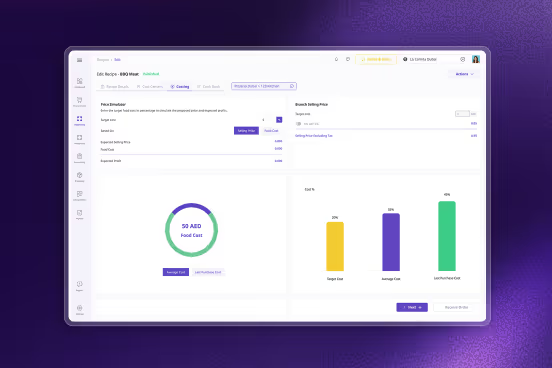
Supy, a comprehensive inventory management platform, centralizes your stock control, procurement processes, and data analytics. By integrating these essential aspects of restaurant operations, Supy enables you to maintain accurate stock levels, reduce waste, and optimize menu pricing effortlessly.
For deeper insights into maximizing your restaurant's operational efficiency, download Supy’s ebook: The Ultimate Guide To Reducing Food Cost In Multi-Branch & Enterprise Restaurants.
Interested in seeing how Supy can transform your inventory and warehouse operations? Schedule a demo with Supy today and take the first step toward a more organized, profitable future.