.jpeg)


Rezeptkosten im Tabellenblatt vs. Software: Warum statische Rezeptkosten scheitern, wenn sich Lieferantenpreise ändern
Wann ein Tabellenblatt für Rezeptkosten veraltet
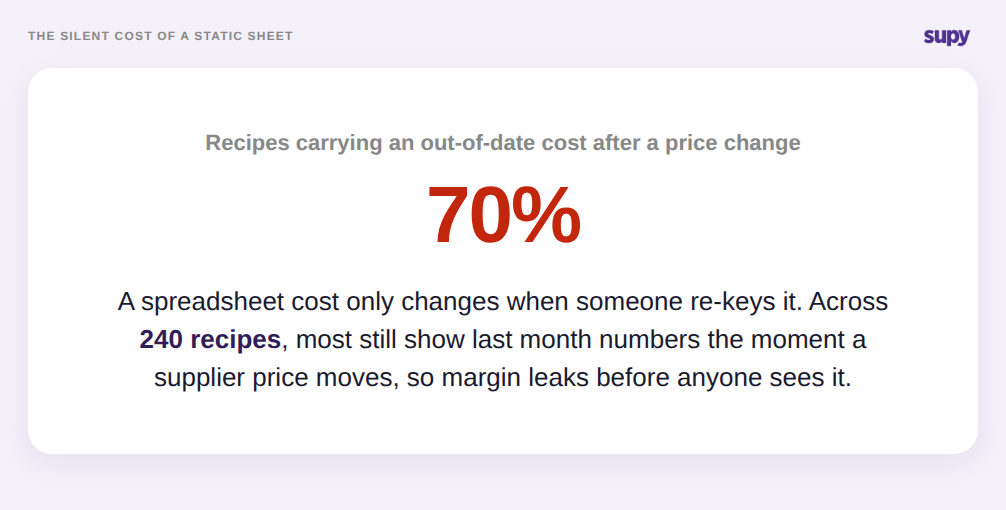
Rezeptkalkulation per Tabelle bedeutet, die Zutatenkosten jedes Rezepts manuell einzutippen und einen Gesamtbetrag abzulesen; eine Software berechnet diesen Gesamtbetrag anhand aktueller Zutatenpreise und hält ihn eigenständig auf dem neuesten Stand. Der Unterschied zeigt sich erst, wenn sich ein Preis ändert. Ein Tabellenblatt behält die alte Zahl, bis jemand sie neu einträgt — sobald also ein Lieferantenpreis steigt und niemandem etwas auffällt, stimmt der Rezeptwert schon beim nächsten Monatsabschluss nicht mehr.
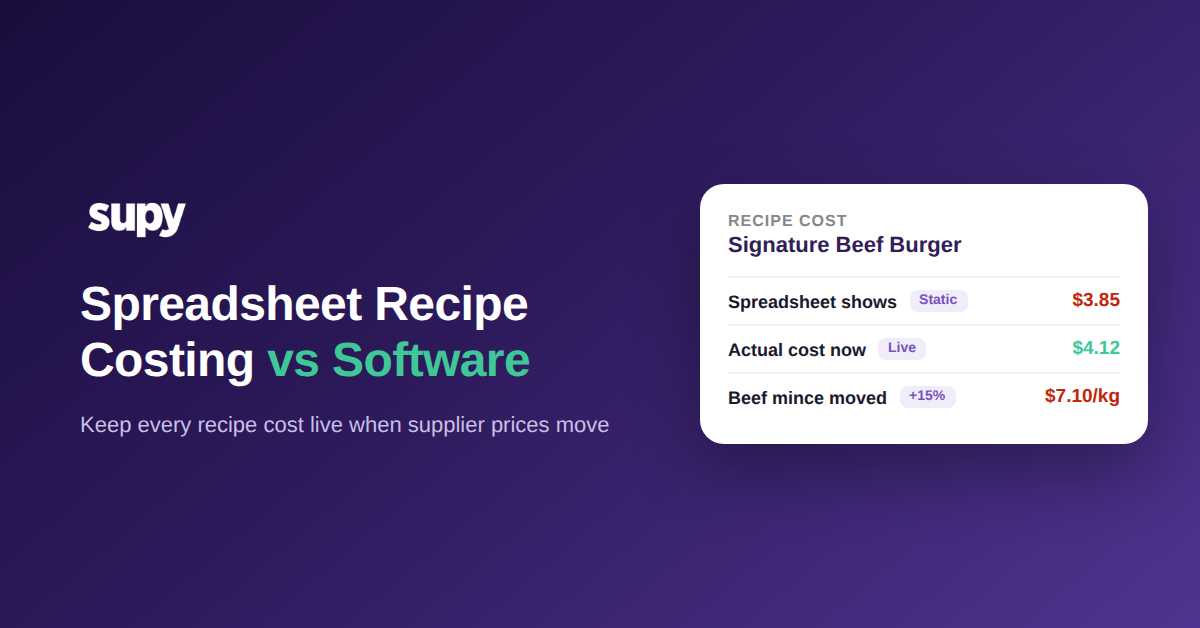
Nehmen Sie eine einzige Position. Ein Signature-Beef-Burger auf Basis von Rinderhackfleisch zu 6,20 $ pro kg zeigt im Tabellenblatt Rezeptkosten von 3,85 $. Der Lieferant erhöht den Hackfleischpreis auf 7,10 $ pro kg, ein Anstieg von 15 %, und der tatsächliche Einstiegspreis dieses Burgers beträgt nun 4,12 $. Der Menüpreis hat sich nicht geändert, das Tabellenblatt hat sich nicht geändert, und die 7 %-Lücke zwischen dem ausgewiesenen Wareneinsatz und dem tatsächlichen ist reine Marge, die leise das Haus verlässt.
Eine Position lässt sich noch leicht erkennen. Das Problem besteht darin, dass ein Betrieb Hunderte von Rezepten auf Basis derselben Lieferantenliste führt und eine einzige Preisänderung jedes Rezept berührt, das diese Zutat verwendet. Solange nicht jedes betroffene Rezept noch am gleichen Tag manuell neu kalkuliert wird, trägt der größte Teil der Speisekarte veraltete Kosten.
Was ein statischer Rezeptkostenwert übersieht: Schwund, Ausbeute und Standortpreis
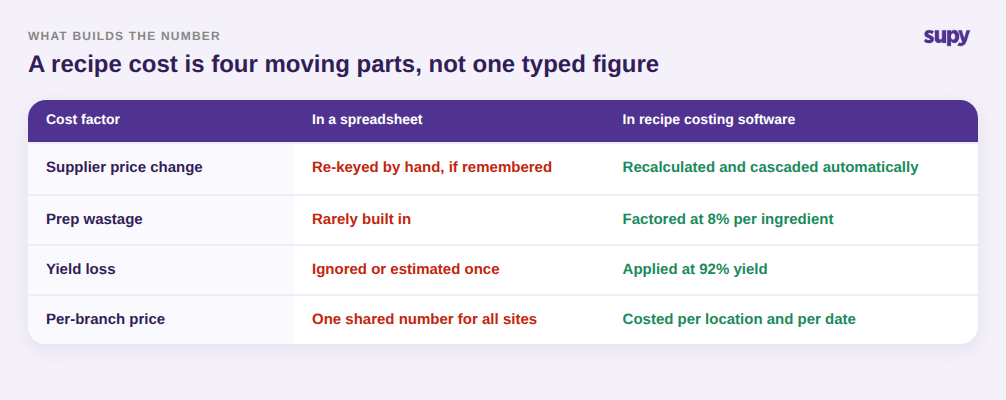
Ein eingetippter Tabellenkalkulationswert ist eine einzige eingefrorene Zahl, doch ein realer Rezeptkostenwert setzt sich aus mehreren variablen Faktoren zusammen. Ihn als eine einzige Zahl zu behandeln, ist die zweite Ursache, warum tabellenbasierte Rezeptkosten von der Wahrheit abweichen — noch bevor sich irgendein Preis bewegt hat.
Drei Faktoren gehen verloren. Zubereitungsschwund bedeutet, dass die Küche mehr von einer Zutat einkaufen muss, als letztlich auf dem Teller landet, sodass die tatsächlichen Kosten pro Portion höher sind als der Rohpreis vermuten lässt. Die Ausbeute funktioniert analog: Durch Zuschneiden, Garverlust und Portionieren wird ein eingekauftes Kilogramm selten zum vollen kalkulierten Kilogramm des fertigen Produkts. Und eine Gruppe, die denselben Artikel zu unterschiedlichen Lieferantenkonditionen je Standort einkauft, hat de facto keinen einheitlichen Zutatenpreis. Ein Tabellenblatt, das 8 % Zubereitungsschwund und 92 % Ausbeute ignoriert, unterschätzt den Tellerpreis, und je sorgfältiger der Betreiber vorzugehen versucht, desto mehr manuelle Pflege verlangt das Tabellenblatt. Eine Software zur Rezeptkalkulation kalkuliert Schwund und Ausbeute automatisch in jedes Rezept ein — auf Basis des Durchschnittspreises oder des letzten Einkaufspreises je Standort —, sodass die Zahl widerspiegelt, was das Gericht tatsächlich kostet. Diese Disziplin liegt auch jeder seriösen Berechnung der Wareneinsatzquote zugrunde.
Warum ein gemeinsames Tabellenblatt nicht alle Standorte kalkulieren kann
Das schwierigste Problem bei einem Tabellenblatt ist, dass ein Betrieb mit mehreren Standorten keinen einheitlichen Rezeptkostenwert hat. Er hat einen pro Standort. Derselbe Burger kostet nicht überall 4,12 $, weil jede Filiale zu eigenen Lieferantenpreisen, Lieferbedingungen und lokaler Verfügbarkeit einkauft.
Ein gemeinsames Haupttabellenblatt kann pro Rezept nur eine Zahl halten — es muss also einen Durchschnitt oder einen Zentral-Preis wählen und auf jede Filiale anwenden. Das verdeckt die Standorte, die still zu viel bezahlen, und schönt die, die es nicht tun. Wenn derselbe Signature-Beef-Burger in einer Filiale 4,31 $ und in einer anderen 3,88 $ kostet, verrät ein einziger aggregierter Gruppenpreis dem Betreiber nichts darüber, wo das eigentliche Problem liegt. Eine Software kalkuliert jedes Rezept pro Standort und Datum, sodass die Gruppe die Spanne einsehen und konkret bei dem Standort ansetzen kann, der tatsächlich aus dem Rahmen fällt — anstatt auf eine gemischte Zahl zu starren, die keinen von ihnen beschreibt. Das ist derselbe Grund, warum theoretischer und tatsächlicher Wareneinsatz je Standort auseinanderdriften und filialweise ausgewertet werden müssen.
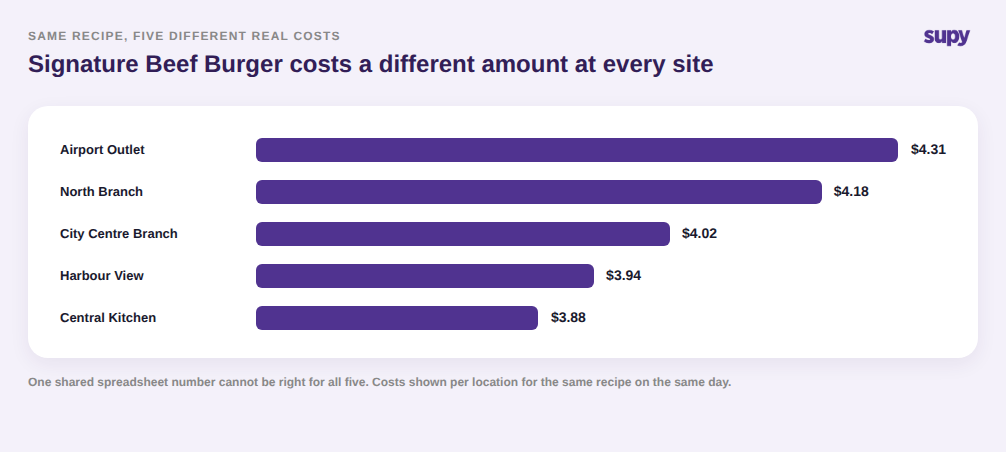
Tabelle oder Software: Was sich ändert, wenn Kosten sich von selbst aktualisieren
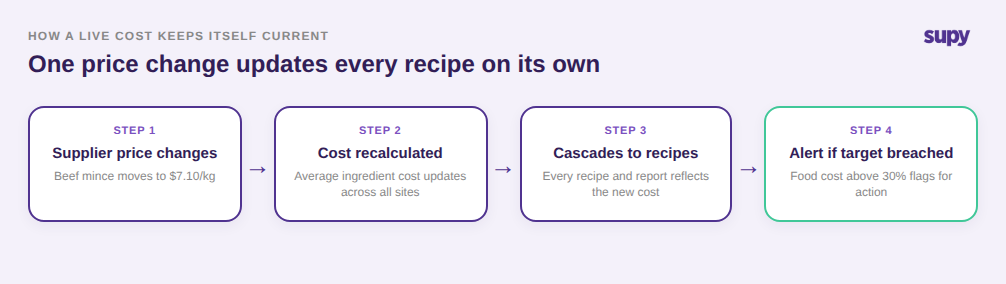
Der Grund, warum eine Software alle drei Lücken auf einmal schließt, ist, dass sie nicht darauf wartet, dass jemand die Zahl pflegt. Wenn sich ein Lieferantenpreis ändert, berechnet die Plattform die durchschnittlichen Zutatenkosten für jeden Standort neu und überträgt die Änderung automatisch auf jedes Rezept und jeden Bericht, der diese Zutat enthält — und markiert dann jedes Rezept, dessen Wareneinsatzquote das Ziel überschritten hat. Die Kalkulation hört auf, eine monatliche Aufräumaktion zu sein, und wird zu einem kontinuierlichen Schutzwall. Supy übernimmt dies innerhalb seiner Plattform für Warenwirtschaft und Rezeptkalkulation, die Lieferantenpreise, Rezepte und Wareneinsatzziele in einem vernetzten Modell zusammenführt.
Das ist auch das ehrliche Argument für und gegen jeden Ansatz. Wählen Sie ein Tabellenblatt, wenn Sie einen einzelnen Standort mit einer kurzen, stabilen Speisekarte und einer Lieferantenliste betreiben, die sich kaum ändert — wo das gelegentliche Nachtragen einer Handvoll Kosten noch genuinen Aufwand bedeutet. Wählen Sie eine Software zur Rezeptkalkulation, wenn Sie mehr als einen Standort führen, eine umfangreiche Speisekarte haben oder Preise einkaufen, die sich häufig bewegen — denn in diesem Maßstab ist das manuelle Nachtragen, das ein Tabellenblatt verlangt, genau die Arbeit, die nie erledigt wird, und die Konsequenz ist ein Wareneinsatz, den Sie erst nach Periodenabschluss entdecken.
Der Test ist einfach. Wenn Sie nicht sagen können, was ein bestimmtes Rezept an einem bestimmten Standort heute kostet — und dabei sicher sein können, dass die Antwort die Lieferantenpreise dieser Woche widerspiegelt —, sind Ihre Rezeptkosten bereits veraltet, und die einzige Frage ist, um wie viel. Nehmen Sie ein umsatzstarkes Gericht, prüfen Sie seinen kalkulierten Preis anhand einer aktuellen Rechnung an zwei Standorten, und die Größenordnung der Lücke zeigt Ihnen, ob ein Tabellenblatt Ihnen noch dient oder Sie still Geld kostet.