.jpeg)


Ausbeute-Kalkulation für Restaurants: Warum statische Rezeptkosten Ihre Margen überschätzen, solange Sie die Ausbeute nicht berücksichtigen
Was die Ausbeute-Kalkulation misst und warum Spezifikationsausbeuten die Marge überschätzen
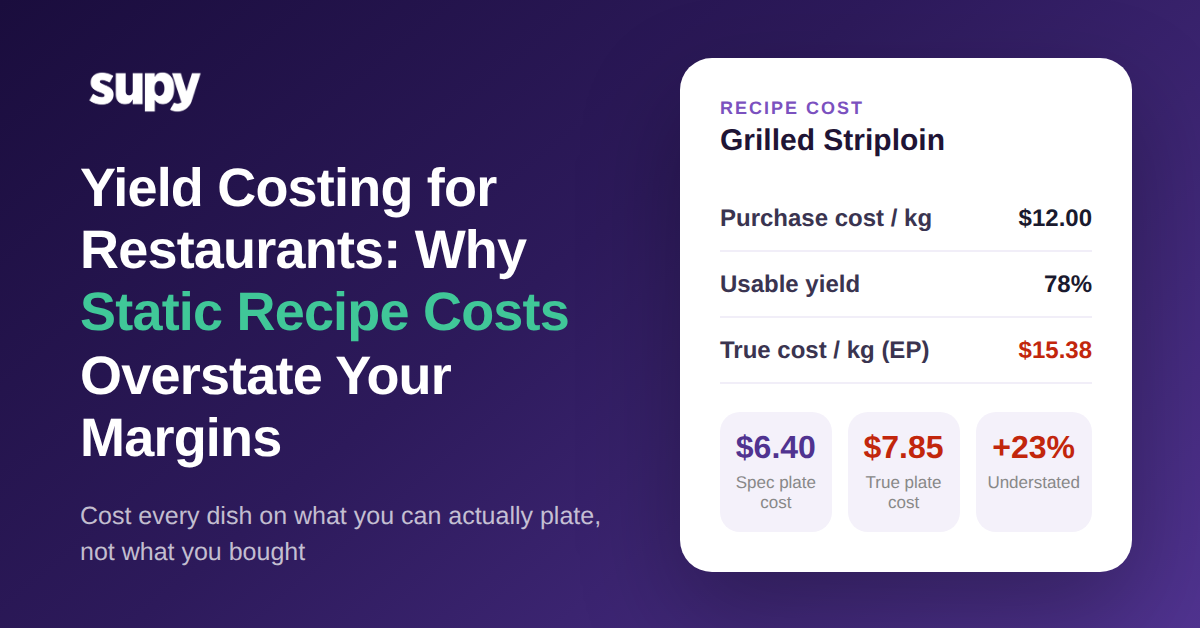
Die Ausbeute-Kalkulation ist die Praxis, ein Gericht auf Basis der Menge einer Zutat zu kalkulieren, die tatsächlich angerichtet werden kann – nicht auf Basis der eingekauften Menge. Sie berücksichtigt den Einkaufspreis, wendet die nutzbare Ausbeute nach Putzen, Garung und Zubereitungsverlust an und ergibt echte Kosten pro essbarer Portion. Lassen Sie diesen Schritt aus, weist jede Rezeptkarte niedrigere Kosten aus als das Gericht tatsächlich verursacht.
Die Lücke ist beträchtlich. Ein bei 12,00 $/kg eingekauftes Rinderrumpsteak kostet auf dem Teller nie 12,00 $/kg. Sobald Sie 22 % durch Fettdeckel, Silberhaut und Kochverlust verlieren, kosten die nutzbaren 15,38 $/kg. Wenn Ihre Rezeptkarte das Gericht immer noch zu 12,00 $/kg kalkuliert, überschätzt sie bei jedem Gedeck still und leise die Marge – und das zuerst bei Ihren hochwertigsten Proteinen, wo der Ausbeuteverlust am größten ist.
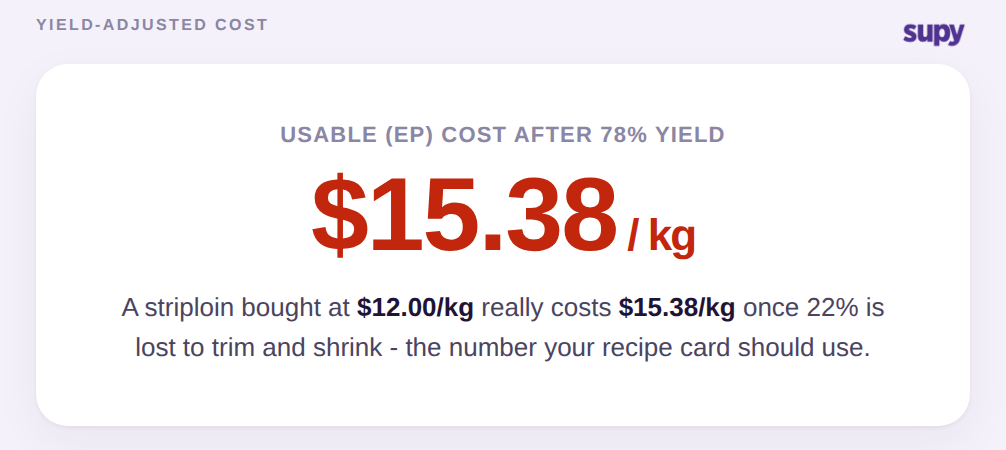
Genau deshalb driften statische Rezeptkosten und die echte Rentabilität im Laufe eines Services auseinander. Die Karte setzt voraus, dass 100 % des Eingekauften auf dem Teller landet; die Küche weiß, dass das nie der Fall ist. Supy integriert die nutzbare Ausbeute direkt in die Rezeptkosten, sodass die Zahl auf der Karte den tatsächlichen Kostenpreis des Gerichts widerspiegelt.
Wo theoretische und tatsächliche Ausbeute auf der Linie auseinanderklaffen
Der theoretische Verbrauch ist das, was Ihre Rezepte für die verkauften Gedecke hätten verbrauchen sollen. Der tatsächliche Verbrauch ist das, was das Lager verlassen hat. Wenn Ihre Rezepte auf Spezifikationsausbeuten basieren, die großzügiger sind als die Realität, decken sich diese beiden Werte nie – und die Differenz zeigt sich als Zutaten, die schneller verschwinden, als das Rezept erklärt.
Die folgende Tabelle zeigt das Muster, das die meisten Multi-Standort-Betreiber erkennen, sobald sie es messen: theoretischer Verbrauch aus der Rezeptkarte, tatsächlicher Verbrauch aus der Bestandsbewegung und eine Abweichung, die bei den hochwertigsten Proteinen bares Geld bedeutet. Das ist kein Diebstahl oder Falschzählen. Es ist Ausbeute, die das Rezept nie berücksichtigt hat.
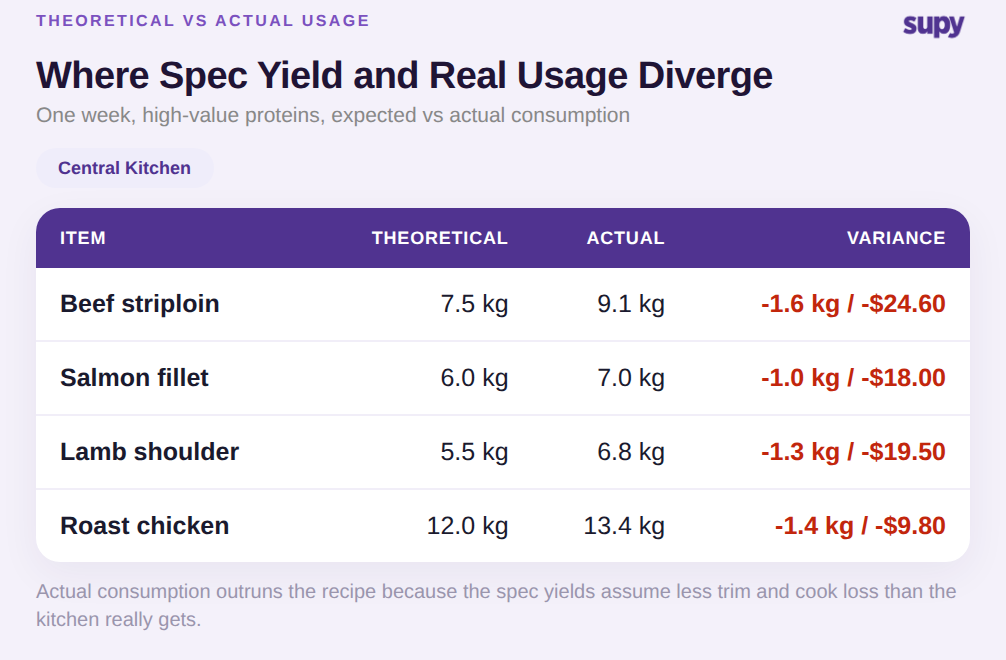
Die Kalkulation gegen die tatsächliche Ausbeute schließt diese Lücke an der Quelle. Anstatt die Abweichung nachträglich bei der monatlichen Zählung zu verfolgen, erfassen Sie die echte Ausbeute einmal – und jedes Rezept, das diese Zutat verwendet, erbt die korrigierte Kalkulation. Den vollständigen Überblick, wie diese Abweichung entsteht und wie man sie liest, finden Sie in unserem Leitfaden zu theoretischem vs. tatsächlichem Wareneinsatz.
Warum Aufbereitungsartikel ohne Ausbeuteaufteilung keinen verlässlichen Preis pro Portion haben
Einige Ihrer teuersten Zutaten kommen gar nicht portioniert an. Ein ganzer Fisch, ein Primärschnitt oder ein Käselaib ist ein einziger Einkauf, der zu mehreren nutzbaren Artikeln wird – jeder mit einem anderen Wert. Solange Sie diesen einen Einkaufspreis nicht nach tatsächlicher Ausbeute auf die Komponenten aufteilen, hat keine davon verlässliche Kosten pro Portion.
Nehmen Sie einen ganzen Lachs: 4,0 kg zum Einkaufspreis von 9,00 $/kg, also 36,00 $ Rohkosten. Das Filet ergibt 2,3 kg, die restlichen 1,7 kg sind Kopf, Gräten und Abschnitte. Wenn Sie das Filet immer noch zu 9,00 $/kg kalkulieren, verschenken Sie Marge – denn die Rohkosten des ganzen Fischs liegen nun in einem kleineren nutzbaren Gewicht. Korrekt aufgeteilt trägt dieses Filet effektiv 15,65 $/kg, und nur dann kann ein darauf basierendes Gericht ehrlich kalkuliert werden.
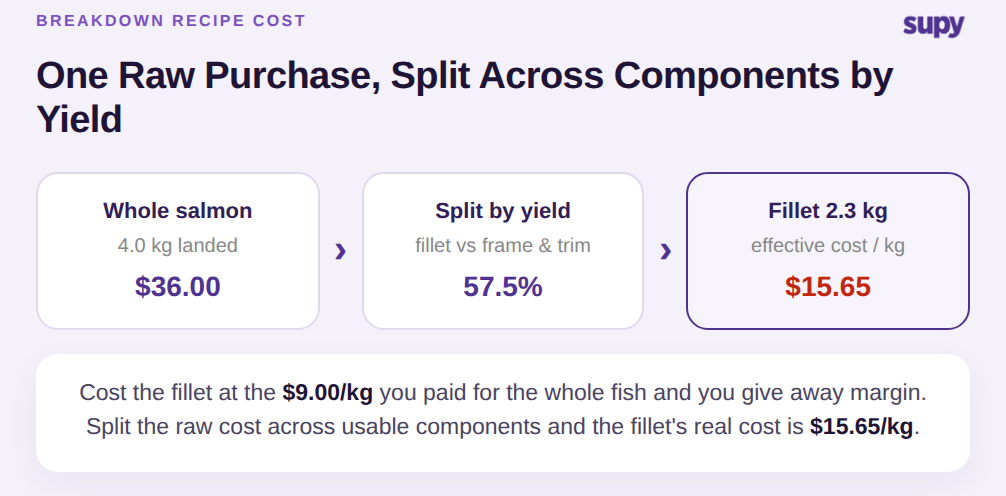
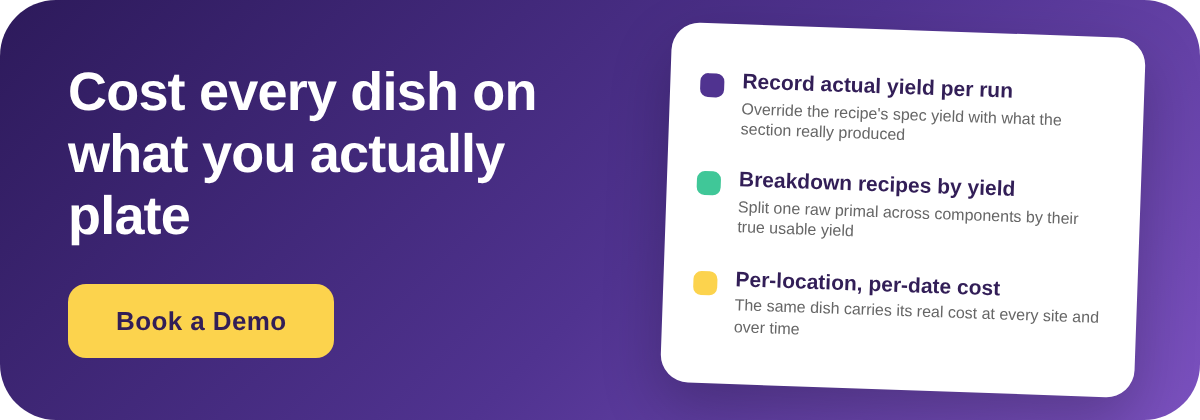
Supy löst das mit Aufbereitungsrezepten: Eine Rohzutat wird in mehrere Komponenten aufgeteilt, und jede Komponente trägt ihren Anteil der Rohkosten nach Ausbeute. Abteilungen für Fleischzerlegung, Fischvorbereitung und Mise en place hören auf zu raten, was der Primärschnitt pro nutzbarem Kilo wirklich kostet.
Tatsächliche Ausbeute bei der Produktion erfassen – nicht die Rezeptvorgabe
Die Ausbeute auf der Rezeptkarte ist ein Plan. Was der Posten an einem bestimmten Tag, aus einer bestimmten Lieferung, tatsächlich erhält, ist die Tatsache, gegen die Sie kalkulieren müssen. Ein zäheres Stück Fleisch, eine weniger geübte Küchenkraft oder ein kälterer Kühlschrank verschieben die echte Ausbeute von der Spezifikation weg. Wenn Sie immer nur gegen die Spezifikation kalkulieren, sehen Sie das nie.
Die Lösung ist, die tatsächliche Ausbeute im Moment der Produktion zu erfassen. Kaufen Sie 100 kg eines Rohartikels ein und trimmen Sie ihn auf 82 kg nutzbares Produkt, ist der wahre Stückpreis dieses nutzbaren Produkts nicht der Einkaufspreis. Ein Zubereitungsverlust von 18 % erhöht die tatsächlichen Kosten jedes angerichteten Gramms um 22 %. Erfassen Sie das einmal beim Produktionsereignis, und die Kosten fließen automatisch durch alle nachgelagerten Rezepte.
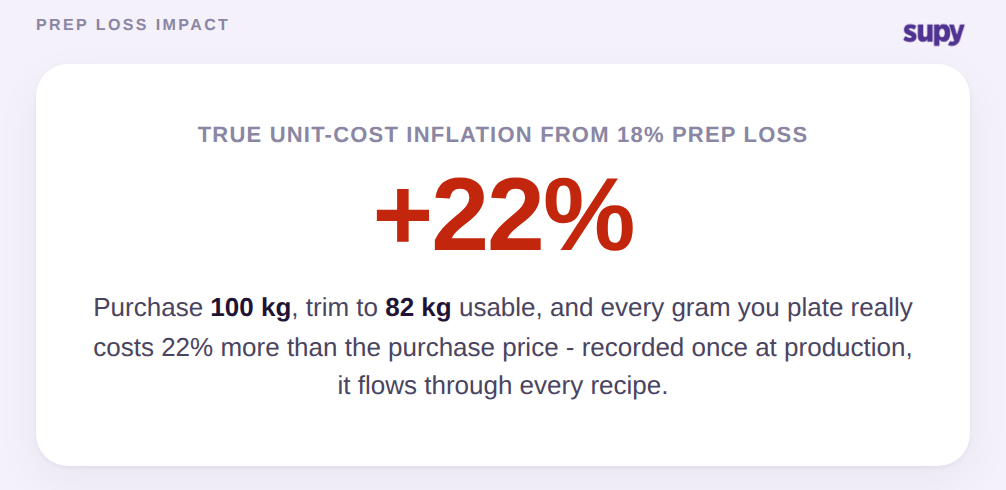
In Supy überschreiben Betreiber die erwartete Ausbeute im Rezept mit der tatsächlich produzierten Ausbeute, und der Zubereitungsabfall wird für jede Zutat berücksichtigt – sodass der Bestand die netto nutzbare Menge nach dem Trimmen widerspiegelt, nicht das eingekaufte Bruttogewicht. Die Rezeptkosten hören auf, eine Annahme zu sein, und werden zur Messung.
Warum eine statische Ausbeute dasselbe Gericht an allen Standorten falsch kalkuliert
Selbst wenn das Rezept identisch ist, kostet dasselbe Gericht an jedem Standort nicht das Gleiche. Die Ausbeute hängt von Ausstattung, Zubereitungsgeschick und der jeweiligen Lieferung eines Standorts ab, und die Zutatenkosten bewegen sich mit dem, was die jeweilige Filiale zuletzt bezahlt hat. Eine statische Ausbeute und ein gemischter Einheitspreis für die gesamte Gruppe werden das Gericht überall falsch bepreisen – außer an dem einen Standort, den der Durchschnitt zufällig trifft.
Das folgende Diagramm zeigt dasselbe Rumpsteak-Gericht an vier Filialen kalkuliert. Das Rezept sagt 6,40 $. Die tatsächlichen, ausbeutebereinigten Tellerkosten reichen von 7,10 $ an der sparsamsten Filiale bis 8,30 $ an der schwächsten – eine Spreizung von 17 % bei einem Gericht in einer Gruppe. Wenn Sie die Speisekarte nach den Spezifikationskosten bepreisen, verkaufen die schwächsten Filialen zu einer Marge, der Sie nie zugestimmt haben.
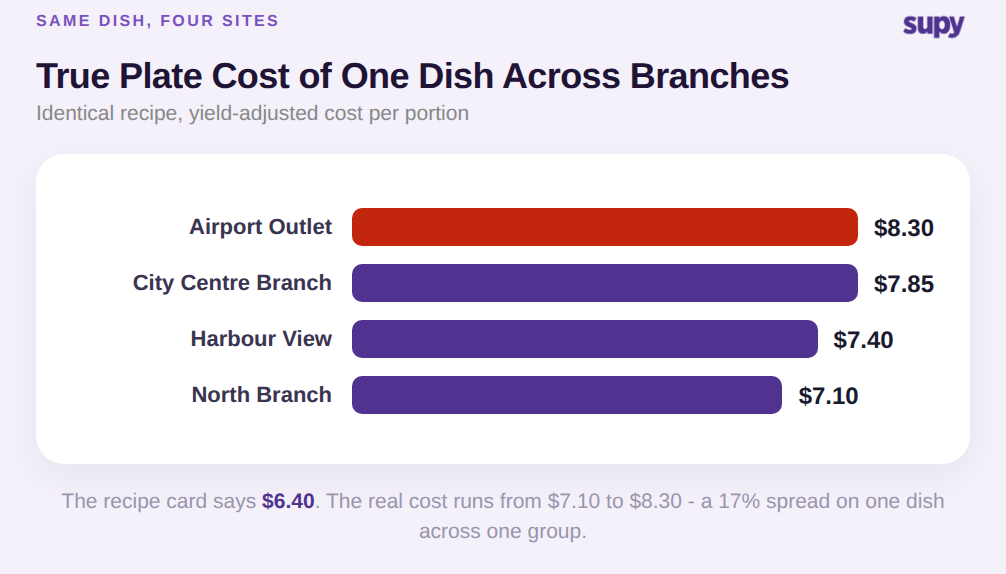
Da Supy die Rezeptkosten pro Standort und pro Datum berechnet – auf Basis des Durchschnitts- oder letzten Einkaufspreises –, kann dasselbe Gericht an jedem Standort seine eigenen wahren Kosten tragen. Das macht eine gruppenweite Speisekartenpreisgestaltung vertretbar, statt ein Durchschnitt zu sein, der fast überall falsch liegt. Das ist die operative Grundlage hinter den Zahlen in unserer Übersicht zur Rezeptkalkulationssoftware.
Wie nicht erfasste Ausbeute als Abweichung auftaucht, die dem Zählfehler angelastet wird
Wenn die Ausbeute nie erfasst wird, verschwindet ihr Kostenanteil nicht. Er taucht am Monatsende als theoretische-vs.-tatsächliche Lücke wieder auf, die erklärt werden muss – und das Naheliegendste ist, dem Zählen die Schuld zu geben. Multi-Standort-Gruppen schreiben unerklärte Wareneinsatz-Abweichungen routinemäßig Inventurfehlern in Filialen zu, obwohl ein Großteil davon schlicht Ausbeute ist, die die Rezepte nie erfasst haben.
Wenn Sie die Treiber dieser Abweichung aufschlüsseln, ist nicht erfasster Ausbeuteverlust in der Regel der größte Einzelanteil – vor Portionierungsabweichungen, echten Zählfehlern und nicht protokolliertem Schwund. Engere Zählungen anzustreben, während die Rezepte noch auf Spezifikationsausbeuten basieren, behebt den kleinsten Teil des Problems und lässt den größten Teil unberührt.
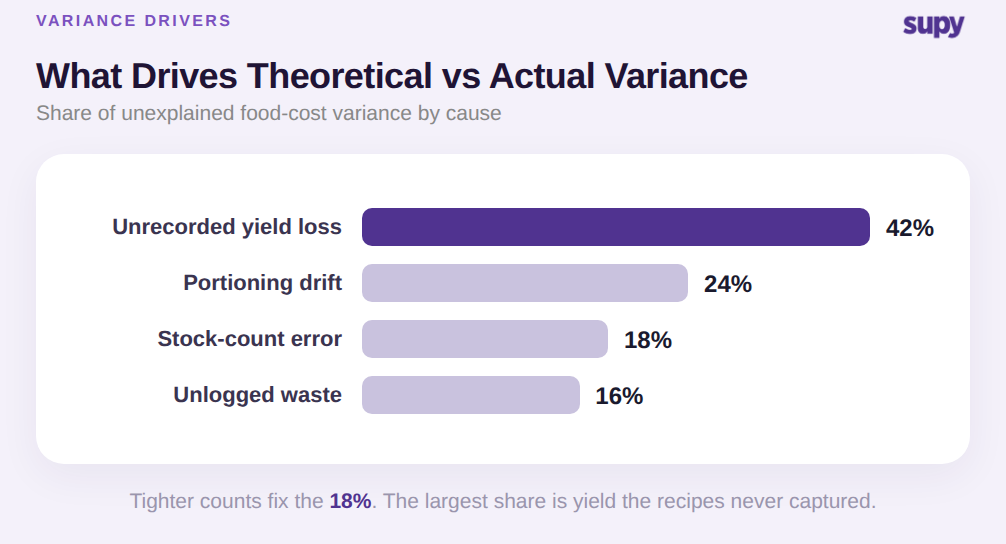
Hier ist der Zwei-Minuten-Check für Ihren eigenen Betrieb: Ziehen Sie die theoretische-vs.-tatsächliche Abweichung Ihrer fünf teuersten Proteine, und prüfen Sie dann, ob Rezepte, die diese Proteine verwenden, eine tatsächliche Ausbeute oder einen Zubereitungsverlust-Wert angeben. Wenn die Abweichung erheblich ist und die Ausbeute-Felder leer sind, zählen Sie nicht falsch – Sie kalkulieren gegen eine Spezifikationsausbeute, die Ihre Küche nie erreicht. Der erste Schritt ist, die echte Ausbeute dieser fünf Zutaten zu erfassen und die korrigierte Kalkulation durchfließen zu lassen – bevor Sie ein einziges Zählblatt anfassen.
Statische Rezeptkosten sind bequem, weil sie stabil sind. Aber eine Kalkulation, die sich nie ändert, hörte auf korrekt zu sein in dem Moment, in dem Ihre erste Lieferung anders getrimmt wurde als die Karte angenommen hatte. Ausbeute-Kalkulation ist das Verfahren, die Zahl auf der Karte mit dem Geld in der Kasse in Einklang zu bringen – bei jedem Gericht und an jedem Standort.