.jpeg)

Restaurant-LMS vs. leichtere Schulungsoptionen: Wie Multi-Standort-Gruppen entscheiden, ob sie wirklich eine brauchen
Was ein Restaurant-LMS ist und welche Frage es nicht beantwortet
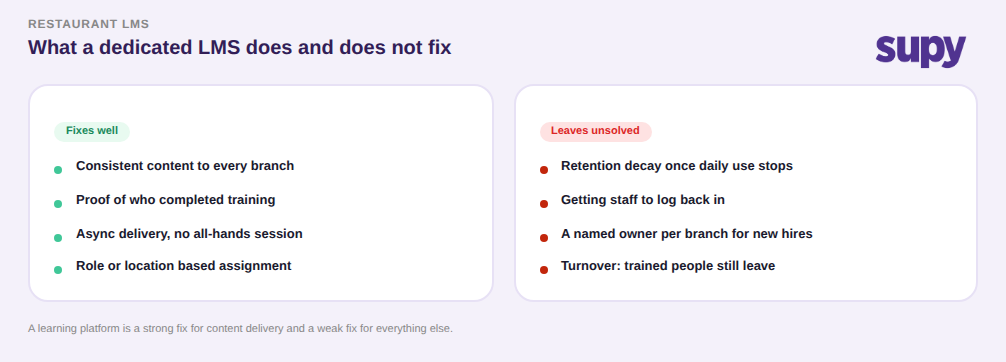
Ein Restaurant-LMS (Lernmanagementsystem) ist Software, die Schulungsinhalte speichert, Kurse nach Rolle oder Standort an Mitarbeiter zuweist und nachverfolgt, wer was abgeschlossen hat. Es gibt einer Multi-Standort-Gruppe einen zentralen Ort, um einheitliches Material an jede Filiale zu übermitteln und Schulungsnachweise zu erbringen. Was es Ihnen nicht abnimmt, ist die Entscheidung, ob Ihr Schulungsproblem überhaupt ein Inhaltsvermittlungsproblem ist.
Diese Unterscheidung ist wichtig, weil die meisten Gruppen nach einem schlechten Onboarding zu einem LMS greifen – und ein schlechtes Onboarding liegt selten daran, dass Inhalte fehlten. Es liegt daran, dass Mitarbeiter nicht erschienen, weil ein Standort nicht unbemannt gelassen werden konnte, weil geschulte Mitarbeiter wechselten oder weil eine einzelne Sitzung aus dem Gedächtnis verblasste, bevor sie zur Gewohnheit wurde. Ein LMS ist eine gute Lösung für einen dieser Misserfolge und nahezu nutzlos für die anderen. Die nützliche Frage ist daher nicht, welches Restaurant-LMS man kaufen soll, sondern welche Schulungsprobleme man tatsächlich beheben will und ob eine dedizierte Plattform die einfachste Lösung dafür ist.
Der Rest dieses Vergleichs beleuchtet die tatsächlichen Fehlerbilder, die Multi-Standort-Betreiber beschreiben, und zeigt, wann ein dediziertes LMS seinen Preis rechtfertigt und wann eine leichtere Kombination aus Train-the-Trainer, praxisintegrierter Vertiefung und einer gemeinsamen Verfahrensbibliothek dasselbe günstiger erreicht.
Warum eine einzelne Schulungssitzung innerhalb von Monaten verblasst
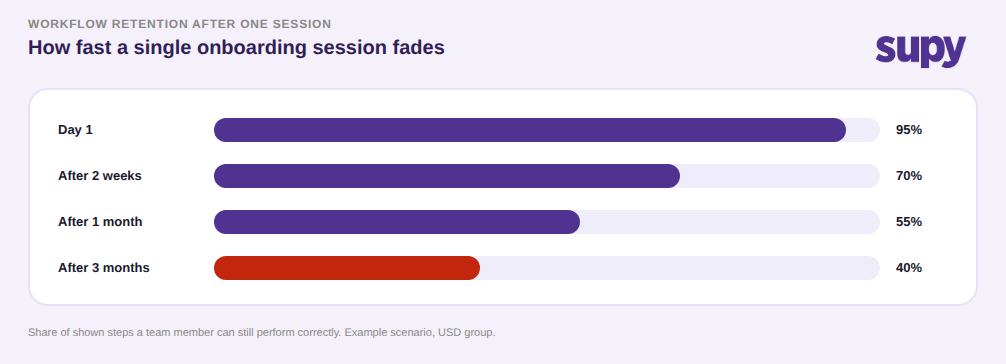
Nehmen Sie eine einzige Einführungssitzung als Ausgangspunkt. In den Wochen danach sinkt der Anteil der Arbeitsschritte, die ein Teammitglied noch korrekt ausführen kann, stetig – weil es nicht jeden Ablauf täglich nutzt. In einem Beispielszenario: Ein neuer Mitarbeiter, der am ersten Tag etwa 95 von 100 gezeigten Schritten ausführen konnte, liegt zwei Wochen später bei rund 70, nach einem Monat bei etwa 55 und nach drei Monaten bei rund 40. Die Schritte, die bleiben, sind die, die in jeder Schicht wiederholt werden; der Rest verblasst.
Das ist das Wichtigste, das man verstehen muss, bevor man Werkzeuge vergleicht, weil es entscheidet, wie eine gute Lösung überhaupt aussieht. Wenn das Behalten nachlässt, sobald die tägliche Nutzung aufhört, ist die Lösung Wiederholung im Kontext – nicht eine bessere einmalige Vermittlung. Ein dediziertes LMS hilft hier nur, wenn Mitarbeiter sich immer wieder einloggen, um ihr Wissen aufzufrischen, was die meisten Frontline-Teams nach dem ersten Abschluss nicht tun. Deshalb hält praxisintegrierte Vertiefung – bei der der Ablauf innerhalb des Tools wiederholt wird, das Mitarbeiter bereits jede Schicht öffnen – die Lernleistung in der Regel besser als ein einmal abgeschlossener Kurs. Wenn Ihr Problem das Verblassen ist, gewinnt der Ansatz, der Mitarbeiter immer wieder mit dem Ablauf konfrontiert. Ein LMS ist dabei nur eine Möglichkeit, nicht die naheliegende Antwort.
Wenn Anwesenheit und Filialabdeckung das Sitzungsmodell sprengen
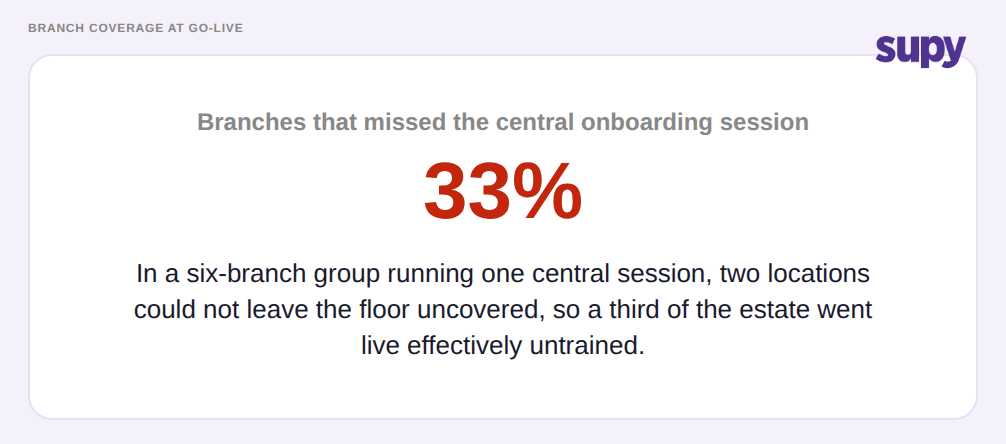
Noch bevor Inhalte verblassen können, scheitern viele Multi-Standort-Schulungspläne an der Anwesenheit. Betreiber berichten von geplanten Gruppensitzungen, an denen kaum jemand teilnimmt, von erfahrenen Mitarbeitern, die eine Woche vor dem Start wechseln, und von Filialen, die schlicht niemanden schicken können, weil ein Standort nicht unbesetzt bleiben darf. In einer Gruppe mit sechs Filialen, die eine zentrale Sitzung durchführt, ist es üblich, dass zwei Filialen komplett fehlen – so geht ein Drittel des Unternehmens praktisch ungeschult live, egal wie gut das Material war.
Dieses Versagensmuster ist das stärkste Argument dafür, synchrones Vollteam-Training hinter sich zu lassen – und es ist auch dort, wo ein dediziertes LMS am attraktivsten aussieht, weil ein asynchroner Kurs keinen gemeinsamen Termin erfordert. Asynchron bedeutet aber nicht zwingend eine dedizierte Plattform. Eine kurze Verfahrensbibliothek, aufgezeichnete Anleitungen und ein Train-the-Trainer-Modell, bei dem eine Führungskraft pro Filiale ihr eigenes Team coacht, lösen das Abdeckungsproblem ebenfalls – und näher am tatsächlichen Schichtbetrieb. Die entscheidende Frage ist eng: Liegt Ihr Hindernis darin, dass Mitarbeiter sich nicht zur selben Zeit versammeln können, oder darin, dass niemand sicherstellt, dass jeder neue Mitarbeiter den Ablauf in seiner Filiale durchläuft? Ein LMS beantwortet die erste Frage; für die zweite braucht es meist eine benannte Person pro Standort, nicht einen Login. Rollenbasierte Zugriffssteuerung in den Systemen, die Mitarbeiter bereits nutzen, kann viel davon tragen, weil sie klar macht, wer in welcher Filiale für welchen Ablauf zuständig ist. Unser Leitfaden zur rollenbasierten Zugriffssteuerung für den standortübergreifenden Bestand zeigt, wie Gruppen diese Verantwortung strukturieren.
Restaurant-LMS vs. Train-the-Trainer vs. praxisintegrierte Vertiefung: Wie Sie wählen
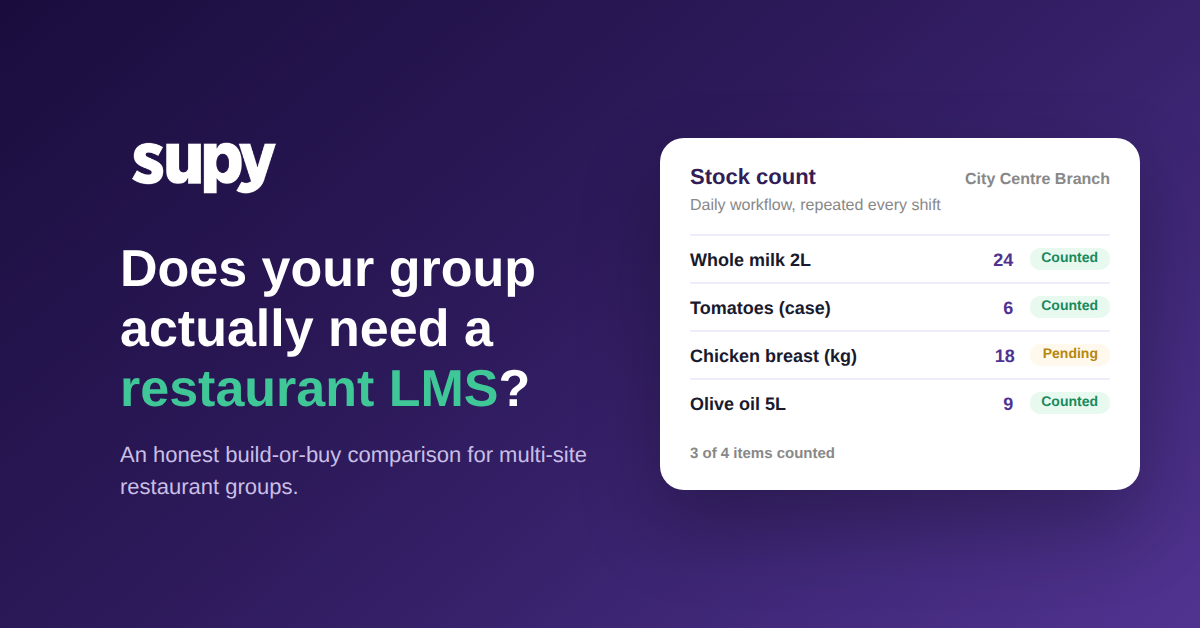
Ordnen Sie die Optionen auf zwei Achsen an, die sie wirklich unterscheiden: wie viel Aufbau- und laufender Verwaltungsaufwand jede erfordert, und wie dauerhaft sie das Behalten sichert. Eine einmalige Live-Sitzung ist günstig, verblasst aber schnell. Ein dediziertes LMS, das Mitarbeiter wirklich weiter nutzen, ist dauerhaft, kostet aber real durch Lizenzen, Inhaltspflege und jemanden, der Abschlüsse durchsetzt. Die kostspielige Falle ist das dedizierte LMS, das gekauft und aufgebaut, aber nicht genutzt wird – es kostet am meisten und verblasst wie eine einmalige Sitzung, weil niemand sich wieder einloggt. Praxisintegrierte Vertiefung hingegen, bei der Lernen auf dem operativen Tool aufbaut, das Mitarbeiter jede Schicht öffnen, ist vergleichsweise günstig, weil es ein bereits laufendes System wiederverwendet, und dauerhaft, weil der Ablauf täglich wiederholt statt aus einem Kurs zurückgerufen wird. Der Inventur-Ablauf zum Beispiel wird planmäßig von denselben Personen wiederholt, sodass die Gewohnheit sich von selbst verstärkt – ohne separaten Kurs.
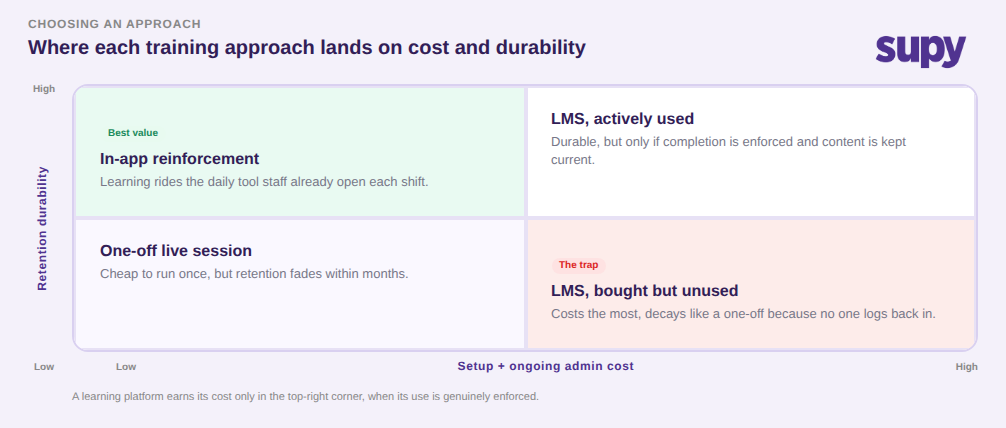
Die Wahl reduziert sich auf das, was Sie tatsächlich kaufen. Wählen Sie ein dediziertes Restaurant-LMS, wenn Sie strukturiertes Schulungsmaterial zu vermitteln haben, Compliance oder Zertifizierungen nachzuweisen sind, eine Schulungsfunktion die Inhalte pflegen kann und ein realistischer Weg besteht, Abschlüsse filialübergreifend durchzusetzen. Wählen Sie die leichtere Kombination – Train-the-Trainer plus praxisintegrierte Vertiefung plus gemeinsame Verfahrensbibliothek – wenn Ihr eigentliches Problem Ablaufbehalten und Filialabdeckung statt Zertifizierung ist, was bei den meisten Multi-Standort-Gastronomiebetrieben zutrifft. Wenn Sie nicht benennen können, wer sich um Logins kümmert und Inhalte aktuell hält, gehen Sie davon aus, dass das LMS in der gekauft-aber-ungenutzt-Ecke landet – und beginnen Sie mit Vertiefung in den Tools, die Ihr Team bereits täglich nutzt.