.jpeg)


طلب العناصر ذات الأسعار المتغيرة من الموردين: كيف تُبقي مجموعات متعددة المواقع كل طلب بتكلفة محددة عندما تتحرك الأسعار أسبوعياً
لماذا لا يمكن لسعر ثابت واحد احتساب تكلفة التوريد الطازج أو المشترى من السوق
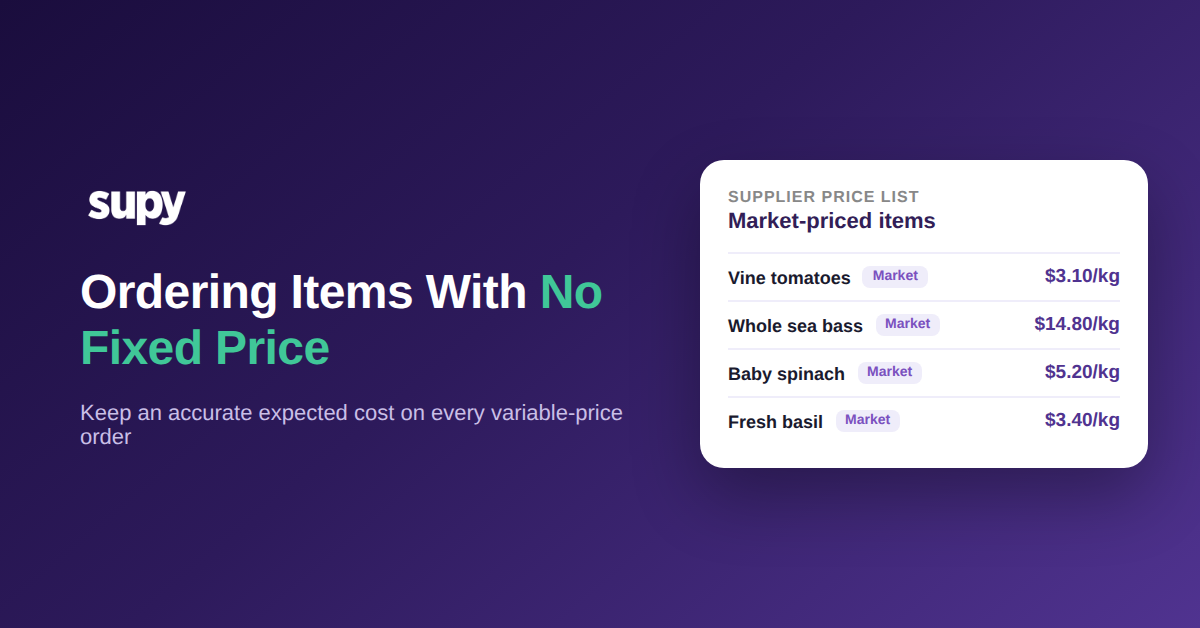
طلب عناصر متغيرة السعر من الموردين يعني شراء مخزون تتغير تكلفته من طلب إلى آخر: المنتجات الطازجة والمأكولات البحرية وأي شيء يُشترى من السوق أو بموجب عقد عائم. لا يمكن لسعر ثابت واحد للصنف تمثيل ذلك، لأن الرقم يصبح خاطئاً في اللحظة التي تتحرك فيها السوق. الهدف ليس سعراً مجمَّداً؛ بل تكلفة متوقعة موثقة في كل سطر طلب.

تخيل طماطم العنقود تتحرك من 2.40 دولار إلى 3.10 دولارات للكيلوغرام في غضون أسابيع قليلة، أي تذبذب بنسبة 29%. سعر الكتالوج الثابت المحدد في بداية تلك الفترة إما قديم وإما يتجاهله من يضع الطلب بصمت، فتتوقف التكلفة المسجلة في وصفاتك والتقارير عن مطابقة ما دفعته فعلاً. اضرب ذلك في 12 موقعاً يشتري كل منها نحو 180 سطراً بأسعار متغيرة، ويصبح «السعر صحيح تقريباً» رقماً لتكلفة الغذاء لا يثق به أحد.
الخبر الجيد أنك تستطيع طلب هذه الأصناف مع الاحتفاظ بتكلفة متوقعة دقيقة في كل جرد ووصفة وتقرير تباين. يتطلب ذلك ثلاثة أشياء: نوع السعر الصحيح لكل صنف، وطريقة لتحديث تلك الأسعار جملةً بدلاً من تحديثها صنفاً بصنف، وخطوة استلام تُسوِّي السعر الحقيقي في اليوم الذي يصل فيه. يستعرض هذا الدليل كل خطوة من هذه الخطوات.
اختر نوع السعر الصحيح لكل صنف متغير السعر
الخطوة الأولى هي التوقف عن التعامل مع «السعر» باعتباره حقلاً ثابتاً واحداً. في Supy، لا يُلزَم الصنف بحمل رقم مُشفَّر واحد. تُحدد أنت طريقة احتساب تكلفته، فيكون هناك سعر متوقع موثق في طلب الشراء قبل وصول التوصيل بأي وقت.

ثمة ثلاث طرق عملية لتسعير سطر ليس ثابتاً حقاً. السعر الثابت مناسب للأصناف المستقرة المُتعاقَد عليها حين يظل السعر ثابتاً فعلاً. أما تسعير التكلفة زائد هامش الربح فمناسب للأصناف التي تشتريها عبر مطبخ مركزي أو مورد داخلي، حيث تكون التكلفة رقماً أساسياً مضافاً إليه هامش ربح محدد، فيرى الفرع المستلِم دائماً سعراً منتظماً قابلاً للشرح. وبالنسبة للأصناف العائمة حقاً، تُرحِّل آخر تكلفة متفق عليها بوصفها السعر المتوقع، ثم تُصحِّحها عند الاستلام (مُفصَّل أدناه) حتى يتتبع الرقم الواقع بدلاً من التخمين. يعمل إصدار فواتير المطبخ المركزي في Supy وفق هذا المنطق، مع دعم التكلفة وهامش الربح والتسعير الثابت في الكتالوج ذاته.
حدد نوع السعر مرةً واحدة لكل صنف، وسيبدأ كل طلب لذلك السطر من تكلفة متوقعة معقولة. هذا هو الرقم الذي يوافق عليه فريقك، وهو ما يتحقق Supy منه مقارنةً بالفاتورة عند وصول البضاعة. للاطلاع على آليات الحفاظ على تحديث أسعار الموردين، راجع أدوات إدارة المُوردين في Supy.
توقف عن إعادة كتابة الأسعار صنفاً بصنف عبر كل موقع
سبب المعاناة من طلب العناصر ذات الأسعار المتغيرة من الموردين نادراً ما يكمن في الطلب نفسه، بل في الصيانة. حين يستلزم كل سعر تحريراً صنفاً بصنف، يتحول التحديث الشهري لمئات الأسطر وعبر كل موقع إلى نصف يوم إدخال بيانات تصبح قديمة قبل أن تنتهي.
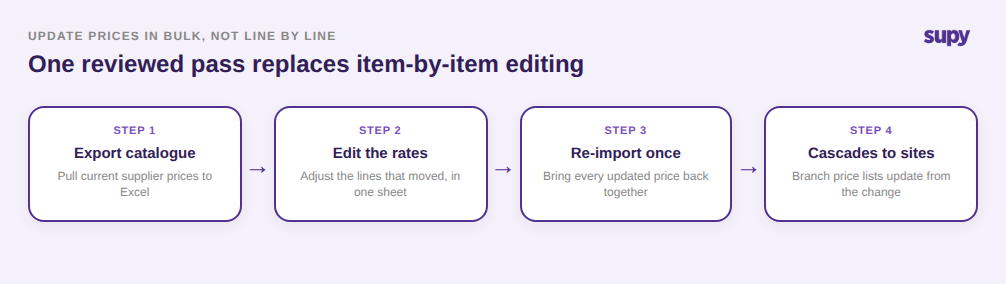
هنا يكمن الحل الحقيقي لإدارة أسعار الموردين المتذبذبة على نطاق واسع. بدلاً من تحرير كل سطر على حدة، تحدِّث أسعار الموردين جملةً واحدة: صدِّر الكتالوج إلى Excel، عدِّل الأسعار، وأعِد استيراده في مرور واحد. يمكنك إخفاء الأسعار في طلبات الشراء حيث لا يحتاج الفرع لرؤية التكلفة، كما يمكنك الاحتفاظ بشروط مختلفة وحدود دنيا للطلب وجداول توصيل لكل مورد ولكل فرع، حتى لا يُسوِّي تحديث مركزي الفوارق المحلية. وبالنسبة للمجموعات التي تُشغِّل مطبخاً مركزياً، تتدرج قائمة الأسعار المحدَّثة إلى الفروع التي تطلب منه، فيصل تغيير واحد إلى كل موقع يعتمد عليه.
المقصود ليس جدول البيانات في حد ذاته؛ المقصود أن تغييرات الأسعار تتوقف عن كونها مهمة صنف بصنف لتصبح إجراءً واحداً مراجَعاً. هذا هو الفارق بين قائمة أسعار مُصانة وأخرى تتآكل بصمت. منصة المشتريات من Supy مبنية على هذا النهج الجماعي أولاً، وتستعرض مقالة مدونة Supy المعمَّقة عن إدارة أسعار المُوردون كيف تتصاعد الأسعار حين لا يتولى أحد مسؤولية التحديث.
حين لا يُعرَف السعر إلا عند الباب: استلِم أولاً واحسب التكلفة بعد ذلك
بعض التوريد لا تصاحبه قائمة أسعار على الإطلاق. يشتري الفرع طماطم العنقود والأعشاب الورقية والسمك يومياً من السوق بإيصالات مكتوبة باليد، ولا تُعرَف التكلفة الحقيقية إلا حين تصل البضاعة والأوراق معاً. لهذه الأصناف ينعكس سير العمل: الاستلام أولاً، ثم إرفاق التكلفة الحقيقية.

تتيح Supy لفرع ما تسجيل مذكرة استلام بضاعة (GRN) دون طلب شراء مطابق، فيُوثَّق الشراء من السوق الذي لا يرتبط بطلب رسمي في النظام بسعره وكميته الفعليين. وعند إرسال المورد فاتورة، يقرأ نظام استلام الفواتير بالذكاء الاصطناعي الوثيقة ويستخرج بنود السطر والأسعار والإجماليات عبر صيغ متباينة ويطابقها مع الطلب. حيثما اختلف سعر الفاتورة عن السعر المتوقع أو اختلفت الكمية المُسلَّمة عن الطلب، يُعلِّم Supy بالتباين قبل أن يقبله أحد. لنقل إن سطراً متوقعاً بـ 2.60 دولار للكيلوغرام وصل بـ 2.95 دولاراً، فجوة 13%: مع ضبط حد تباين الاستلام عند 5%، يُحجَز ذلك السطر للمراجعة بدلاً من تحديث تكاليفك بصمت.
انطلاقاً من هذا التنبيه، يستطيع المستلِم قبول السعر الجديد أو تحرير الكمية أو إصدار إشعار ائتمان للرسوم الزائدة، وكل ذلك من الشاشة ذاتها مع سجل تدقيق كامل. تُصحَّح التكلفة المتوقعة بالتكلفة الحقيقية في اللحظة التي تملك فيها البضاعة والوثيقة معاً. الفجوات الصغيرة غير المُعلَّم عنها عبر 180 سطراً متغير السعر و12 موقعاً قد تتراكم بصمت لتبلغ نحو 1,180 دولار شهرياً. لمزيد من المعلومات حول اكتشاف تلك الفجوات آلياً، راجع كيفية عمل برامج مسح الفواتير عبر المواقع.
قبل الموافقة على الطلب التالي لصنف متغير السعر
إليك فحصاً سريعاً يمكنك إجراؤه على عملياتك هذا الأسبوع. إذا كانت أي إجابة «لا»، فهناك يتسرب مالك المتعلق بالأسعار المتغيرة، والحل إحدى الخطوات الثلاث أعلاه.

اسأل: هل يحمل كل صنف متغير السعر نوع سعر محدداً وتكلفة متوقعة موثقة، بدلاً من رقم ثابت قديم؟ هل يستطيع فريقك تحديث تلك الأسعار جملةً، أم لا يزال شخص ما يحررها سطراً بسطر؟ وحين تصل توصيلة من السوق بتكلفة تتجاوز السعر المتوقع، هل يُعلِّم النظام بالفجوة قبل أن تصل إلى تقرير تكلفة الغذاء، أم لا تظهر الفروقات إلا في نهاية الشهر؟ إذا كانت أسعارك المتوقعة محددةً بوعي ومُصانةً جملةً ومُسوَّاةً عند الاستلام، يتوقف طلب العناصر ذات الأسعار المتغيرة من الموردين عن كونه مصدر مفاجآت ويصبح مجرد طلب آخر مضبوط محسوب التكلفة.