.jpeg)


مرتجعات المورّد للمطاعم متعدد الفروع: كيف تستعيد كل إشعار ائتمان مستحق لك
عندما تصل شحنة ناقصة أو تالفة أو غير مطابقة للمواصفات، لا تستعيد المبالغ المستحقة لك إلا إذا أُنشئ المرتجع بشكل سليم وتطابق إشعار الائتمان مع ما استُلم فعلاً. أسرع طريقة لتحقيق ذلك هي إنشاء المرتجع مباشرةً من GRN، إذ تكون الأصناف والكميات والأسعار مرتبطةً بهذه الشحنة مسبقاً فتتولى مطالبة الائتمان كتابة نفسها. هذا التغيير الوحيد يحوّل المرتجعات من عملية إعادة إدخال بيانات إلى تأكيد في دقيقتين، وعنده تتوقف مجموعات المطاعم متعدد الفروع عن فقدان ائتمانات تستحقها.
أنشئ المرتجع من GRN المستلم لا من نموذج فارغ
مرتجع المورّد هو المستند الذي تنشئه لإعادة المخزون المستلم إلى المورّد والمطالبة بالائتمان المقابل. وعند إنشائه من مقال في مدونة Supy حول GRN، يُفتح مملوءاً مسبقاً بالأصناف الفعلية للشحنة وكمياتها وأسعارها المؤمّنة، فيعكس إشعار الائتمان بدقة ما جرى قيده في الاستلام لا رقماً أعاد أحدهم كتابته من الذاكرة. أنت تحدد كمية الإرجاع وتُحسب قيمة الائتمان بناءً على السعر الذي فُوتر لك فعلاً.
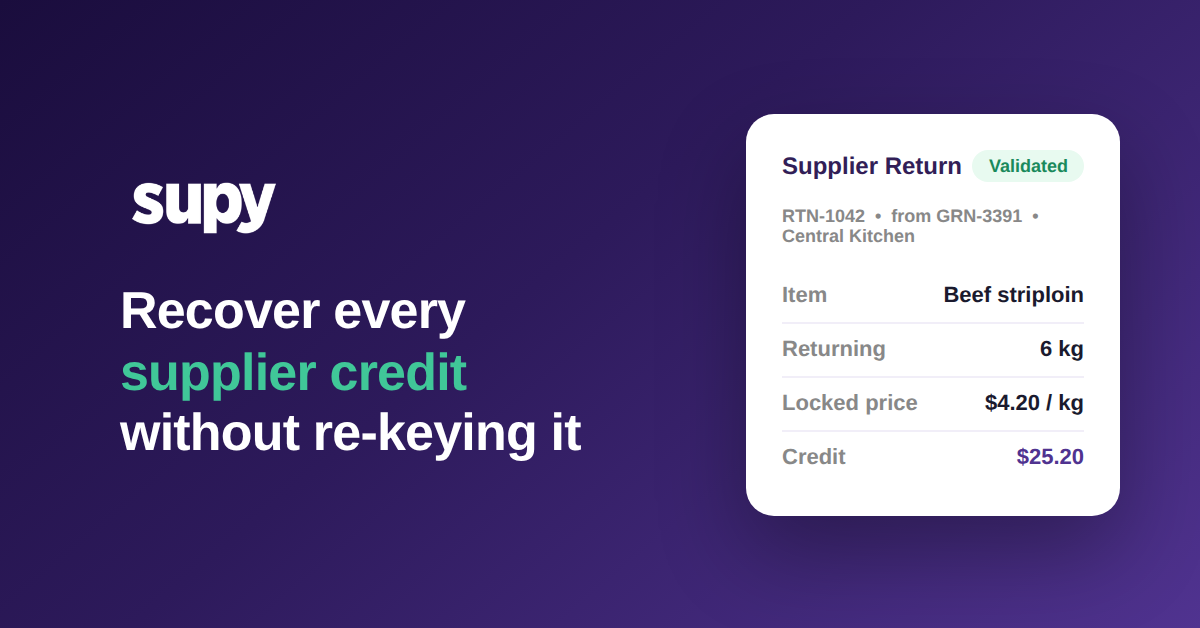
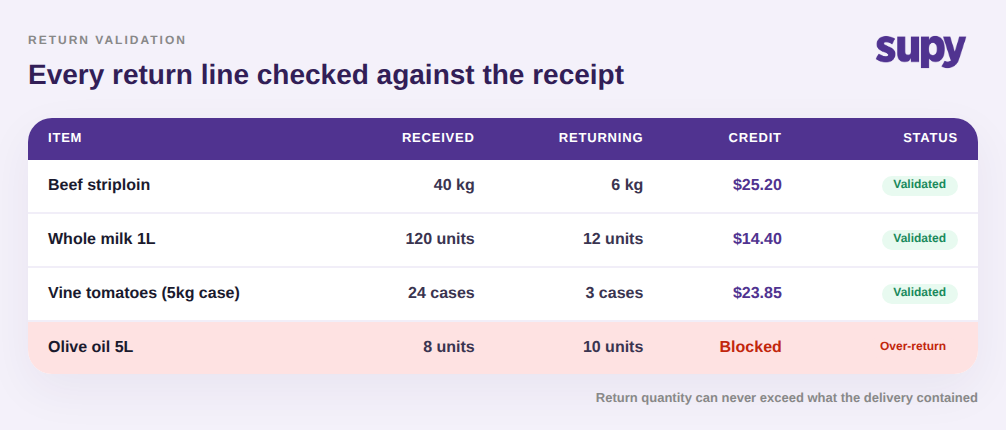
يهمّ ذلك لأن البديل هو نموذج فارغ. حين يُدخل أحد أعضاء الفريق مرتجعاً من الصفر، يخمّن السعر ويقرّب الكمية ثم يوفّقه مع فاتورة ربما سُدِّدت بالفعل. إنشاء المرتجع من GRN يُزيل التخمين: الشريحة البقرية التي استُلمت بسعر 4.20 دولار للكيلو تُرجع بائتمان 4.20 دولار للكيلو، ومرتجع 6 كيلو من استلام 40 كيلو يولّد ائتماناً قيمته 25.20 دولار دون أن يجري أحد أي حساب. مع عشرات الشحنات أسبوعياً وعدة فروع، هذا هو الفرق بين ائتمانات متطابقة وتسوية نهاية الشهر التي لا تستقيم أبداً.
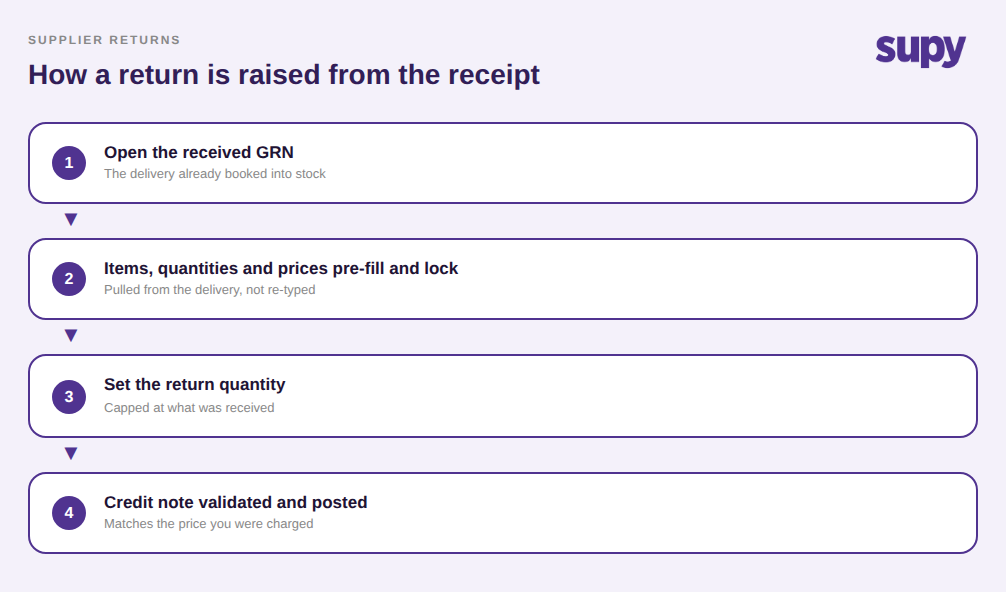
أين تتسرب الإيرادات في المرتجعات المُدخلة يدوياً: إرجاع زائد وائتمانات لا تتطابق
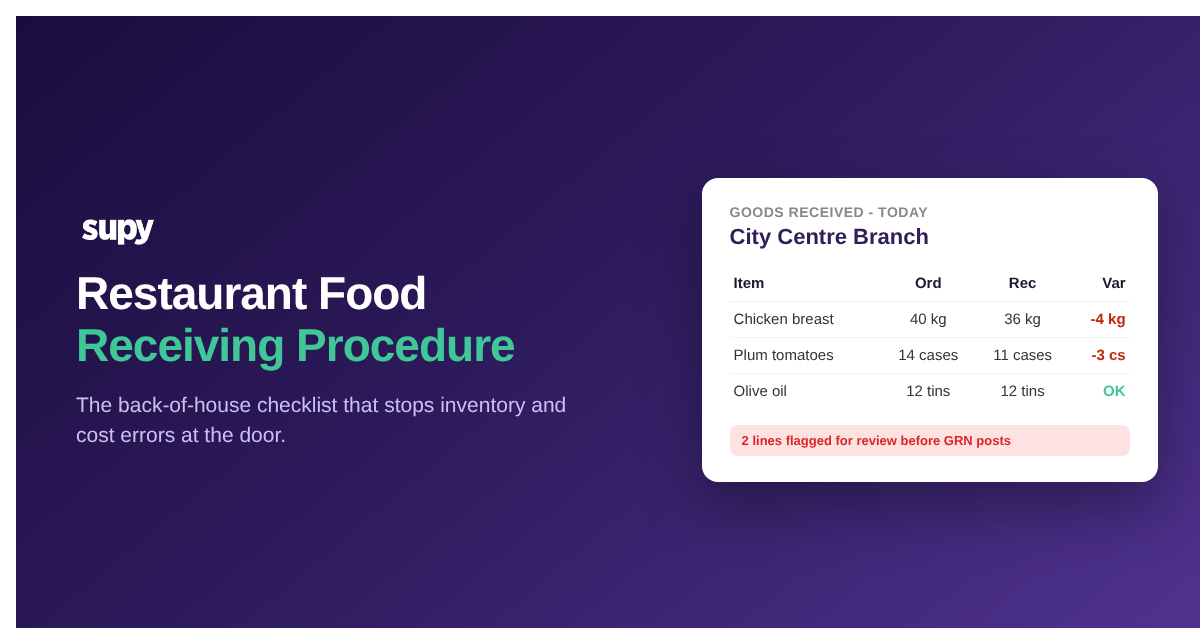
نمطا الفشل اللذان يستنزفان المرتجعات بصمت هما الإرجاع الزائد وعدم تطابق الأسعار، وكلاهما ينشأ حين تُنشأ المرتجعات بمعزل عن استلام GRN. الإرجاع الزائد هو مطالبة بأكثر مما تم تسليمه فعلاً، إذ يطالب موظف بإرجاع 10 وحدات مقابل استلام 8، إما بالخطأ أو لأن شخصين أدخلا المرتجع نفسه. يرفض المورّد الزيادة، فتتعارض المطالبة وإشعار الائتمان، وتجد نفسك في نزاع تباين يكلف وقتاً من العمل أكثر من قيمة الائتمان.
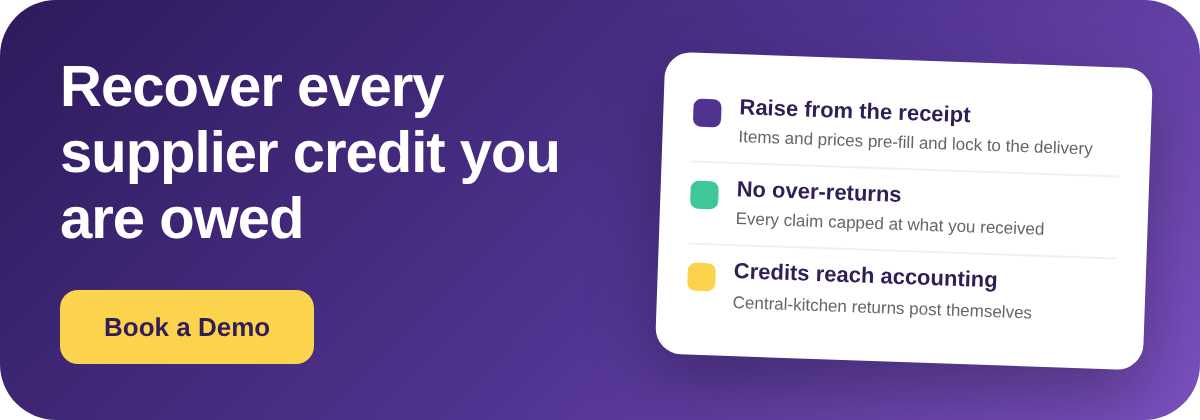
إنشاء المرتجع من GRN يسدّ الثغرتين. يُقيَّد المرتجع بالكمية المستلمة فلا تتجاوز المطالبة ما احتوته الشحنة فعلاً، ويُتحقق من تخصيص إشعار الائتمان قبل تقديم المرتجع لا بعد أسابيع. النتيجة: كل بند مرتجع يتطابق مع استلامه كمياً وسعرياً لحظة إنشائه، فالتحقق يتم مسبقاً لا في تحقيق نهاية الشهر.
مرتجعات المطبخ المركزي: سدّ الفجوة في إشعارات الائتمان داخل المحاسبة
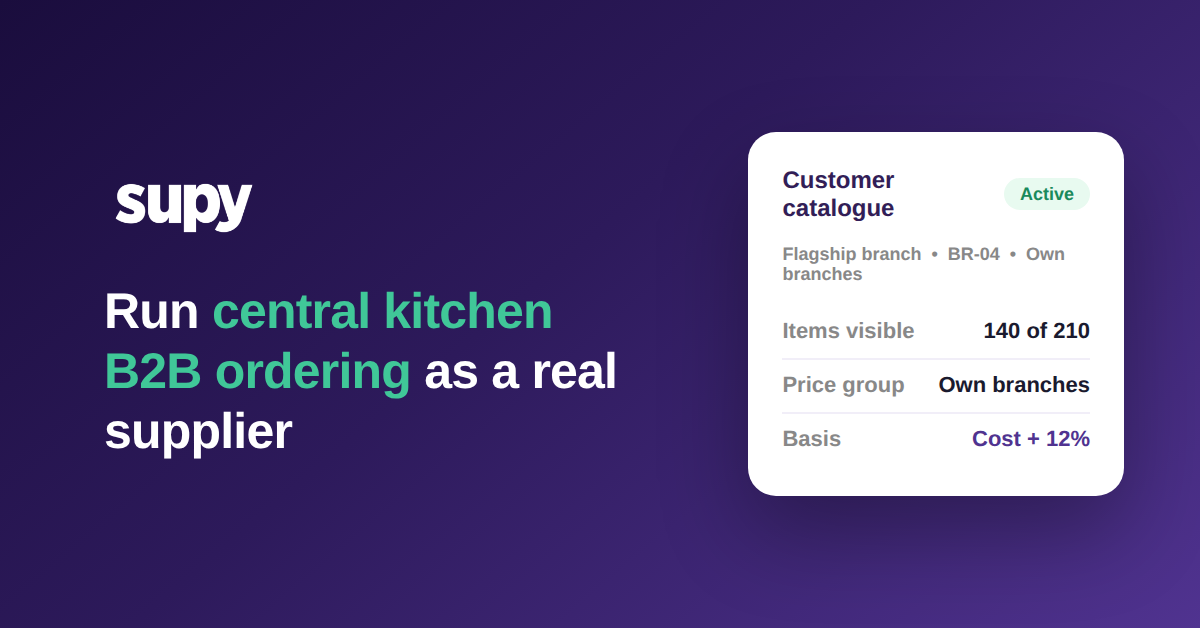
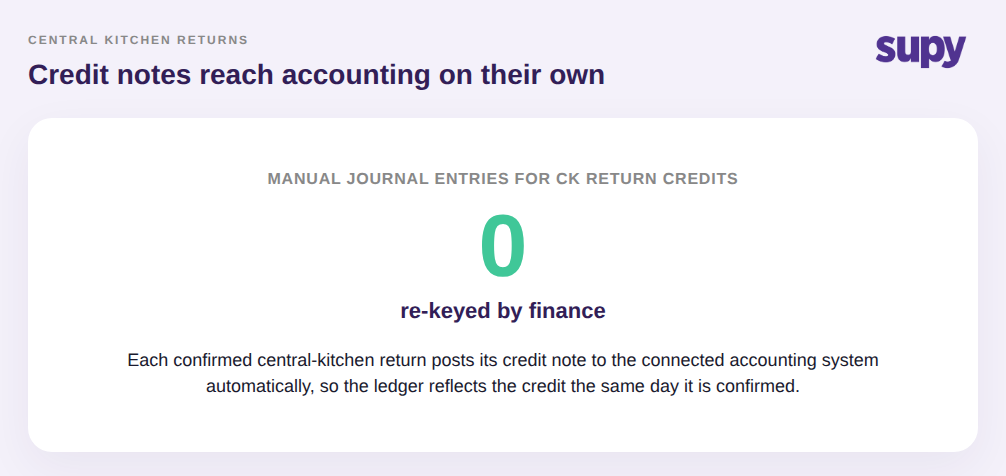
بالنسبة للمجموعات التي تشغّل مطبخاً مركزياً يموّن فروعها، كانت المرتجعات تاريخياً نقطة تتسرب منها الأرقام إلى دفتر الأستاذ. يصف المشغّلون الفجوة ذاتها مراراً: مرتجعات المُوردين الصادرة من المطبخ المركزي لا تُرحَّل إلى المحاسبة، ولا يوجد تدفق سليم لإشعارات الائتمان للمرتجعات الواردة من الفروع التي تخدمها المطبخ. كل ائتمان يصبح قيداً محاسبياً يدوياً يُدخَل مجدداً في نظام المحاسبة، وهذا هو المكان الذي تتسلل منه أخطاء الإدخال المزدوج.
سد هذه الفجوة يعني أن إشعار الائتمان يُرحَّل تلقائياً. حين يُؤكَّد مرتجع المطبخ المركزي، يُرسَل إشعار ائتمانه تلقائياً إلى نظام المحاسبة المتصل، فتنخفض القيود المحاسبية اليدوية لهذه الائتمانات إلى 0. تتوقف الجهة المالية عن إعادة إدخال المرتجعات، يعكس دفتر الأستاذ الائتمان في اليوم ذاته الذي يُؤكَّد فيه، وتتوقف جهتا العمل عن التباعد بين دورات الإقفال.
حدّد المرتجعات التي تحتاج موافقة وتلك التي تُسوَّى مباشرة
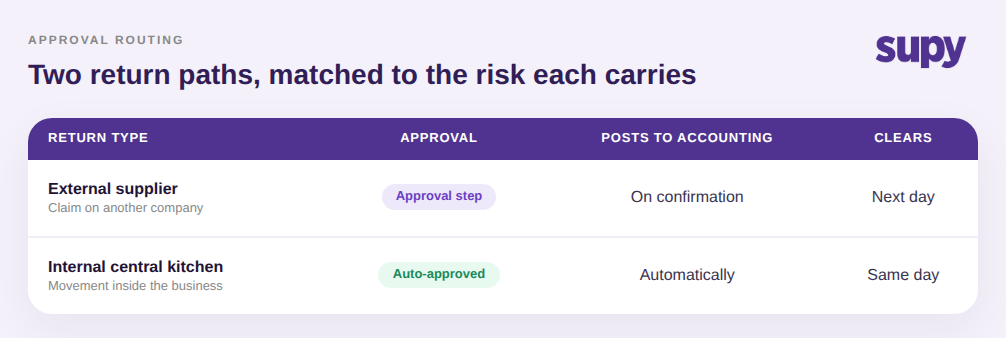
ليست كل مرتجع ينبغي أن يسير بالسرعة ذاتها، ومعاملتها بالتساوي يخلق احتكاكاً بحد ذاته. مرتجع لمورّد خارجي هو مطالبة بحساب الشركة الأخرى فيجب أن تمر بخطوة موافقة قبل تأكيدها: يتحقق أحدهم من أن البضاعة تعود فعلاً وأن الائتمان صحيح. أما المرتجع الداخلي من فرع إلى مطبخك المركزي فهو حركة داخل كيان واحد، وإلزام مدير بالموافقة عليه لا يُبطئ المطبخ فحسب دون أي فائدة رقابية.
القاعدة العملية: تمر مرتجعات المُوردين الخارجية بسير عمل الموافقات بينما تُوافَق مرتجعات المطبخ المركزي الداخلية وتُسوَّى تلقائياً. المطالبات الخارجية تنال التدقيق اللازم وتُرحَّل إلى المحاسبة عند التأكيد؛ المرتجعات الداخلية تُسوَّى في اليوم ذاته دون قائمة انتظار. ولأن المرتجعات يمكن إنشاؤها وتسجيلها من تطبيق الجوال، يستطيع الموظف الذي يستلم البضاعة فعلياً على رصيف الاستلام بدء المرتجع في المكان وسيسير تلقائياً في المسار المناسب لنوعه.
قبل أسبوع التسليم القادم، استخرج مرتجع موردين أدخله فريقك يدوياً الشهر الماضي وقارنه بـ GRN الخاص به: هل تتجاوز الكمية ما استُلم، ويتطابق الائتمان مع السعر الذي فُوتر لك؟ إن كان أي منهما غير مطابق، فهذا هو التسرب الذي يسدّه هذا الإجراء. ابدأ بإنشاء مرتجعك القادم مباشرةً من GRN ودع إشعار الائتمان يُتحقق منه بنفسه. لمعرفة كيف تندرج المرتجعات في سير عمل المشتريات الأشمل، استكشف منصة Supy.