.jpg)

Restaurant Marketing in 2026: The Playbook for Growing Demand (Without Discounting Your Brand)
.png)
Let’s be honest: restaurant marketing used to be simpler. Post a few nice plates, run a seasonal offer, keep Google updated, and hope word-of-mouth does the rest.
In 2026, the restaurant business is more competitive than ever, and the brands that are winning aren't just serving better food - they're building better stories, smarter systems, and deeper connections with their guests.
Guests discover restaurants through short-form video, creator recs, review platforms, and “near me” searches that happen at speed. Then they expect instant answers, accurate menus, and a brand that feels real, not overly polished. Social isn’t just “awareness” anymore. It’s often the first touchpoint in the buying journey, and it’s where trust gets built or lost.
Read our guide about the restaurant marketing strategies that actually move the needle in 2026, combining the latest digital trends with hard-won wisdom from operators who have scaled brands at a real pace, with practical steps you can run across one location or twenty.
The Big Shift: Marketing Is Now An Independent Operating System.
The strongest restaurant brands don’t “campaign” all the time. They run a system:
- Social content creates demand
- Reviews and Google convert intent
- Email and loyalty retain customers
- Influencers accelerate trust
- AI helps teams execute consistently and spot what’s working faster
In other words, your restaurant marketing plan needs to be connected, not scattered.
A few years ago, restaurant marketing meant a good Instagram account, a Google Maps listing, and maybe some delivery app promotions. That's still part of the toolkit - but it's a fraction of what's required now.
Today's guests discover restaurants through a TikTok video filmed by a stranger. They research you on Google before they even open your website. They expect personalized communication, a seamless online ordering experience, and a reason to feel loyal - not just satisfied. And they can tell instantly when a brand feels authentic versus when it's been assembled by a committee.
1. Build a Brand Identity That Actually Means Something
Before you spend a single dirham or dollar on advertising, get clear on what your restaurant actually stands for. Not a generic mission statement, but something your team can feel and your guests can recognise instantly.
Who are you for? Families looking for a relaxed evening out? Office workers grabbing a reliable weekday lunch? Date-night diners celebrating something special? That clarity should shape everything from your menu and pricing to your tone of voice and visual identity.
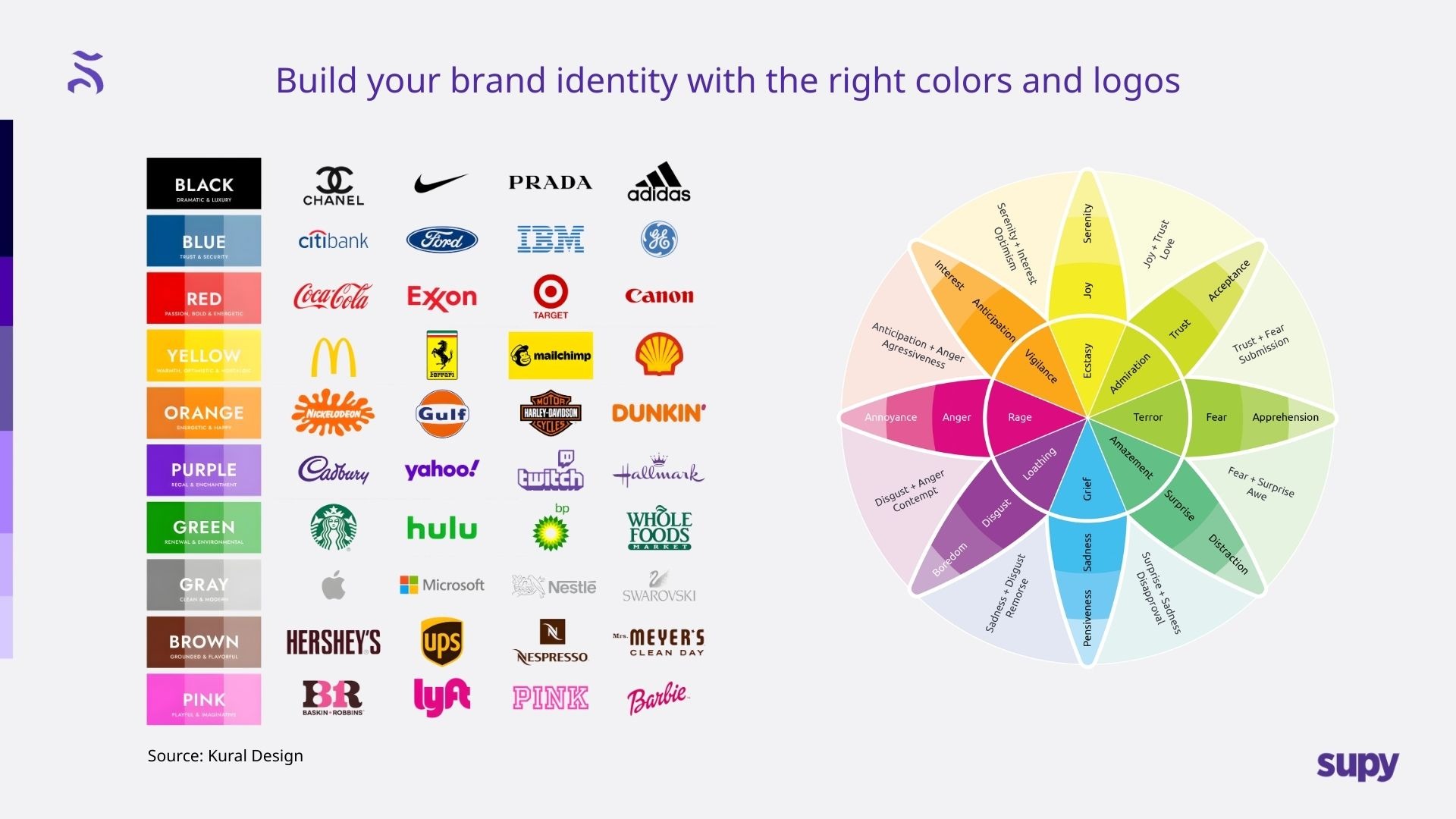
Your brand isn’t just your logo or colour palette, though those matter. Read more about how colours influence perception and behaviour, and consistency across your menu, interiors, social media, and ads builds familiarity. But the deeper layer is positioning. Are you the neighbourhood staple, the premium experience, or the everyday favourite?
In a recent podcast conversation, hospitality marketing leader Amy Glover spoke about the importance of focus. Brands that try to appeal to everyone often dilute what makes them memorable. The ones that grow are those that double down on what they do best and build everything around that core promise.
"We were guilty of trying to be all things to everyone. We decided to double down on what we knew we were great at - steak. Not just a steak dish. A steak experience."
In 2026, brand clarity matters more than ever. Social media has made authenticity visible. Guests notice inconsistencies quickly. Consistency builds trust, and trust drives repeat visits.
2. Build a Website That Works as Hard as Your Front-of-House Team
Your website is the first impression you make on a huge portion of your potential guests. Most people will check your website and your menu before they decide to visit or order. A slow, confusing, or visually outdated website doesn't just frustrate people. It loses them entirely.
In 2026, the bar is higher. Your website needs to be mobile-first (because most people are browsing on their phones), fast-loading, and visually representative of your brand. Tools like Webflow, Squarespace, and Wix have made it easier than ever to build something that looks great without a developer - but the principle remains: your website should feel like an extension of your restaurant, not an afterthought.
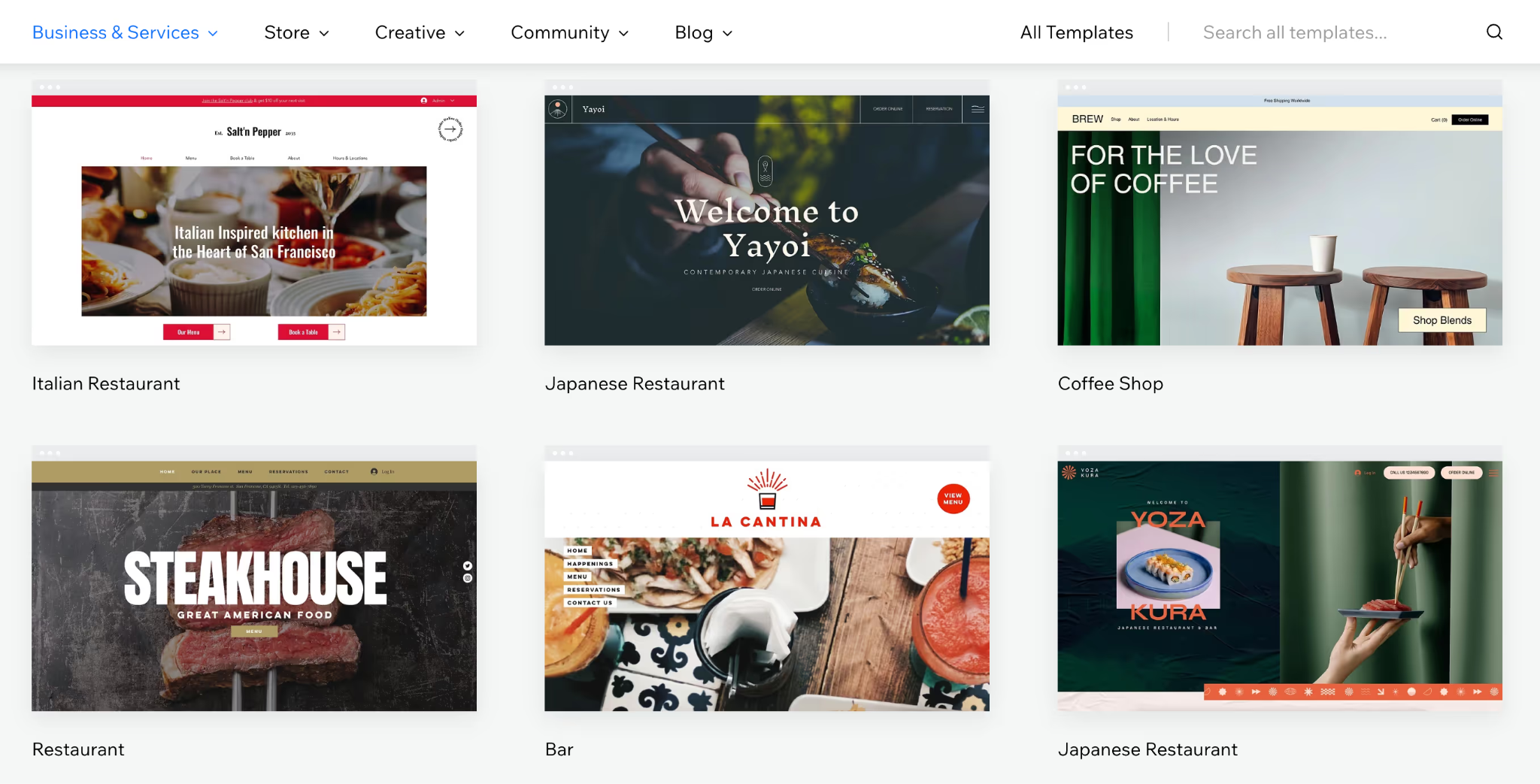
At a minimum, your website should include a clear online menu, a reservation or ordering integration, your opening hours updated for public holidays, high-quality photography, and an easy way for guests to contact you or find your location on a map.
The brands that get this right treat their digital presence with the same pride they take in their physical space. Because for many guests, the website is the restaurant - before they ever walk through the door.
3. Social Media Marketing: From Presence to Virality
Social media is no longer a nice-to-have. It is, for many restaurants in 2026, the single biggest driver of new guest discovery - and the most underutilized growth lever for brands that are still treating it as a bulletin board rather than a storytelling platform.
The shift that's happened in the last two years is profound. Short-form video - on TikTok, Instagram Reels, and YouTube Shorts - has changed how restaurants get discovered. A thirty-second video of a cheese pull, a theatrical dish presentation, or a behind-the-scenes kitchen moment can reach hundreds of thousands of people overnight. This isn't luck. Virality in 2026 is increasingly a strategy.
The brands winning on social media share a few things in common. They post consistently - not necessarily every day, but on a reliable schedule that keeps them in their audience's feed. They prioritize video because every major algorithm in 2026 heavily favors short-form video content over static images. They use hooks in the first two seconds of every video, because attention is the scarcest resource on the internet. And they make content that's genuinely interesting to watch - not just promotional.
Think of what Burger28 did in the UAE - informative, high-energy, appetite-inducing videos that made people feel like they needed to visit before they even realized they were watching a restaurant's marketing content. That's the standard.
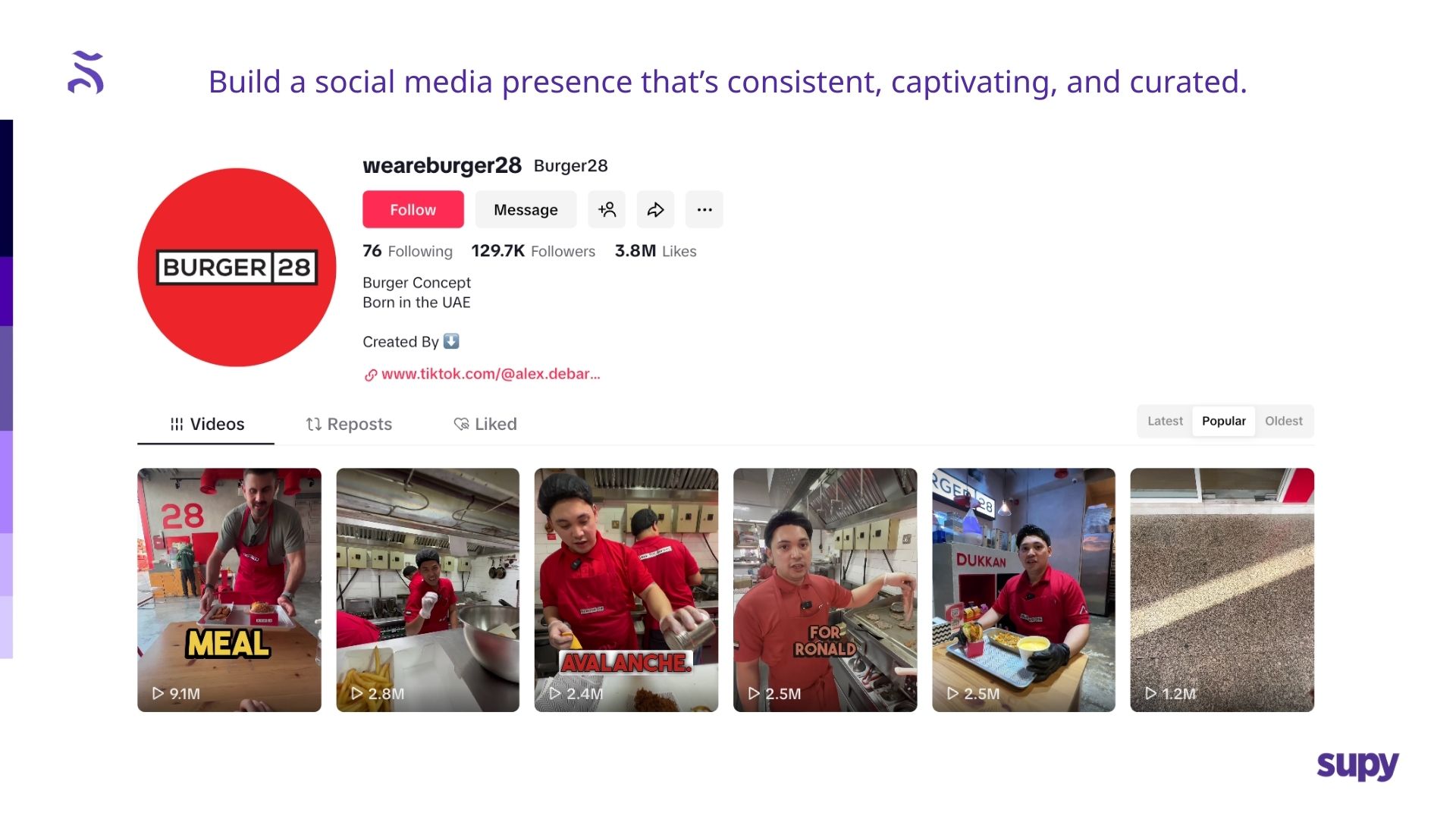
Here are the restaurant social media marketing principles that hold in 2026:
- Consistency over perfection. Post two to three times per week minimum. The algorithm rewards active accounts more than perfect ones.
- Video first. Reels and TikToks get more organic reach than photos. Invest in a simple filming setup - a ring light and a phone tripod can take you a long way.
- Show the people, not just the plates. The most engaging restaurant content in 2026 features chefs, servers, and even regular guests. Humans connect with humans.
- Use hashtags strategically. Research the hashtags your target audience actually follows in your city or region. Niche, local hashtags often perform better than generic ones.
- Engage back. Reply to comments. Answer DMs. Ask questions in your captions. Social media is a conversation, not a broadcast.
Trends change weekly. What stays effective is consistency and format.
Instead of asking “What do we post today?”, build a repeatable content series. Series content is easier to produce, easier to delegate, and easier for customers to recognize.
Examples that work especially well for restaurants:
- “What we’re prepping today” (15–25 seconds, hands-only, real BOH energy)
- “Staff picks” (one dish, one sentence, one reason)
- “The dish behind the dish” (ingredient, supplier, or method spotlight)
- “This or that” menu debates (quick, fun, comment-friendly)
- “New specials drop” (same format every time)
A key 2026 reality: audiences don’t necessarily want more posts; they want better responsiveness and real engagement from brands.
4. Influencer Marketing: Beyond the Big Names
In 2026, effective influencer marketing for restaurants is no longer about paying mega-creators for one post and hoping for reach. The real impact comes from partnering with local micro-influencers (5,000–100,000 followers) who genuinely dine out in your area and have built trust with a highly engaged audience. Their recommendations drive action because they feel earned, not sponsored.
Action plan:
- Identify creators whose audience matches your ideal guest and whose brand aligns with yours.
- Prioritize those who consistently post local food content and generate real engagement.
- Run a simple collaboration structure: invite them in, give a light brand brief, define a filming window, and set clear posting expectations.
- Request deliverables that drive footfall, such as one short-form video (Reel/TikTok), one story with a location tag and one clear “must-order” recommendation.
- Host occasional curated tasting events to generate simultaneous multi-creator buzz.
- Build a reusable creator roster and collaborate quarterly instead of one-off campaigns.
When done well, micro-influencers become a powerful social proof engine. They create third-party credibility faster than paid ads, and that trust converts directly into bookings and visits.
5. AI Is Now Part of Every Smart Restaurant's Marketing Stack
Artificial intelligence has moved from buzzword to practical tool in restaurant marketing - and in 2026, the brands ignoring it are increasingly leaving money on the table.
Here's where AI is making a genuine difference in restaurant marketing right now:
Personalized email and SMS campaigns. AI tools can analyze guest order history and behavior to send targeted offers - not generic newsletters, but messages that feel like they were written specifically for that person. A guest who orders pad thai every Friday gets a Friday evening offer on their favorite dish. That level of personalization was only possible for enterprise brands a few years ago. Today it's accessible to independent operators.
.jpg)
AI-powered chatbots. A chatbot on your website or social media profiles can handle reservations, answer menu questions, and promote offers - 24 hours a day, without any staff overhead. For a guest browsing your website at 11pm deciding where to book for the weekend, a chatbot that immediately answers their question is the difference between a booking and a bounce.
Content creation assistance. AI tools are helping restaurant marketers generate caption ideas, email subject lines, and campaign concepts faster than ever. This doesn't replace creativity - it accelerates it. A small marketing team can now produce the output of a much larger one.
Sentiment analysis and review monitoring. AI tools can scan your Google reviews, TripAdvisor feedback, and social media mentions in real time, flagging negative sentiment before it compounds. This feeds directly into the guest experience feedback loop that Amy Glover describes as central to any serious marketing strategy.
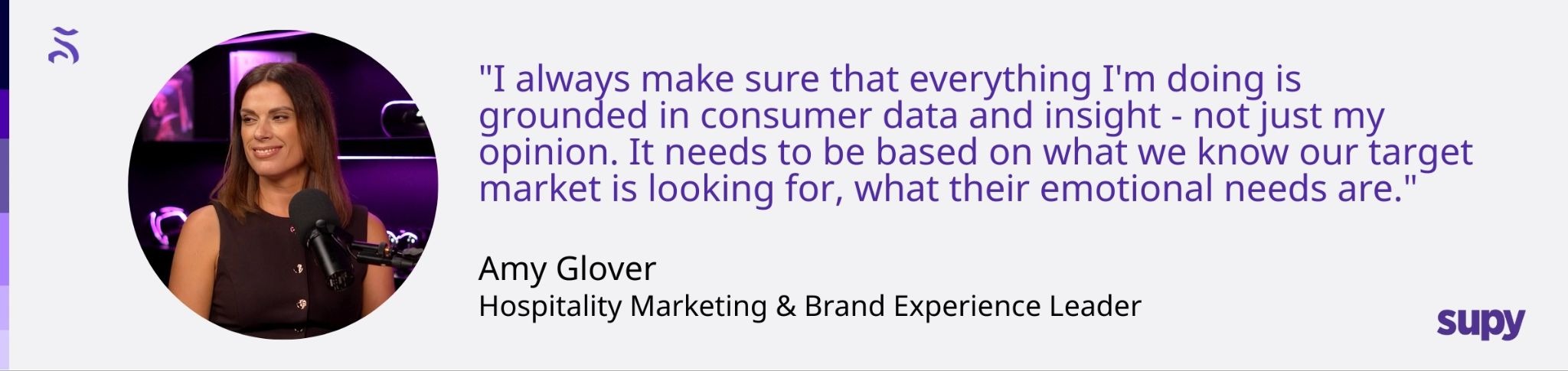
AI doesn't replace the human judgment, creativity, and operational instinct that great hospitality marketing requires. But it amplifies them - and in a competitive market, that amplification matters.
7. Loyalty Programs That Build Real Relationships
A loyalty program is not a discount scheme. Done right, it's a relationship architecture - a system that makes your best guests feel genuinely valued and gives them a reason to choose you, again and again, even when a competitor is offering something shiny and new.
The economics of loyalty are straightforward: acquiring a new guest costs significantly more than retaining an existing one. Your regular guests are disproportionately valuable to your bottom line. Losing them to a competitor is one of the most expensive things that can happen to your business - and it often happens not because of price, but because of indifference.
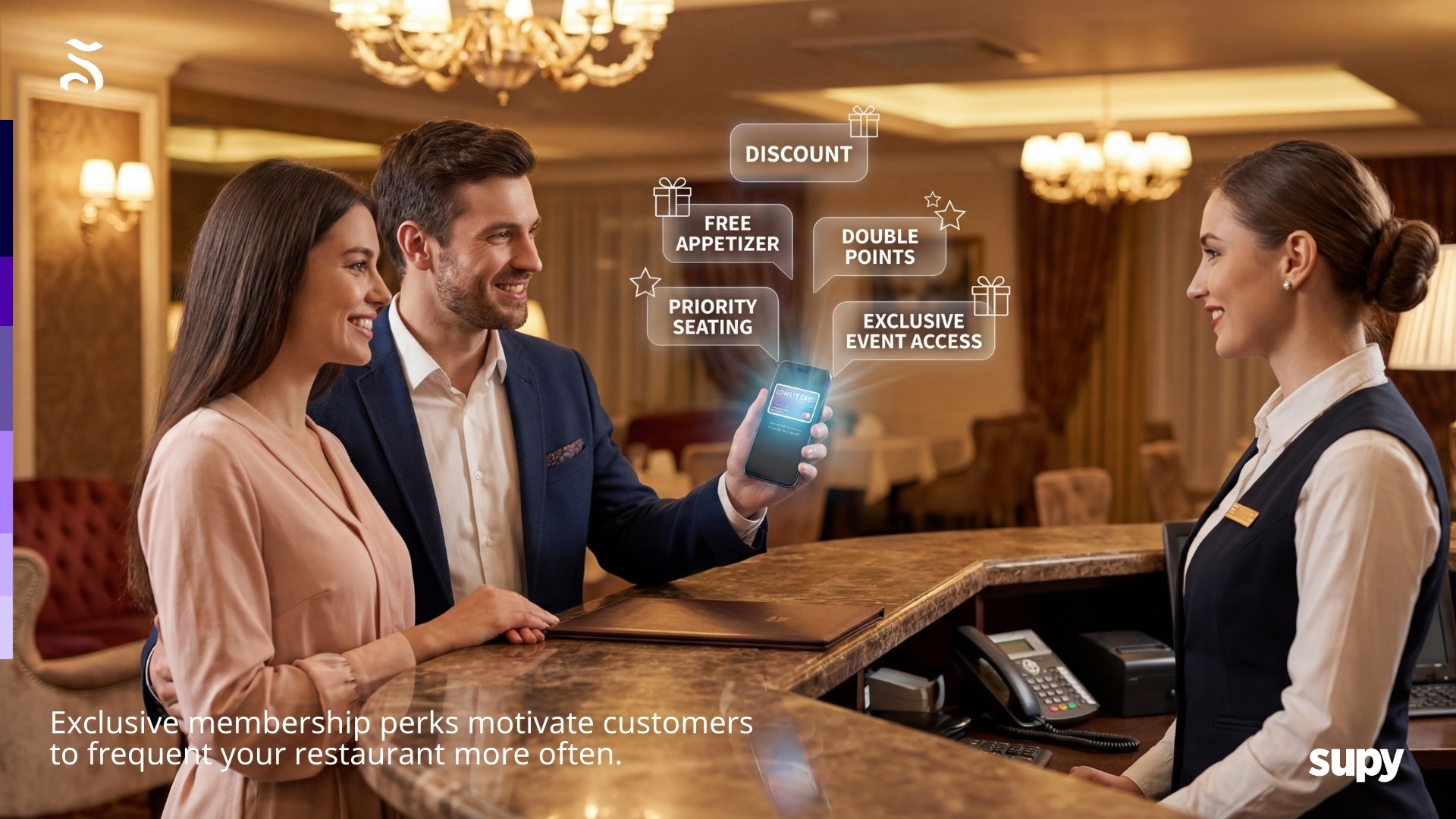
A well-designed loyalty program can increase sales by 30% or more. But the design matters. The best restaurant loyalty programs in 2026 offer genuine value - not just points that feel abstract and take forever to accumulate - and are frictionless to use. An app-based loyalty program that requires five steps to redeem a reward will be abandoned. A stamp card that gives guests a free coffee after five visits will be used.
8. Google Maps, Reviews, and Local Search: The Foundation You Can't Ignore
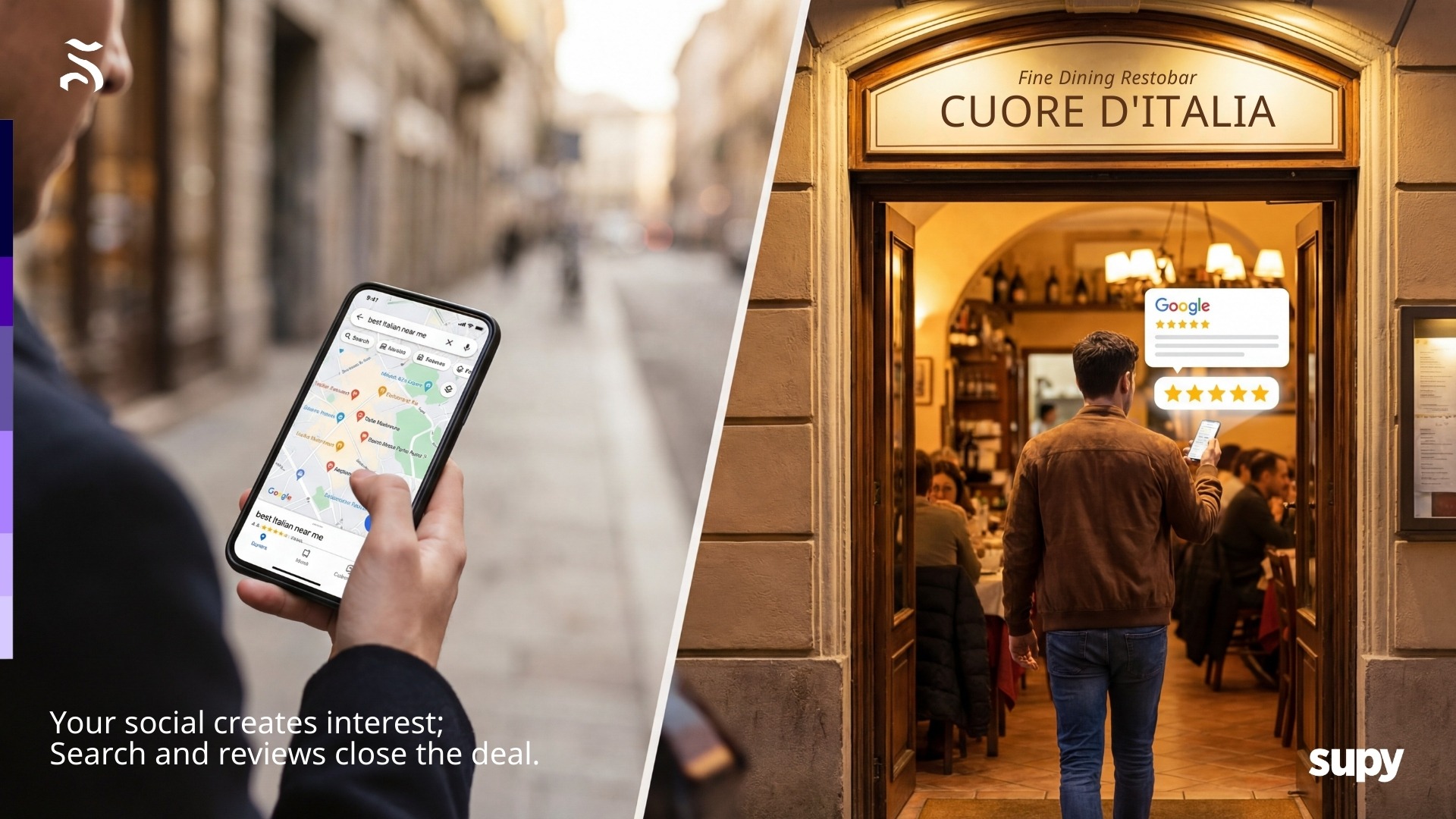
For a significant portion of your potential guests, the customer journey begins with a Google search. "Best brunch near me." "Italian restaurants in [your area]." "Where to go for a special occasion in [your city]." Your visibility - and your reputation - in local search results can make or break your ability to capture this traffic.
Optimizing your Google Business Profile is one of the highest-ROI activities available to any restaurant. Make sure your listing includes accurate hours (updated for holidays), high-quality photos, a compelling description, and - critically - responses to every review, positive or negative.
Negative reviews, handled well, can actually strengthen guest trust. A thoughtful, empathetic response to a complaint signals that you take service seriously and care about making things right. Ignoring negative reviews, or responding defensively, signals the opposite.
Your non-negotiables:
- Google Business Profile always up to date (hours, menu, booking links, photos)
- A steady stream of fresh reviews (not bursts)
- Consistent replies to reviews (especially negative ones)
- Accurate menu listings across major platforms
Quick operational rule: if your menu, hours, or booking link is wrong in one place, assume it’s wrong in five.
9. Delivery Platforms, Your Own App, and the Digital Ordering Ecosystem
The food delivery market continues to grow, and in 2026, being present on the major platforms in your market - whether that's Deliveroo, Talabat, Uber Eats, or others - remains essential for reaching the portion of your customer base that simply won't visit in person.
Within these platforms, you have tools to run promotions, boost your visibility, and capture guests who are discovering your brand for the first time. Think of delivery platforms as the top of your funnel - a guest who orders from you three times on Deliveroo is being primed to eventually visit your physical location, if you give them a reason to.
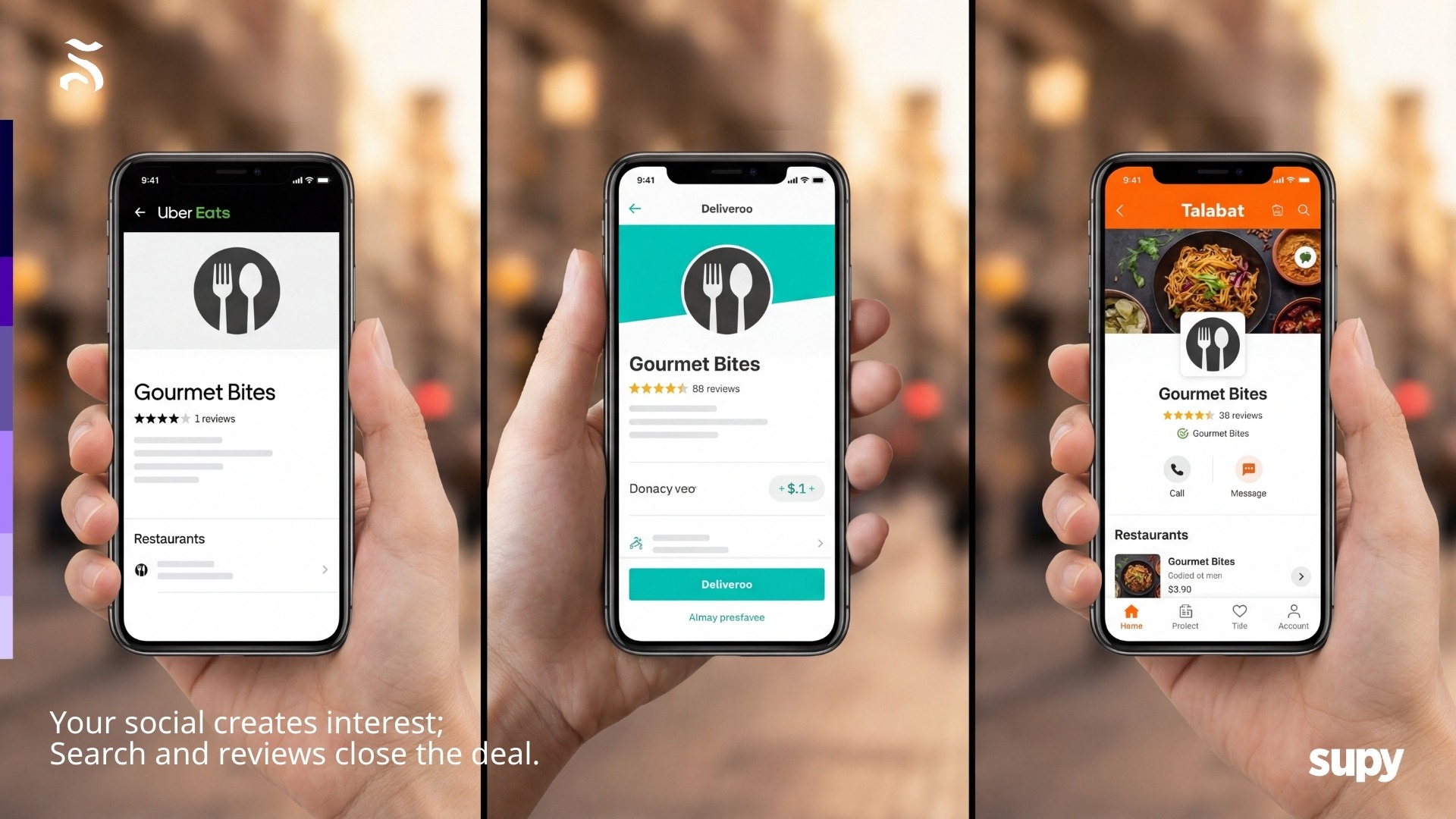
For brands with the resources to invest, a proprietary app offers something delivery platforms cannot: direct access to your guests, free from platform commission, and the ability to build a richer, more personalized relationship. Your own app enables push notifications, loyalty program integration, order history personalization, and data ownership that third-party platforms will never give you.
The key is not to view your own digital channels and third-party platforms as competitors, but as complementary parts of your overall marketing ecosystem - each serving a different stage of the guest relationship.
12. User-Generated Content: Your Guests Are Your Best Marketers
One of the most powerful and underutilized assets in restaurant marketing is the content your guests are already creating. In 2026, people photograph their food almost reflexively - and if your dishes, your environment, and your presentation are worthy of sharing, they will be shared. Millions of times, across thousands of accounts, to audiences you could never reach with even the most generous advertising budget.
The first step is designing for shareability. This doesn't mean gimmicks - it means taking pride in presentation, creating dishes and environments that are genuinely visually compelling, and making it easy for guests to tag you. A simple card on the table with your Instagram handle. A photo-worthy moment built into the dining experience. A staff culture that notices when a guest is photographing and offers to help them get a better shot.
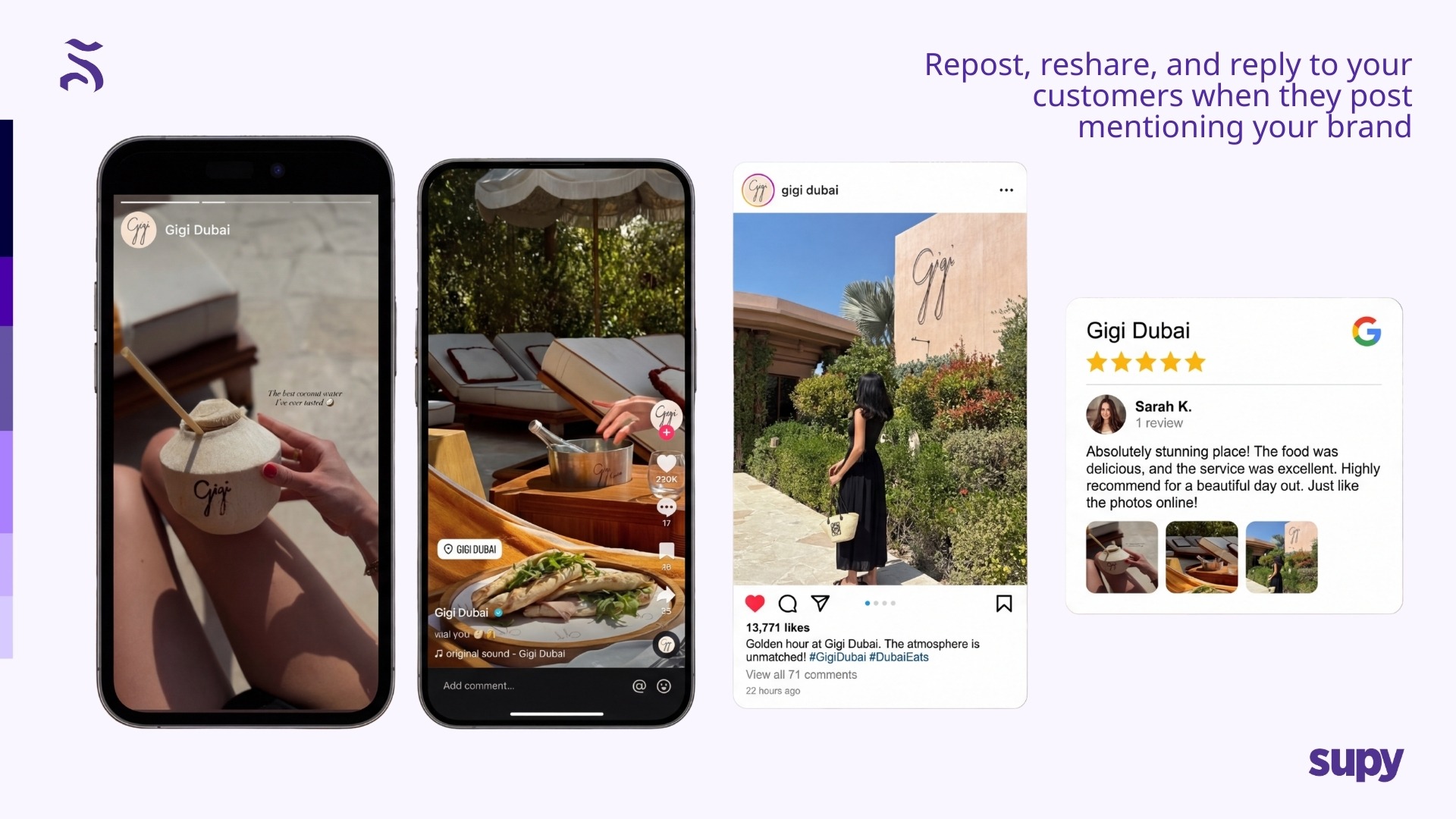
When guests tag you, engage with them. Reshare their content to your story. Comment on their posts. This signals to other potential guests that real people are having a great time at your restaurant - and according to research, user-generated content influences the purchasing decisions of the vast majority of consumers who see it.
The data your guest-generated content provides is also invaluable insight. Which dishes are being photographed most? Which corner of your restaurant keeps appearing in images? These are signals about what your guests genuinely love - and they should inform your menu development, your interior design decisions, and your own content strategy.
13. Sustainability and Community: Marketing Through Values
In 2026, a growing segment of diners - particularly younger guests - factor a restaurant's values into their choice of where to eat. Environmental responsibility, local sourcing, community engagement, and social impact are no longer niche concerns. They are increasingly mainstream expectations.
This doesn't mean you need to overhaul your entire operation overnight. But it does mean that if you're already doing things right - reducing food waste, sourcing from local producers, using sustainable packaging, supporting community causes - you should be telling that story. Authentically, specifically, and without greenwashing.
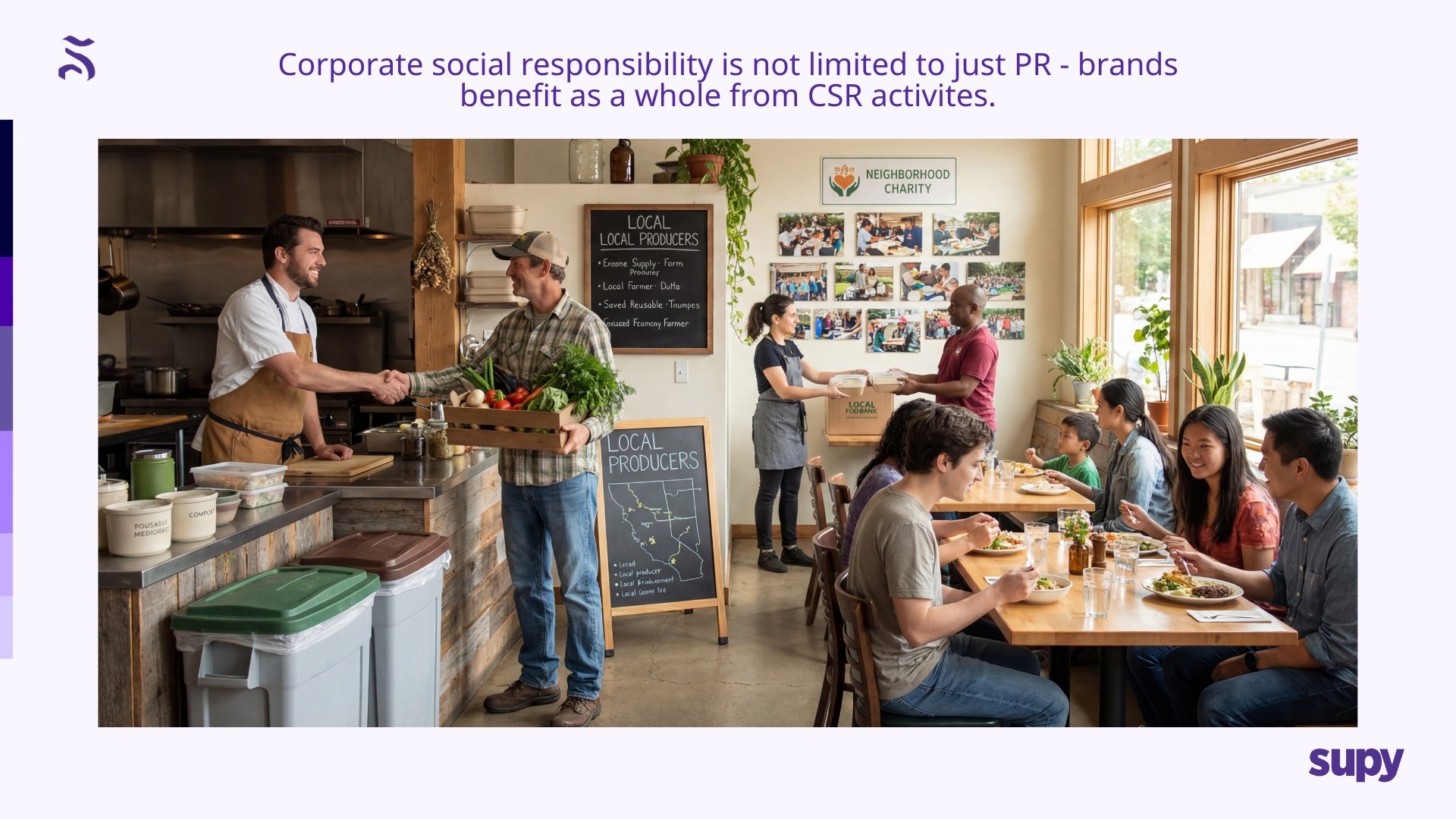
Behind-the-scenes content showing your relationships with local farmers. A social post about your end-of-day food donation partnership with a local shelter. A note on your menu about where your meat comes from. These are small touches that add up to a brand that feels like it stands for something - and guests who share those values will become some of your most loyal advocates.
Giving back to the community more broadly - supporting local charities, showing up during difficult times, being a genuine neighbor rather than just a business - builds a kind of trust that no amount of advertising budget can manufacture.
14. What Separates Brands That Scale From Brands That Drift
Amy Glover has worked on brands that grew from twenty restaurants to a hundred, and she's seen brands that had everything - a great product, a loyal following, a strong founding team - slowly lose their way. She identifies four reasons brands drift over time.
The first is lack of brand clarity: people within the business don't truly understand what the brand stands for, so it gets interpreted differently at different venues and by different teams. The second is commercial pressure leading to short-term tactical decisions - knee-jerk discounting, random promotions, menu changes that aren't anchored to any brand logic - that widen the gap between brand intent and brand reality. The third is disengaged operators: frontline teams who feel like marketing is something that happens to them rather than with them. And the fourth is failure to evolve: not staying current with macro consumer trends and the changing expectations of your target market.
The solution to all four is the same thing: investment in people, culture, and communication. Codify what the brand stands for, in terms clear enough that any team member in any venue can understand and act on them. Build genuine two-way communication between your marketing function and your operational leaders. Protect the things that make your brand special, even when - especially when - commercial pressure is pushing you to compromise them. And stay close to your guests, continuously, because their needs and expectations will keep changing.
.jpg)
Final Thought: Marketing Is Not Just Getting People Through the Door
In 2026, restaurant marketing is no longer just about flashy promotions or filling seats; it’s about creating a seamless experience across all touchpoints - from the first time a guest sees your brand to when they return, time and again, to experience the same quality and service. The key to sustainable growth lies in efficiency - and operational efficiency starts with the right tools.
Amy sums it up perfectly: the most successful marketers in hospitality don’t just focus on bringing in new guests. They work from the inside out, connecting creative vision to operational excellence. It’s about building a brand that’s not just discovered, but trusted. That trust is built on consistency, and that’s where technology like Supy comes in.
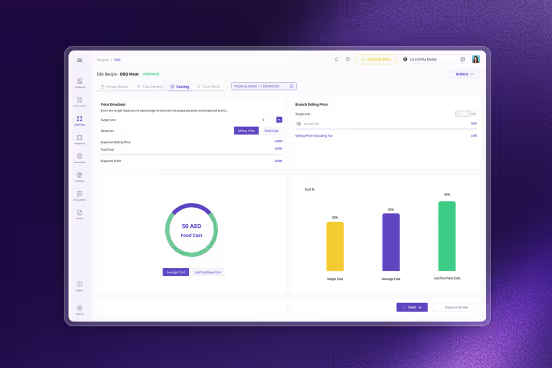
By automating the heavy lifting behind inventory management, recipe costing, and supplier relationships, Supy empowers restaurant groups to scale without sacrificing control. It ensures that your operations run smoothly so your team can focus on delivering memorable guest experiences.
Ready to see how automation can take your restaurant operations to the next level? Book a demo with Supy today and discover how we can help you streamline, scale, and grow with confidence: https://supy.io/book-a-demo