





How to Get Food Safety Labeling and Dating Right Across Every Site

What Food Safety Labeling and Dating Looks Like Across Every Site
Food labeling and dating work across every site when one routine, not each kitchen's habit, decides what the label shows and the date to use. Get it wrong and a guest eats food past its safety date, or an unlabelled allergen reaches the plate. This article shows what a compliant label carries, how use-by and best-before differ, and how to run one routine at every branch.
A good label proves three things to anyone who picks up the container:
- What the food is. The name on the pack, so any kitchen knows it on sight.
- What is in it. The allergens a guest might react to.
- When to use it. The date the kitchen must use it by or throw it away.
When every site writes those three the same way, a new starter can read a label in another kitchen. A manager can audit any fridge in a minute. Stock gets used in the right order, not left until someone notices it has turned.
Labels stop matching when each kitchen uses its own method. One site writes the prep date, another the use-by date, and a third writes nothing at all. Operators running central kitchens for several branches tell us the label is the only thing that travels with the stock, so one standard format beats any memo.

Use-By, Best-Before and the Date Your Team Acts On
A use-by date is about safety. A best-before date is about quality. The UK Food Standards Agency says use-by dates relate to the safety of food, whereas best before dates relate to quality.
It warns that eating food past its use-by date can make you ill. Best-before matters for dry and store-cupboard stock, not the fresh food a kitchen preps and holds.
| Date on the label | What it tells the team | When to act on it |
|---|---|---|
| Use-by | The food is unsafe to eat after this day | Use or discard by this date, no exceptions |
| Best-before | Quality drops after this day, safety usually holds | Judge dry and ambient stock on condition |
| Prep or open date | The day a kitchen made or opened the item | Set the use-by from it and rotate first-in-first-out |
The date your team acts on most is the one the kitchen sets itself. When you prep a ready-to-eat dish, or open a pack and hold it chilled, you mark the day it must be used by and rotate first-in-first-out against it.
- Date marking. The FDA Food Code is specific. Ready-to-eat food that needs temperature control, held chilled for more than 24 hours, must be marked with a date and used within 7 days.
- Varies by country. Date rules vary by country, so confirm your limit with your own food authority. Keep a food shelf life chart on the wall so every kitchen sets the same window.
Allergen Labels on Food You Pack to Sell on Site
Food you pack before a customer orders it carries the strictest rule. Think of the sandwiches, salads and cakes a site makes and wraps for its own counter, which count as prepacked for direct sale.
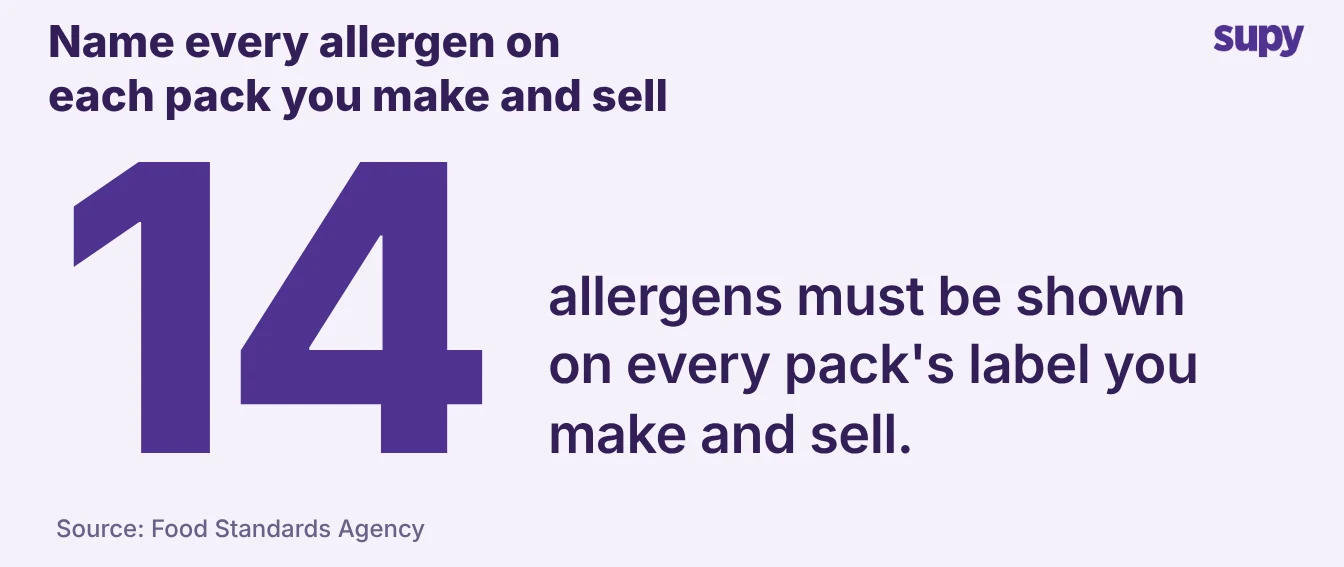
Since October 2021 that label has had to show the food name and a full ingredients list, with the 14 regulated allergens emphasised. The rule is Natasha's Law, and it treats a mis-labelled sandwich as a safety failure, not a paperwork slip.
Food made to order and handed straight to the guest is not prepacked for direct sale, but the allergen information still has to be available and accurate. A group in more than one country writes its label to the strictest standard it is held to, and confirms the detail with each market's food authority.
The practical move is the same everywhere. Name the allergens on the label, keep the ingredient breakdown behind the counter current, and update both the moment a recipe changes. Our guide to restaurant allergens covers how to keep that right as menus change.
How to Run the Same Labeling Routine at Every Branch
The rule is the easy part. Running it the same way in eight kitchens on a busy Friday is the hard part, and it comes down to four moves:
- Print one label format. Every site prints it, instead of writing dates by hand.
- Set one use-by window per item. The same dish gets the same date everywhere.
- Rotate first-in-first-out. Work against that date at every count and delivery.
- Check each shift. Record that it happened, because a rule nobody records is one nobody can prove.
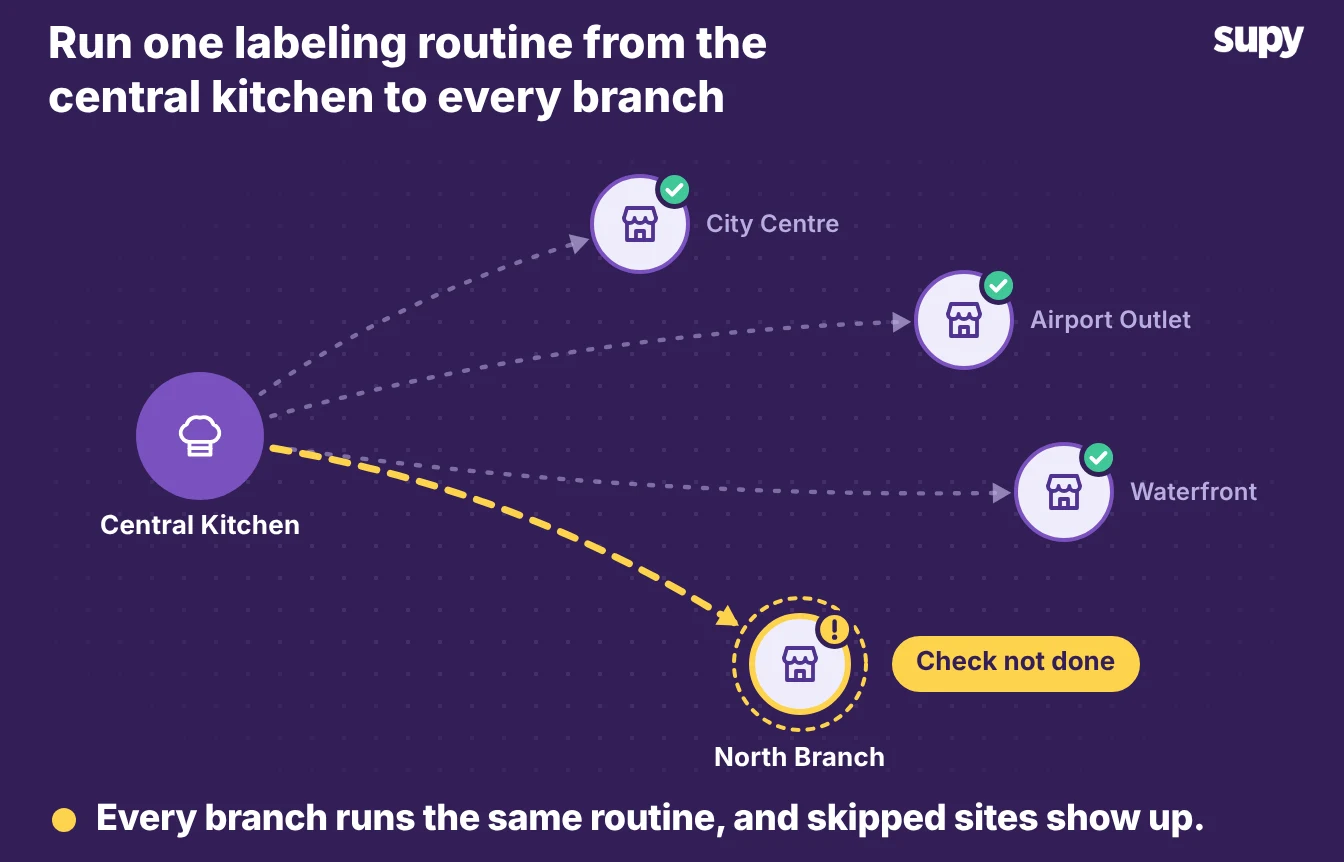
A checklist carries those four moves from head office to the floor. Supy Ops, Supy's checklist software, lets you build a labeling and date-check routine once and run it on schedule at every branch.
- Staff on phones. Staff work through it on their phones, and a failed step tells them what to do and raises a fix for a manager to sign off.
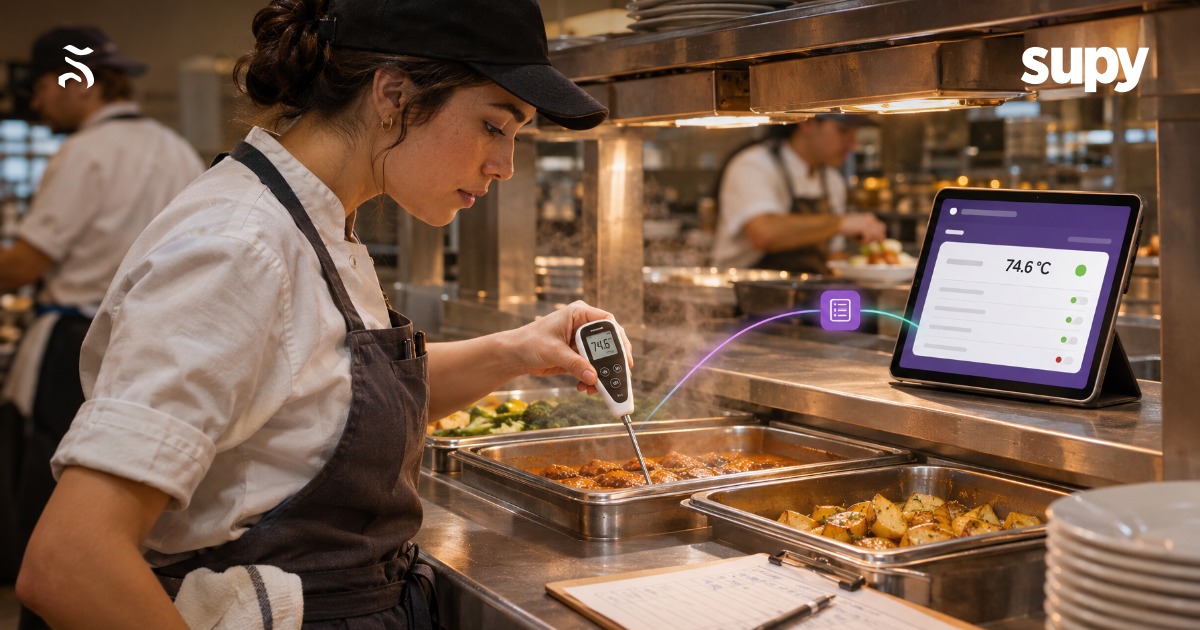
- Prints food labels. It prints food and prep labels with the product name, the date and the allergens, so no site writes dates on tape.
- Reports completion. It also reports completion across every site, so you see which kitchens ran the check and which skipped it.
Start with a quick self-audit at one site this week:
- Pick up five chilled containers. Count how many carry a clear, readable use-by date. Fewer than five is your first problem.
- Read a prep label from two kitchens. If they list the item or the date differently, you have no standard yet.
- Check one prepacked item against the rule. Confirm the food name and the ingredients list are on it, with the allergens emphasised.
- Ask who proves the check happened. If the answer is that the team knows to do it, there is no record an inspector can see.
Fix the standard first. Then roll the same label format and date-check routine out to every site, and only then deal with the kitchens that resist it. Confirm every date limit and allergen rule with your own food authority before you publish a house standard, because the regulator sets the floor, not the memo.