.jpeg)


Restaurant Lieferanten-Preisbenchmarking: Wie Multi-Standort-Gruppen Überzahlungen erkennen, bevor sie sich häufen
Was Lieferanten-Preisbenchmarking bedeutet, wenn jeder Preis ein bewegliches Ziel ist
Restaurant-Lieferanten-Preisbenchmarking ist die Praxis, jeden bezahlten Preis mit einem Referenzpunkt zu vergleichen, sodass Sie erkennen können, ob er hoch, niedrig oder im Drift ist – anstatt ihn isoliert zu akzeptieren. Die Referenz kann die eigene Kaufhistorie für diese Zutat sein, der Preis, den eine Schwesterfiliale oder ein alternativer Lieferant zahlt, oder der Preis, der tatsächlich in der Bestellung vereinbart wurde. Ohne Referenz ist ein Preis nur eine Zahl auf einer Rechnung, und eine Zahl ohne Vergleich wirkt immer akzeptabel.
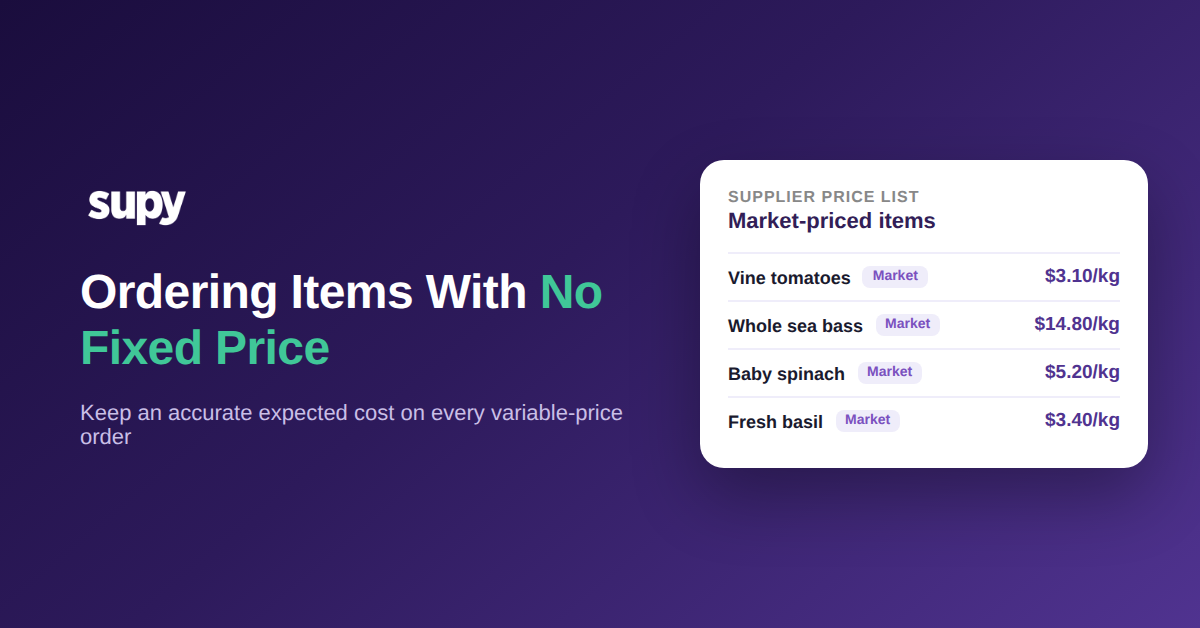
Der Grund, warum dies wichtiger ist als früher, ist, dass Preise sich nicht stabilisieren. Ein Lieferantenkatalogpreis ist eine Momentaufnahme, kein Vertrag. Volatile Frischwaren können sich alle ein bis zwei Wochen ändern, und bis ein Bestand oder ein Budget auf Basis des Vormonatssatzes festgelegt wird, hat sich bereits ein erheblicher Anteil der Artikel neu bepreist – ohne dass es jemand markiert hat. Benchmarking ist kein einmaliges Jahresverhandlungsexercise; es ist ein kontinuierlicher Vergleich, weil sich der Bezugspunkt ständig verändert.
Warum das stichprobenartige Prüfen einiger Rechnungen systematische Überzahlungen verpasst
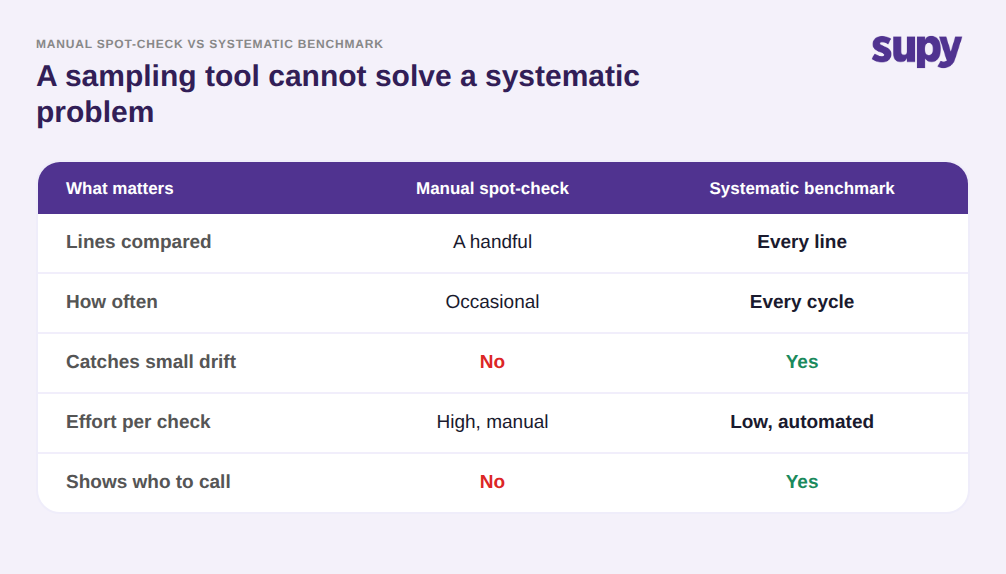
Der Instinkt bei sinkenden Margen ist, jemanden ein paar Rechnungen prüfen zu lassen. Das fühlt sich nach Sorgfalt an, ist aber das falsche Werkzeug für ein systematisches Problem – und es lohnt sich, ehrlich darüber zu sein, warum. Stichprobenkontrollen entnehmen einige wenige Positionen aus Tausenden, erfassen nur Fehler, die groß genug sind, um mit dem Auge aufzufallen, und werden zu selten durchgeführt, um Preise zu erkennen, die sich Cent für Cent verschieben. Die Überzahlung, die tatsächlich kumuliert, ist klein, über viele Positionen verteilt und konstant – genau das, was eine manuelle Prüfung zu verpassen eingerichtet ist.
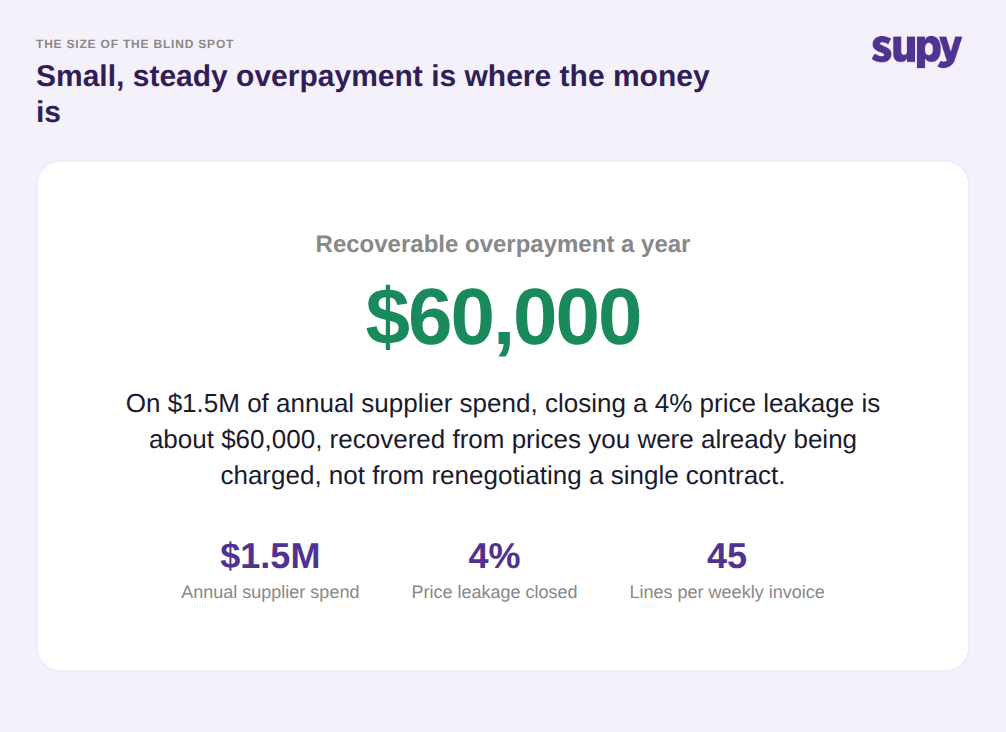
Ein systematisches Benchmarking kehrt jede dieser Schwächen um: Es vergleicht jede Position, jeden Zyklus, mit einer definierten Referenz und liefert die Ausnahmen an eine Person, anstatt eine Person zu bitten, sie zu finden. Bei $1.5 million jährlichem Lieferantenvolumen bedeutet das Schließen selbst einer 4% Leckage rund $60,000 pro Jahr – und das ist Geld, das aus Preisen zurückgewonnen wird, die Ihnen bereits berechnet wurden, nicht aus der Neuverhandlung eines einzelnen Vertrags. Die veröffentlichten Daten bestätigen das Muster: Suchergebnisse für diese Anfragen sind von generischen Ratschlägen zur Lieferantenverhandlung dominiert, nicht von einer Methode zum Erfassen von Überzahlungen, die bereits in Ihren Rechnungen stecken – und dort liegt das rückgewinnbare Geld tatsächlich.
Denselben Artikel über Filialen und Lieferanten hinweg vergleichen
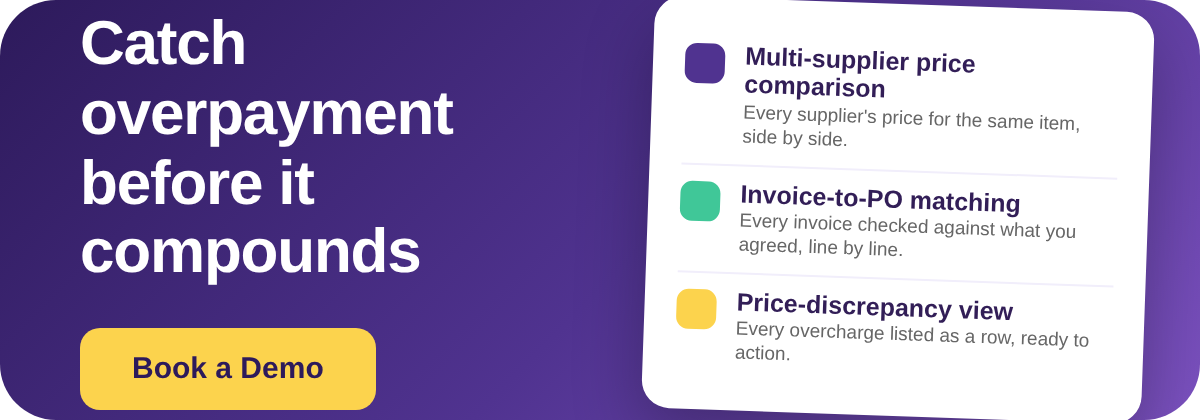
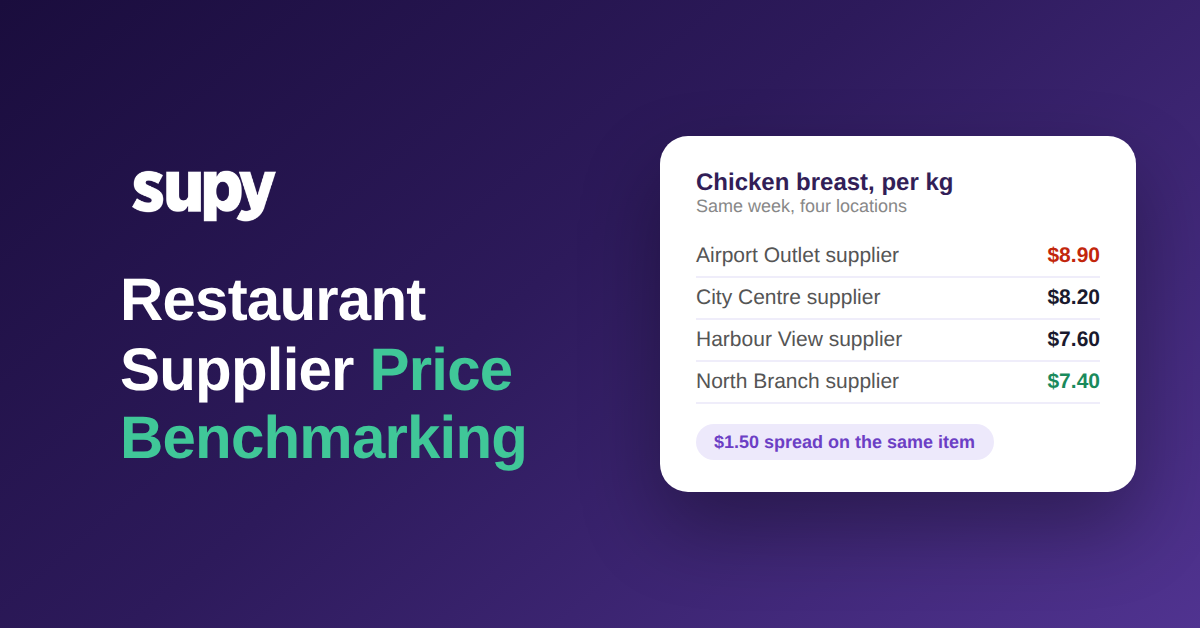
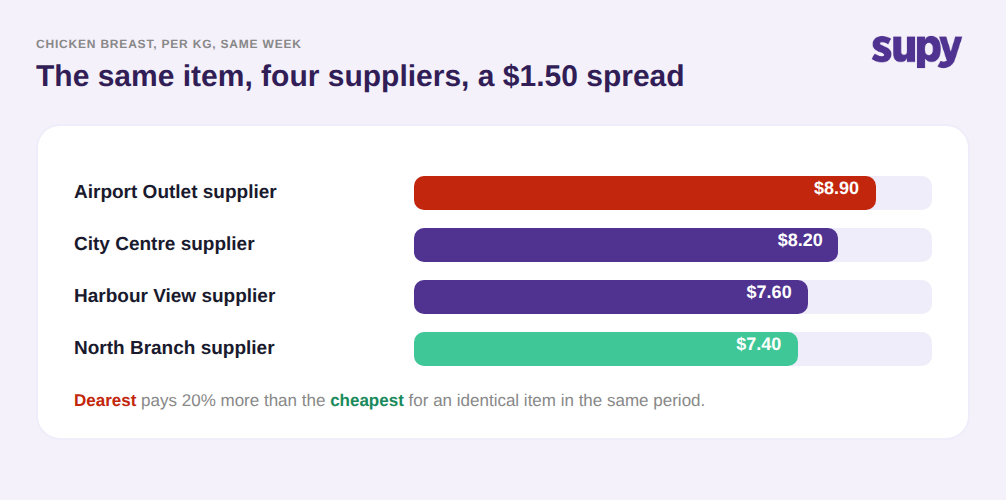
Der erste Referenzpunkt, den Sie vollständig kontrollieren, ist Ihre eigene Unternehmensgruppe. Wenn dieselbe Basiszutat von mehreren Filialen oder von mehr als einem Lieferanten gekauft wird, sollte der Preis vergleichbar sein – und wo er es nicht ist, haben Sie einen Hebel gefunden. Dieselbe Hühnerbrust, die von $7.40 bis $8.90 pro Kilogramm an vier Standorten variiert, ist kein Marktgeheimnis; es ist eine Einkaufsentscheidung, die auf Standardisierung wartet. Supys Multi-Lieferanten-Preisvergleich listet den Preis jedes Lieferanten für dieselbe Zutat auf, und da Einkaufspreise pro Artikel über die Zeit verfolgt werden, können Sie einen Preis auch mit seiner eigenen Geschichte vergleichen und den Drift erkennen, bevor er zur neuen Normalität wird.
Hier wird die Gruppenstruktur zum Vorteil statt zur Komplikation. Ein Einzelstandort-Betreiber hat nur seine eigene Geschichte zum Vergleich; eine Multi-Standort-Gruppe trägt ein lebendiges internes Benchmark in seinen eigenen Daten – eine Filiale gegen die andere, ein Lieferant gegen den nächsten. Diese Einkaufsübersicht zu konsolidieren ist auch der Zweck von Restaurant-Beschaffungssoftware, damit der Vergleich ein Bericht ist, den man liest, statt einer Tabelle, die man von Hand zusammenstellt.
Rechnung vs. Vereinbarung: Die Lücke zwischen dem verhandelten Preis und dem tatsächlich gezahlten Preis
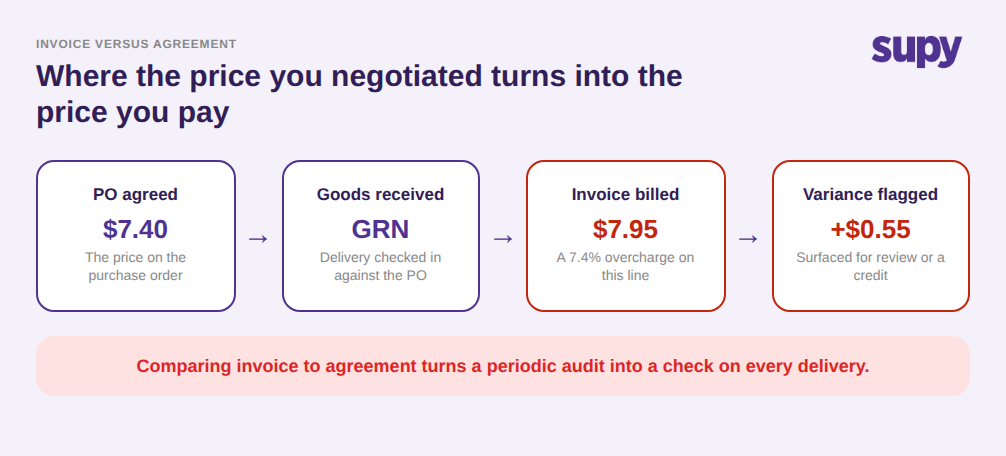
Das wertvollste Benchmarking ist oft das stillste: der vereinbarte Preis im Vergleich zum berechneten Preis. Ein erheblicher Anteil der Lieferantenrechnungen enthält mindestens eine Position, die zu einem anderen Preis abgerechnet wurde als dem in der Bestellung tatsächlich vereinbarten. Es ist selten Betrug; es sind Abweichungen, veraltete Preisdateien und menschliche Fehler – und das meiste bleibt uneingetrieben, weil niemand die Rechnung Zeile für Zeile mit der Vereinbarung vergleicht. Eine zu $7.40 pro Kilogramm vereinbarte Einheit, die mit $7.95 abgerechnet wird, ist eine 7.4% Überhöhung, die keine Stichprobenkontrolle auf einer 45-zeiligen Rechnung entdecken wird.
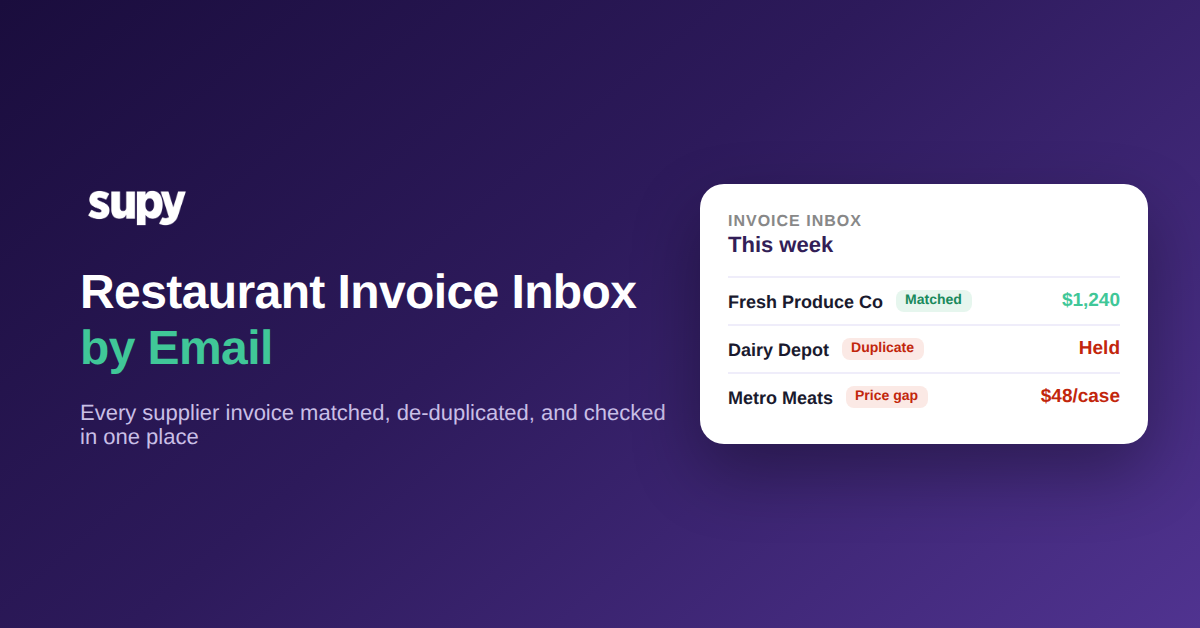
Das ist das Benchmarking, das Software am saubersten schließt, weil es ein reiner Datenabgleich ist. Supys Rechnungsannahme gleicht jede Lieferantenrechnung mit ihrer Bestellung ab, extrahiert die Positionen und Preise und markiert jeden Preis- oder Mengenkonflikt, bevor er Bestand und Konto aktualisiert. Eine Wareneingangsansicht listet dann jede Abweichung als Zeile auf – standardmäßig mit einem Preisabweichungsfilter – sodass ein Einkäufer den erwarteten Preis aktualisieren, eine Gutschrift ausstellen oder den Lieferanten über denselben Bildschirm kontaktieren kann. Der Vergleich von Gezahltem mit Vereinbartem hört auf, eine periodische Prüfung zu sein, und wird zu etwas, das bei jeder Lieferung passiert. Wenn Überzahlung das Symptom ist, dem Sie nachgehen, geht unser Leitfaden zur Lieferantenüberhöhung tiefer darauf ein, wo sie sich versteckt.
Sie brauchen nicht alle drei Benchmarkings gleichzeitig live, und die Reihenfolge ist wichtig. Beginnen Sie mit Rechnung vs. Vereinbarung, da dies Geld zurückgewinnt, das Sie bereits verhandelt haben, und keine neuen Daten über Ihre eigenen Bestellungen und Rechnungen hinaus benötigt. Fügen Sie als nächstes Ihr eigenes Preisverlaufs-Benchmarking hinzu, damit Abweichungen bei Ihren meistgekauften Artikeln von selbst auftauchen. Schichten Sie Filial- und Lieferantenvergleiche zuletzt darauf auf, sobald die ersten beiden laufen, um den Einkauf in der Gruppe zu standardisieren. Wählen Sie Ihre zehn umsatzstärksten Artikel aus, vergleichen Sie die in diesem Monat abgerechneten Preise mit dem Vereinbarten und untereinander – die ersten Überzahlungen werden sichtbar, bevor Sie die Liste beendet haben. Die Preise werden sich nie von selbst melden; ein Benchmarking ist einfach die Referenz, die sie sichtbar macht.