.jpeg)


Restaurant-POS-Stornierungen: Warum sie Ihren Schwund und Ihre Abweichung verzerren

Warum eine stornierte Transaktion als echter Schwund erscheint
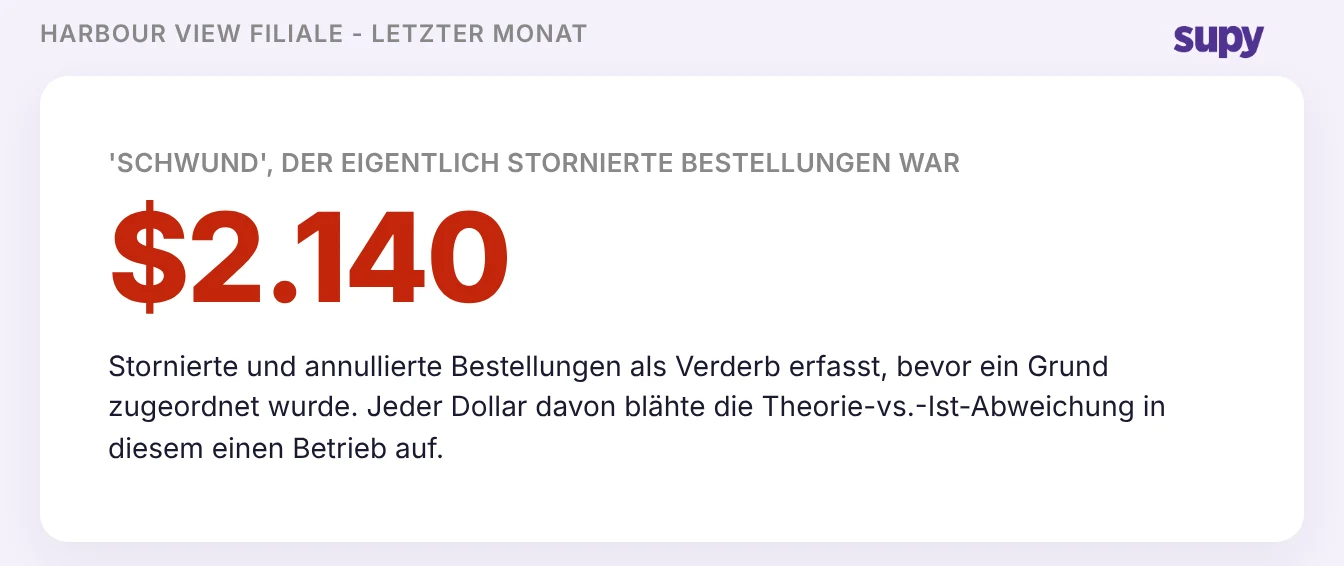
Wenn ein Kassierer eine POS-Transaktion storniert oder annulliert und der Grund nie das Inventar erreicht, tut das System das Einzige, was es kann: Es behandelt die gesamte Transaktion als Schwund und zieht die Zutaten vom Bestand ab. Ordnen Sie jede Stornierung zuerst ihrem tatsächlichen Grund zu, und stornierte Bestellungen werden zu genauen Schwunderfassungen statt zu Phantomverlusten, sodass Ihre Wareneinsatz-Abweichung endlich widerspiegelt, was tatsächlich passiert ist.
Eine Gruppe von Pubs und Bars mit mehreren Standorten stiess genau darauf. Stornierungsgründe aus ihrem POS-System wurden nie an das Inventar weitergeleitet, sodass jede Stornierung unabhängig vom tatsächlichen Grund als Schwund verbucht wurde - einschliesslich einer Bestellung, die geändert wurde, bevor die Küche überhaupt mit der Zubereitung begonnen hatte, was überhaupt kein Schwund ist. Derselbe Betreiber arbeitete später eine Lücke von AUD 28.000 zwischen theoretischen und tatsächlichen Kosten in einem Betrieb auf drei Ursachen herunter: SKU-Abweichungen, veraltete Rezepturen und eine Inventur, bei der eine 300-kg-Menge falsch eingegeben worden war. Stornierte Verkäufe, die die Schwundkennzahl still aufblähten, lagen direkt neben diesen Problemen und verzerrten die Zahl, bevor jemand ein einziges Regal gezählt hatte.
Wo Stornierungen die Theorie-vs.-Ist-Zahl aufbrechen
Die meisten Wareneinsatz-Ratschläge setzen voraus, dass die Abweichungskennzahl bereits vertrauenswürdig ist, und gehen direkt zur Inventur über. In der Praxis ist die Zahl meist zuerst auf der Umsatzseite falsch. Das POS-System liest Brutto, während die Gewinn-und-Verlust-Rechnung mit Netto arbeitet, einige POS-Artikel werden nie einer Rezeptur zugeordnet, und Stornierungen werden auf jeder Seite der Abstimmung unterschiedlich gezählt. In der monatlichen POS-zu-Inventar-Abstimmung einer Multi-Marken-Restaurantgruppe war die unterschiedliche Zählung von stornierten Transaktionen auf jeder Seite einer der wiederkehrenden Gründe, warum Umsatz und Verbrauch nie übereinstimmten, Standort für Standort.
Das macht Stornierungen zu einem Datenintegritätsproblem, nicht zu einem Rundungsfehler. Jede nicht zugeordnete Stornierung fügt Phantomverbrauch hinzu, den keine Inventur je erklären wird, weil der Verlust nie im Lager stattgefunden hat. Bevor Sie ein einziges Regal prüfen, muss die Verkaufsgrenze sauber sein.

Wie Supy eine Stornierung in eine genaue Schwunderfassung umwandelt
Supy wandelt stornierte POS-Transaktionen automatisch in Schwunderfassungen um und zieht sie vom Bestand ab, mit einem manuellen Auslöser, sodass ein Team entscheiden kann, welche Stornierungen umgewandelt werden sollen und welche nicht. Damit entfällt der Nacherfassungsschritt, der die meisten Teams davon abhält, Stornierungen überhaupt zu erfassen. Der Hebel, der die Zahl ehrlich macht, ist der Grund. Betreiber erstellen in den Einstellungen individuelle Schwundkategorien, die ihrer eigenen Terminologie oder Kostenstellenaufteilung entsprechen, und ordnen jede umgewandelte Stornierung einer echten Kategorie zu. Eine Vor-Zubereitungs-Bestellungsänderung wird genau so markiert und aus dem Verderb herausgehalten; ein gefallenes Tablett wird als echter Schwund erfasst. Echter Verlust und Nicht-Schwund-Ereignisse teilen sich nicht mehr eine undifferenzierte Gruppe.

Der Unterschied liegt in der Lücke zwischen einem Klumpen ungeklärten Schwunds und einer Schwunderfassung, hinter der ein Betreiber in einer Überprüfung stehen kann. Wenn Sie den weiteren Überblick darüber wünschen, wo diese Zahlen leben, verknüpft unsere Restaurant-Warenwirtschaftsplattform stornierungsgetriebenen Schwund mit dem Live-Bestand, und ein schneller Wareneinsatz-Rechner ist ein schneller Weg, um zu überprüfen, was eine verzerrte Schwundzeile mit Ihrem Wareneinsatzprozentsatz macht.
Warum Schwund auf Zutatenebene Ihre Abweichung vertrauenswürdig macht
Eine Stornierung als Schwund auf Gerichtsebene zu erfassen ist nur die halbe Arbeit. Wenn Schwund erfasst wird, zerlegt Supy ihn in die einzelnen Zutaten und zieht jede im Verhältnis zu ihrem Anteil an der Rezeptur ab, sodass der Abweichungsbericht ein genaues Bild auf Zutatenebene zeigt statt einen einzelnen Abschreibungsposten auf Rezepturebene. Das ist wichtig, weil Abweichungsuntersuchungen selten auf Diebstahl zurückzuführen sind. Bei mehreren Betreibern mit mehreren Standorten lassen sich grosse Einzelzutaten-Lücken auf nicht erfassten Schwund und veraltete oder falsch eingegebene Erfassungen zurückführen statt auf Schwund durch Diebstahl. Die grosse Einzelzutaten-Abweichung einer Casual-Dining-Gruppe ging auf nicht erfassten Schwund plus einen veralteten Vorbereitungs-Schwundprozentsatz zurück, nicht auf einen Dieb.
| Artikel | Theoretisch | Tatsächlich | Abweichung |
|---|---|---|---|
| Rinderrippe | 38,0 kg | 39,6 kg | -1,6 kg / -$26 |
| Fassbier | 120 L | 124 L | -4 L / -$18 |
| Buffalo Wings | 26,0 kg | 26,4 kg | -0,4 kg / -$5 |
| Frittieröl | 20 L | 21 L | -1 L / -$4 |
So gelesen hört eine Abweichung auf, ein Rätsel zu sein, und wird zu einer kurzen Liste erklärbarer Bewegungen. Es ist dasselbe Prinzip hinter dem Abgleich von POS-Verkäufen mit dem Inventar und hinter dem Aktuellhalten von Vorbereitungs-Schwundprozentsätzen: Je näher der Schwund an seiner tatsächlichen Ursache erfasst wird, desto weniger der Abweichung bleibt zum Diskutieren übrig.
Wo Sie mit der Behebung Ihrer Stornierung-zu-Schwund-Zuordnung beginnen
Der schnellste Weg herauszufinden, ob dies in Ihrem Betrieb passiert, ist der Schwundbericht des letzten Monats für einen belebten Standort und eine einzige Frage: Können Sie stornierte Bestellungen von echtem Verderb trennen? Wenn nicht, bläht jede Stornierung diese Zahl auf und zieht Ihre Theorie-vs.-Ist-Abweichung mit sich. Der erste Schritt ist klein und braucht kein Projekt. Überprüfen Sie die Stornierungsgründe, die Ihr POS-System bereits erfasst, erstellen Sie Schwundkategorien in Supy, die dazu passen, und aktivieren Sie dann die Stornierung-zu-Schwund-Umwandlung, sodass jede Stornierung von Anfang an in der richtigen Kategorie landet.

Genaue Schwunderfassung geht nicht darum, mehr zu protokollieren, sondern darum, den Grund zu protokollieren. Sobald eine stornierte Transaktion ihre tatsächliche Ursache in das Inventar trägt, gibt Ihr Schwundprotokoll die Wahrheit wieder, und Ihre Wareneinsatz-Abweichung wird zu einer Zahl, auf die Sie reagieren können, statt einer, über die Sie streiten.