.jpeg)


Mehrstufige Genehmigung von Bestellungen: Ausgaben von Restaurantgruppen kontrollieren
Was die mehrstufige Bestellgenehmigung kontrolliert
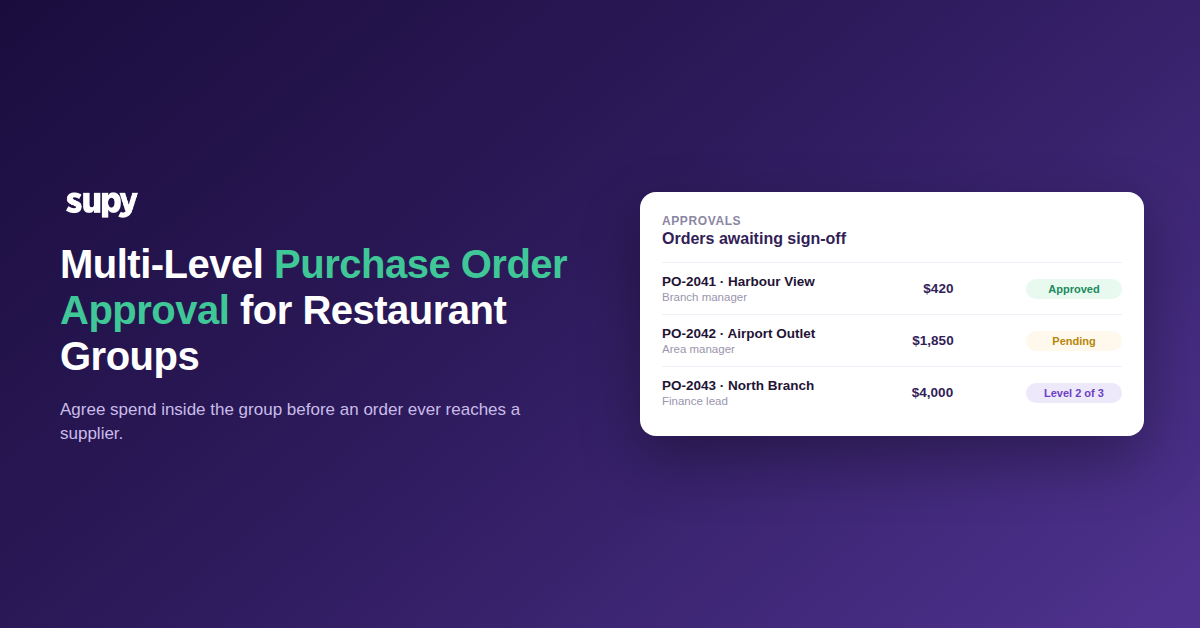
Die mehrstufige Bestellgenehmigung ermöglicht einer Restaurantgruppe, Ausgaben zu vereinbaren, bevor eine Bestellung einen Lieferanten erreicht. Sie leitet jede Anfrage durch einen oder mehrere designierte Genehmiger – gebunden an eine Person, eine Filiale und üblicherweise einen Bestellwert –, sodass größere Verpflichtungen mehr Prüfung erfahren als routinemäßige Nachbestellungen, und keine Bestellung ohne vereinbarte Genehmigung zu einer echten Verpflichtung gegenüber einem Anbieter wird.
Die Kontrolle liegt in der Sequenz. Eine Filiale stellt eine Anfrage, diese wird an den ersten Genehmiger weitergeleitet, und wenn der Bestellwert einen Schwellenwert überschreitet, wird sie an einen zweiten oder dritten weitergeleitet, bevor überhaupt eine Bestellung generiert wird. Erst wenn jede erforderliche Ebene genehmigt hat, wird die Bestellung zu einer echten Verpflichtung und geht per E-Mail, WhatsApp oder einer direkten Integration an den Lieferanten. Supy führt dies als sequenzielle Genehmigungen von bis zu 5 Genehmigern aus, ausgelöst durch die Kombination aus Filiale und Bestellwert, was die Beschaffung von einem Durcheinander individueller Bestellgewohnheiten in einen vorhersehbaren Prozess über alle Standorte hinweg verwandelt – der eigentliche Sinn des Einsatzes von Restaurant-Beschaffungssoftware anstelle einer gemeinsamen Tabellenkalkulation und eines Gruppengesprächs.
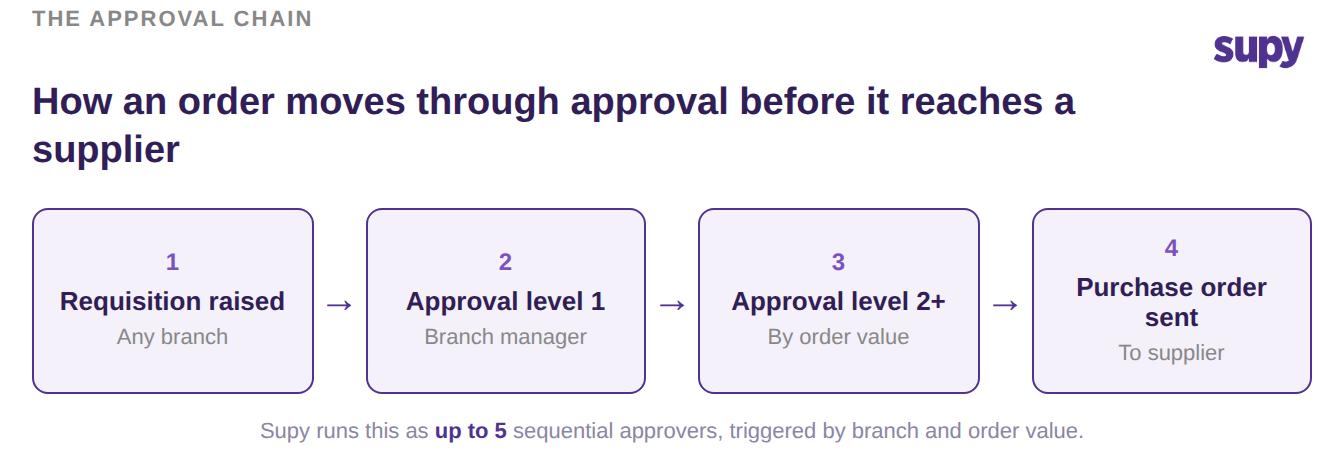
Was dies einem Betreiber gibt, ist ein einziger vereinbarter Verpflichtungspunkt. Statt dass Ausgaben erst nach der Tatsache auf einer Rechnung erscheinen, sind sie sichtbar und vereinbart, sobald die Anfrage gestellt wird. Das ist der Unterschied zwischen dem Überprüfen dessen, was gekauft wurde, und dem Kontrollieren dessen, was gekauft wird.
Rollen einrichten, bevor die Bestellgenehmigungsmatrix aufgebaut wird
Der häufigste Grund, warum eine Genehmigungsmatrix nie funktioniert, ist, dass sie aufgebaut wurde, bevor jemand definiert hat, wer wer ist. Das Genehmigungs-Routing kann eine Regel nur durchsetzen, wenn die zugrunde liegenden Rollen und Berechtigungen vorhanden sind und ein Administrator sie zugewiesen hat. Bis dahin gehen Anfragen weiterhin direkt an Anbieter, egal was die Matrix auf dem Bildschirm sagt, weil das Routing keine Rollen hat, an die es weiterleiten kann.
Das stolpert Gruppen mit mehreren Standorten wiederholt, weil es wie eine Software-Lücke aussieht, wenn es wirklich eine Governance-Entscheidung ist, die intern auf jemanden wartet. Bevor Sie die Matrix zeichnen, vereinbaren Sie die Rollen, was jede Rolle aufwerfen, genehmigen und einreichen darf, und wer die Zuweisung von Personen zu ihnen besitzt. Verteilen Sie auch die Konfigurationsrechte: Wenn nur ein vollständiger Administrator Rollen und Richtlinien einrichten kann, wird diese Person zum Engpass bei jedem Filial-Rollout.
Die folgende Struktur ist ein einfacher Ausgangspunkt. Die Limits sind illustrativ – setzen Sie Ihre eigenen entsprechend dem tatsächlichen Ausgabeverhalten Ihrer Gruppe –, aber die Form gilt: Aufwerfen ist breit, Genehmigen ist nach Wert eingeschränkt, und das Einreichen einer Bestellung ist das streng gehaltene Recht.
| Rolle | Anfrage aufwerfen | Genehmigen bis | Bestellung einreichen |
|---|---|---|---|
| Filial-Mitarbeiter | Ja | Kein Genehmiger | Nein |
| Filialleiter | Ja | $500 | Eigene Kostenstelle |
| Gebietsleiter | Ja | $2,000 | Ja |
| Finanzen oder Inhaber | Ja | Kein Limit | Ja |
Genehmigungen nach Filiale und Bestellwert weiterleiten
Eine feste Kette, die jede Bestellung durch jeden Genehmiger schickt, sieht aus wie Kontrolle und verhält sich wie das Gegenteil. Wenn ein $40-Kräuter-Nachschub dieselben drei Genehmigungen benötigt wie eine $4,000-Gerätebestellung, stempeln Genehmiger ab, um ihre Warteschlange zu leeren, die Prüfungen verlieren jede Bedeutung, und Leute suchen still nach Wegen drumherum. Alles durch alle zu leiten reduziert die Kontrolle über hochwertige Einkäufe, anstatt sie zu erhöhen.
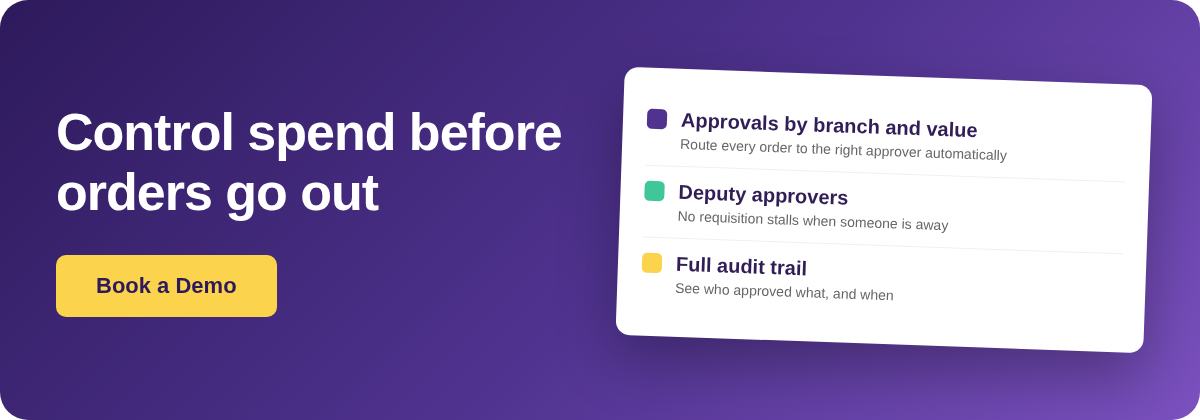
Die Lösung besteht darin, auch nach Bestellwert sowie nach Filiale weiterzuleiten. Kleine, routinemäßige Bestellungen werden mit einer einzigen lokalen Genehmigung abgewickelt, damit Filialen nicht verlangsamt werden; nur Bestellungen über einem Schwellenwert eskalieren zu einem Gebietsleiter, und nur die größten erreichen Finanzen oder einen Inhaber. Supy löst seine Genehmigungsschritte genau auf dieser Kombination aus Filiale und Bestellwert aus, und das ist der Teil, den generische Bestellungs-Tools für Gruppen mit mehreren Standorten selten handhaben – die meisten erklären, was eine Bestellung ist, nicht wie man eine über dem Schwellenwert liegende an einen anderen Genehmiger weiterleitet als eine kleine.
| Bestellwert | Aufgeworfen von | Erforderliche Genehmigungen |
|---|---|---|
| Bis $500 | Filial-Mitarbeiter | Filialleiter |
| $500 bis $2,000 | Filialleiter | Filialleiter, dann Gebietsleiter |
| Über $2,000 | Gebietsleiter | Gebietsleiter, dann Finanzen oder Inhaber |
Einen Stellvertreter in jeden Genehmigungsschritt einbauen
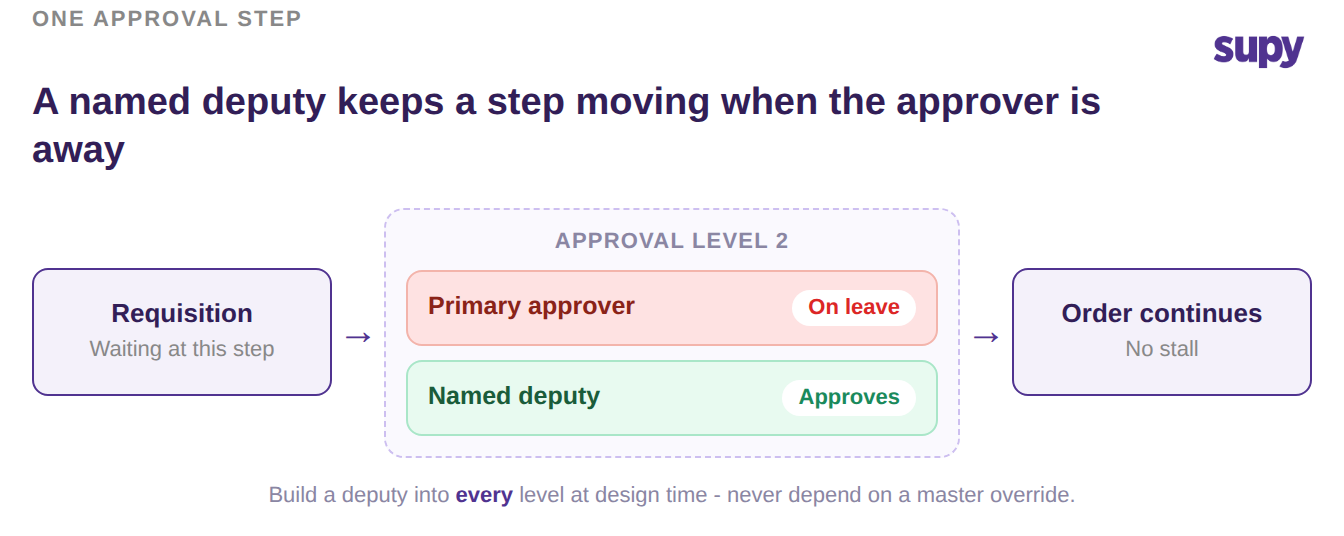
Eine Genehmigungsmatrix hat einen einzigen integrierten Ausfallpunkt: den Genehmiger. Wenn die eine Person, die einem Schritt zugewiesen ist, im Urlaub, außer Schicht oder einfach beschäftigt ist, kommt jede Anfrage, die auf sie wartet, zum Stillstand, und der Druck, Filialen versorgt zu halten, verwandelt sich in Anfragen, den Schritt vollständig zu übersteuern. Eine Übersteuerung ist die falsche Antwort, weil eine Matrix, die unter Druck umgangen werden kann, wirklich keine Kontrolle ist.
Das dauerhafte Design besteht darin, beim Aufbau der Matrix in jedem Schritt einen Stellvertreter-Genehmiger zu benennen, statt sich auf einen Notausgang zu verlassen, wenn jemand abwesend ist. Wenn ein Schritt einen primären und einen benannten Stellvertreter hat, ist ein abwesender Genehmiger kein Ereignis: Die Anfrage wird an den Stellvertreter weitergeleitet und bewegt sich weiter, und das wertbasierte Routing gilt weiterhin unverändert. Entscheiden Sie dies bewusst für jede Ebene, besonders für die höherwertigen, wo ein einzelner leitender Genehmiger am wahrscheinlichsten der Engpass ist.
Die Wege schließen, die die Genehmigung umgehen
Selbst eine gut aufgebaute Matrix leckt, wenn es einen Weg drum herum gibt, und es gibt zwei häufige Türen. Die erste ist ein Filial-Mitarbeiter, der eine Bestellung direkt an einen Lieferanten einreicht. Die Lösung besteht darin, einzuschränken, wer eine Bestellung pro Kostenstelle einreichen darf, anstatt durch eine einzige gruppenweite Benutzerberechtigung, die immer entweder zu locker für die Filialen oder zu eng für die Personen ist, die wirklich bestellen müssen. Eine Verhaltens-Umgehung – der bestellende Benutzer speichert einen Entwurf und ein Manager führt das Einreichen durch – kann eine Woche lang eine Lücke überbrücken, aber behandeln Sie sie als temporär: Eine Verhaltenskontrolle ist keine Kontrolle.
Die zweite Tür ist der Warenempfang ohne Bestellung. Wenn ein Betrieb eine Lieferung annehmen kann, die nie aufgeworfen oder genehmigt wurde, wird die gesamte Genehmigungsmatrix beratend, weil die Ausgabe bereits stattgefunden hat. Entscheiden Sie explizit, ob Waren ohne eine entsprechende Bestellung empfangen werden können, und für die meisten Gruppen lautet die Antwort, die die Matrix schützt: nein.
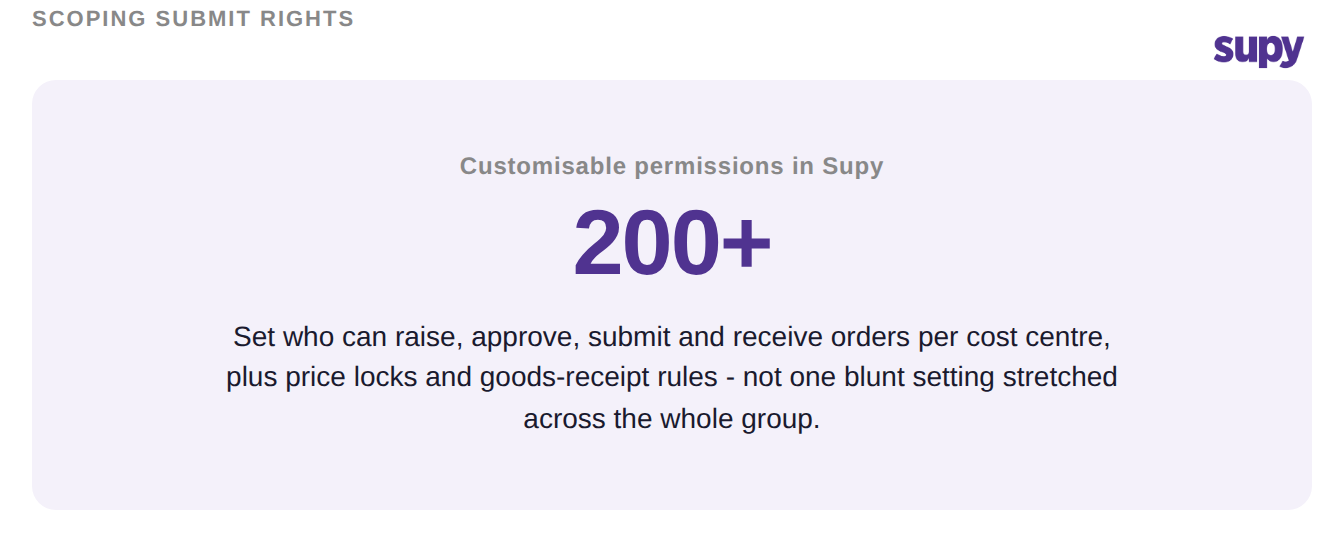
Genau das ist die Berechtigungsschicht für. Supy bietet mehr als 200 anpassbare Berechtigungen sowie Bestell- und Wareneingangsrichtlinien, sodass Einreichungsrechte, Empfangsregeln und Preissperren pro Kostenstelle festgelegt werden können, anstatt eine stumpfe Einstellung für die gesamte Gruppe zu erzwingen.
Testen Sie Ihren eigenen Genehmigungsablauf
Bevor Sie den Ablauf für abgeschlossen halten, führen Sie einen Test durch. Nehmen Sie eine echte Bestellung aus der letzten Woche und verfolgen Sie sie von Anfang bis Ende. Hätte eine Filiale sie ohne Genehmigung platzieren können? Hätte sie gestoppt, wenn der benannte Genehmiger abwesend gewesen wäre? Hat ihr Wert entschieden, wie viele Personen sie gesehen haben, oder hat sie die gleiche Behandlung wie alles andere erhalten? Wenn eine Antwort nein ist, liegt die Lücke in einem der vier oben genannten Bereiche – Rollen, Wert-Routing, Stellvertreter oder die Umgehungswege – und dort beginnen Sie.
Gruppen, die Ausgaben auch auf Budgetebene sperren möchten, können dies mit umfassenderen Restaurant-Ausgabenkontrollen kombinieren, und wenn Sie abwägen, ob strengere Beschaffungskontrolle die Einrichtung wert ist, ist der ROI-Rechner eine schnelle Möglichkeit, es zu bemessen. Der Sinn der mehrstufigen Bestellgenehmigung ist nicht mehr Papierkram; es geht darum, Ausgaben innerhalb Ihrer Gruppe zu vereinbaren, bevor sie zu einer Rechnung werden, die Sie nicht mehr hinterfragen können.