.jpeg)

Back-of-House-Schulung: Küchenpersonal souverän im System schulen, das die Küche steuert

Was Back-of-House-Schulungen tatsächlich leisten sollten
Back-of-House-Schulung ist die Arbeit, Küchen- und Lagerpersonal wirklich souverän im Betriebssystem zu machen, das die Küche steuert – nicht nur oberflächlich damit vertraut zu sein. Ein Team beherrscht das System, wenn jede Kernaufgabe – Rezept erfassen, Lagerbestand zählen, Lieferung entgegennehmen – einen namentlich genannten Verantwortlichen hat, der sie selbstständig in seiner eigenen Schicht erledigen kann, ohne einen Manager fragen oder auf eine Papierlösung zurückgreifen zu müssen.
Diese Definition ist wichtig, weil sie verändert, was Sie messen. „Alle haben an der Sitzung teilgenommen" sagt Ihnen nichts Nützliches. „Jede Schicht kann die Zählung durchführen, eine Lieferung entgegennehmen und Verschwendung ohne Hilfe erfassen" sagt Ihnen, dass die Schulung funktioniert hat. Back-of-House bezeichnet hier die Küchen-, Zubereitungs- und Lagerseite des Betriebs: die Mitarbeiter, deren Daten jeden nachgelagerten Kostenbericht speisen. Wenn auch nur eine dieser Aufgaben keinen souveränen Verantwortlichen hat, zeigt sich die Lücke später als fehlerhafte Zahl – nicht als Schulungsbeschwerde – was genau der Grund ist, warum sie bis zum Monatsende unbemerkt bleibt.

Warum Einzel-Schulungssitzungen die Hälfte des Teams verfehlen
Die einmalige geplante Schulung ist der Standard – und genau dort geht die meiste Kompetenz verloren. Eine Einführungssitzung ist auf einen Raum, eine Zeit und einen Trainer ausgelegt – und so funktioniert eine Küche nicht. Jemand ist immer in der Schicht, jemand ist im Urlaub, und in einer Gruppe mit sechs Standorten können die Filialteams schlicht nicht zu einer zentralen Sitzung reisen. Das Ergebnis ist vorhersehbar: Ganze Standorte gehen unzureichend geschult live, weil die Mitarbeiter, die sie betreiben, nie im Raum waren.
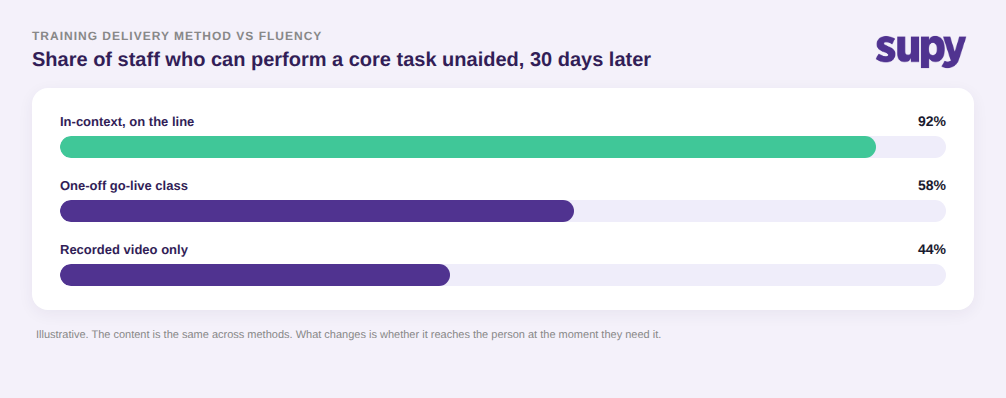
Aufgezeichnetes Video hilft etwas, aber Zuschauen ist kein Tun. In der Praxis lässt eine einmalige Schulung etwa 58 % des Personals in der Lage, eine Kernaufgabe einen Monat später selbstständig auszuführen – während kontextbezogenes Training, direkt im eigentlichen Arbeitsablauf und in der Praxis, diesen Wert auf knapp 92 % bringt. Der Unterschied liegt nicht am Inhalt; es ist vielmehr so, dass kontextbezogenes Training die Person zum richtigen Zeitpunkt erreicht, nach ihrem eigenen Zeitplan, an ihrem eigenen Standort.
Das ist auch der Grund, warum ein ergänzendes Tool – eine Terminplan-App oder ein dediziertes Learning-Management-System (LMS) – nur einen Teil des Problems löst. Diese Tools eignen sich gut zum Nachverfolgen, wer was absolviert hat. Sie machen jemanden nicht souverän im Rezeptbildschirm, den er jeden Tag nutzen wird. Wenn Sie abwägen, ob eine Gruppe Ihrer Größe überhaupt ein eigenständiges LMS benötigt, behandeln wir diesen Kompromiss separat.
Wo Schulungen nachlassen: Der Drei-Monats-Rückfall
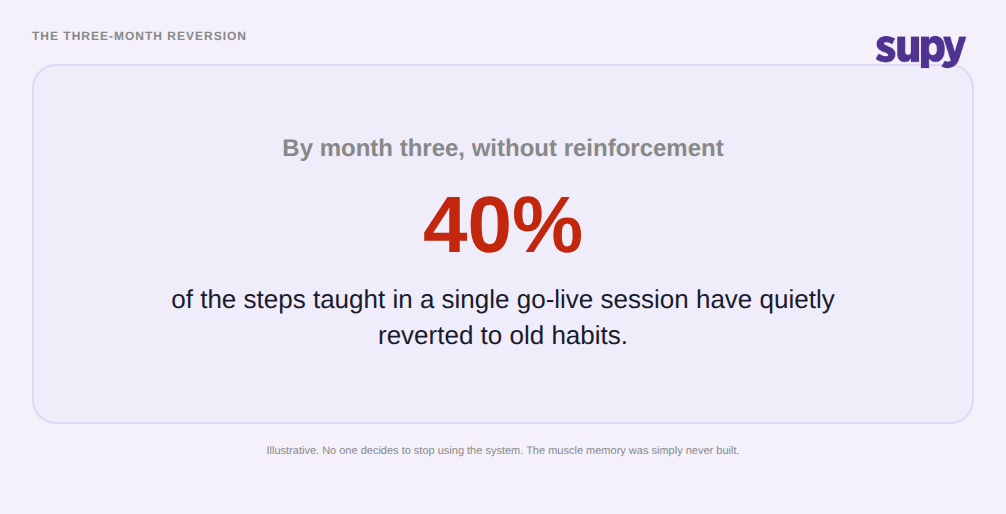
Selbst ein Team, das am ersten Tag souverän war, driftet ab. Wissen verblasst schnell ohne Verstärkung: Nach etwa dem Drei-Monats-Zeitpunkt sind rund 40 % der in einer einmaligen Einführungssitzung vermittelten Schritte still in alte Gewohnheiten zurückgekehrt. Der Papier-Bestellblock taucht wieder auf, die Zählung wird „geschätzt", das Rezept wird nie aktualisiert, wenn der Lieferant wechselt. Niemand hat entschieden, das System nicht mehr zu nutzen; das Muskelgedächtnis wurde einfach nie aufgebaut.
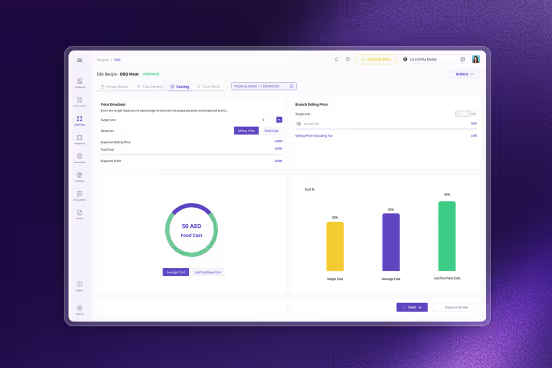
Die Lösung besteht darin, aufzuhören, Schulung als Ereignis zu behandeln, und sie stattdessen als etwas zu behandeln, das innerhalb der Arbeit lebt. Referenzmaterial und Live-Anleitungen sollten an demselben Ort sitzen, an dem die Mitarbeiter bereits arbeiten – nicht in einem separaten Handbuch, das niemand wiedereröffnet. Das digitale Kochbuch von Supy ist genau dafür konzipiert: Schritt-für-Schritt-Anleitungen und Bilder für jedes Rezept, von jedem Gerät aus zugänglich, direkt am Arbeitsplatz. Wenn die Anleitung mit einem Tippen zum Zeitpunkt der Zubereitung verfügbar ist, passiert die Verstärkung von selbst – und jede Schicht wird zu einer kleinen Schulungssitzung, anstatt davon abhängig zu sein, dass sich jemand an eine Schulung von vor einem Quartal erinnert.
Beginnen Sie mit Rezepten, oder der Rest haftet nie
Wenn Sie die Module in der falschen Reihenfolge unterrichten, bricht die Kompetenz zusammen – egal wie gut die Vermittlung ist. Rezepte sind die entscheidende Voraussetzung. Lagerverbrauch, theoretische versus tatsächliche Nutzung und Kostenverfolgung funktionieren alle erst, wenn Rezepte erfasst und verstanden sind – daher wird ein Team, das bei der Rezeptkonfiguration unsicher ist, überall im nachgelagerten Bereich fehlerhafte Zahlen produzieren, und kein Maß an Lagerbestandsschulung behebt das.
Die funktionierende Reihenfolge: zuerst Rezepte und Erträge, dann tägliche Lagerbestandszählungen, dann Wareneingang und Wareneingangsnachweise (GRNs), dann die theoretische versus tatsächliche Berichterstattung, die alles zusammenführt. Jeder Schritt speist den nächsten – daher bedeutet eine falsche Reihenfolge, dass das Team mit Daten übt, denen es nicht vertrauen kann. Die Rezeptkonfiguration ist konsequent der größte Onboarding-Blocker, genau weil sie an erster Stelle steht und am schwierigsten ist – das ist das Argument dafür, dort Ihre beste kontextbezogene Anleitung einzusetzen, nicht dafür, sie zu überspringen. Wir gehen tiefer auf die Gründe ein, warum die Rezeptkonfiguration Rollouts blockiert, und auf die Sequenzierung von Schulungen nach Rolle in zwei Begleitstücken.

Mitarbeiter gewinnen, die glauben, es nicht zu brauchen
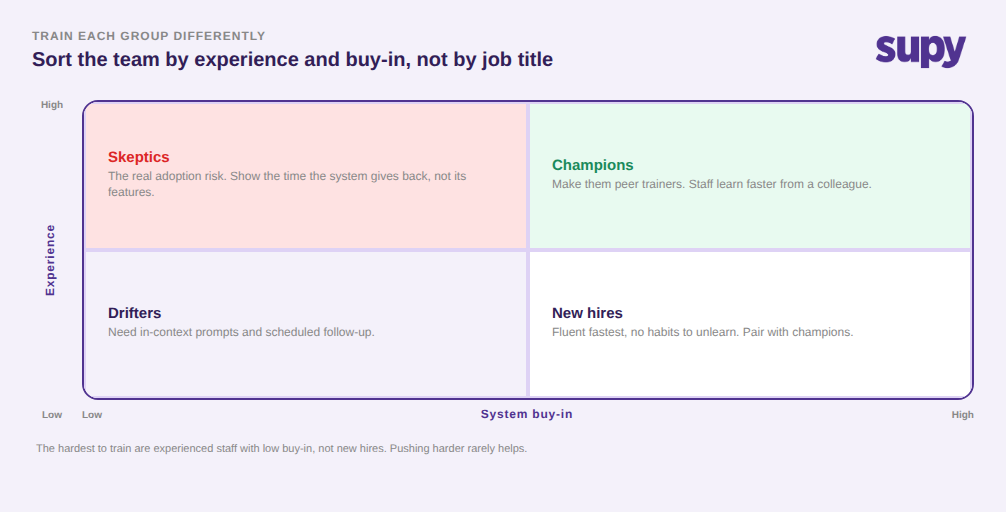
Die am schwierigsten zu schulenden Mitarbeiter sind nicht die Neulinge; es sind die erfahrenen Mitarbeiter, die ein neues System als zusätzliche Arbeit statt als Teil des Jobs sehen. Neue Mitarbeiter kommen ohne alte Gewohnheit, die sie verlernen müssten, und erreichen die Kompetenz am schnellsten. Die Veteranen sind das eigentliche Adoptionsrisiko – und härter zu drängen hilft selten.
Zwei Maßnahmen funktionieren. Erstens: Sortieren Sie Ihr Team nach Erfahrung und Engagement und schulen Sie jede Gruppe unterschiedlich: Machen Sie Ihre erfahrenen, engagierten Mitarbeiter zu Peer-Trainern, da Mitarbeiter schneller von Kollegen lernen als von einer Hauptverwaltungs-Präsentation; pairen Sie Neulinge mit ihnen; und gewinnen Sie Skeptiker, indem Sie zeigen, welche Zeit das System zurückgibt – nicht welche Funktionen es hat. Zweitens: Nutzen Sie rollenbasierten Zugriff, sodass jede Person nur den Teil des Systems sieht, den sie tatsächlich berührt. Supy unterstützt über 200 anpassbare Berechtigungen dafür, was das Training fokussiert und verhindert, dass ein erfahrener Koch unter Bildschirmen begraben wird, die nicht seine Aufgabe sind.
Ihr erster Schritt diese Woche
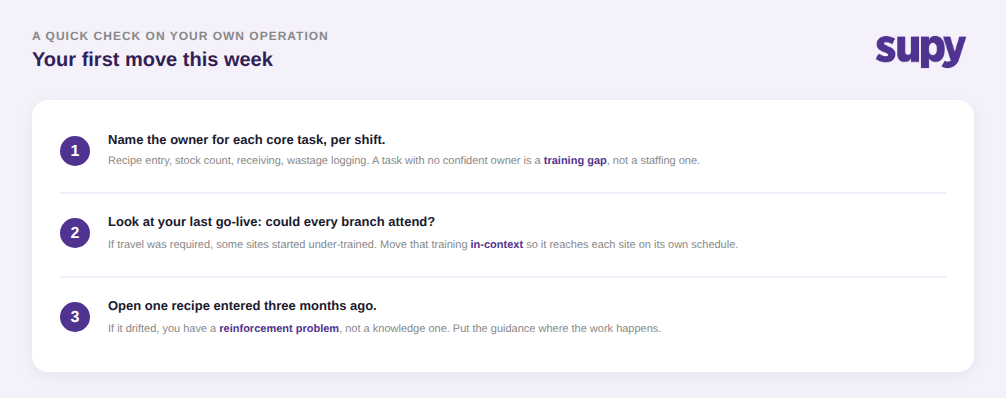
Sie brauchen keinen größeren Launch-Tag; Sie brauchen eine Vermittlungsmethode, die jeden erreicht, und eine Sequenz, die hält. Führen Sie diese schnelle Prüfung für Ihren eigenen Betrieb durch: