.jpeg)


PAR-Bestand für Restaurants bei frischen und hochvariablen Artikeln: Warum statische Werte standortübergreifend versagen

Warum ein fester PAR-Bestand bei frischen und hochvariablen Artikeln versagt
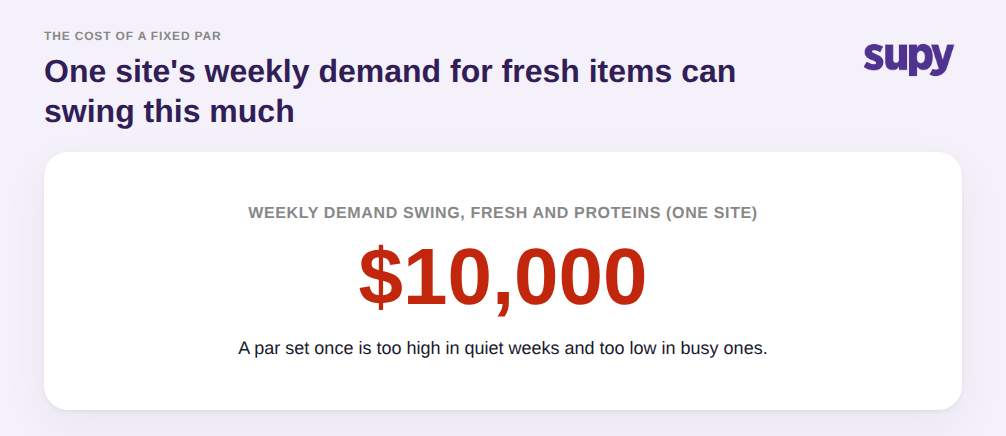
Die Betriebsleiterin einer Gruppe mit sechs Standorten stellte fest, dass ihre PAR-Bestände bei lagerstabilen Artikeln einwandfrei funktionierten, bei Proteinen und frischen Lebensmitteln jedoch versagten – wo der Wochenbedarf eines Standorts um bis zu 10.000 USD schwanken konnte. Ein PAR-Bestand ist schlicht die Lagermenge, die eine Nachbestellung auslöst, und er hält nur stand, solange die Nachfrage konstant bleibt. Bei frischen und hochvariablen Artikeln ist ein einmal festgelegter Wert ein halbes Jahr zu hoch und das andere halbe Jahr zu niedrig.
Möchten Sie die Zahlen für Ihre eigene Küche ermitteln? Der kostenlose PAR-Bestand-Rechner berechnet anhand Ihres Verbrauchs, der Liefertage und der Lieferantenvorlaufzeiten einen Bestand für jeden Artikel Ihrer Liste.
Die Lösung liegt nicht in einem großzügigeren Wert, sondern darin, jeden Artikel unterschiedlich zu behandeln: Behalten Sie statische PAR-Bestände dort, wo die Nachfrage wirklich stabil ist und die gängige PAR-Bestand-Formel noch greift, und stellen Sie frische, hochvariable Artikel auf dynamische PAR-Bestände um, die auf aktuellen Verkaufszahlen basieren. Der restliche Leitfaden ist ein Entscheidungsbaum, der bestimmt, welcher Artikel in welche Kategorie gehört – so wird die Frage für jeden Artikel einfach: Schwankt seine Nachfrage genug, um einen festen Wert falsch zu machen?
Jeden Artikel anhand von zwei Fragen einordnen: Wie verderblich, wie variabel?
Jeder Artikel in Ihrem Lager beantwortet zwei Fragen, die seine PAR-Strategie bestimmen: Wie schnell verdirbt er, und wie stark schwankt sein Wochenbedarf? Tragen Sie diese beiden Achsen auf, und es ergeben sich vier Gruppen – von denen nur eine problematisch ist.
Stabile und lagerstabile Artikel befinden sich in der einfachen Ecke. Dosentomaten, Trockenpasta und Reinigungsmittel schwanken kaum von Woche zu Woche und verfallen nicht, daher ist ein einmal festgelegter statischer PAR-Bestand, den Sie gelegentlich prüfen, genau richtig. Beständig verderbliche Artikel wie Tagesbrot und Hausmilch verderben schnell, verkaufen sich aber in einem vorhersehbaren Rhythmus – sie benötigen daher ebenfalls einen statischen Bestand, jedoch einen knapp bemessenen mit kurzem Bestellzyklus. Lagerstabile, aber variable Artikel wie Flaschengetränke, die an einen Veranstaltungskalender gebunden sind, können mit einem statischen Bestand auskommen, den Sie etwa monatlich überprüfen.
Die problematische Ecke ist die letzte: Artikel, die sowohl verderblich als auch variabel sind. Frische Proteine, Meeresfrüchte und Blattgemüse verderben innerhalb weniger Tage und schwanken stark mit der Gästeanzahl, dem Wetter und der Jahreszeit. Als Faustregel gilt: Wenn der Wochenbedarf eines Artikels zwischen einer ruhigen und einer geschäftigen Woche um mehr als etwa 20 % schwankt, ist ein fester Wert in den meisten Wochen falsch – und genau hier rentieren sich dynamische PAR-Bestände. Die erste Frage für jeden Artikel lautet also schlicht: In welcher der vier Ecken befindet er sich?

Der Test: Statischer oder dynamischer PAR-Bestand für diesen Artikel?
Der Test besteht aus einer einzigen Frage, die Sie Artikel für Artikel stellen können: Schwankt der Wochenbedarf dieses Artikels um mehr als etwa 20 %, und verdirbt er innerhalb weniger Tage? Wenn beides verneint wird, behalten Sie den statischen Bestand und fahren fort. Wenn beides bejaht wird, nehmen Sie ihn von seinem festen Wert und stellen Sie ihn auf einen dynamischen, prognosegestützten Bestand um.
Um ehrlich zu antworten, ziehen Sie die letzten acht Wochen Verbrauchsdaten für den Artikel an einem Standort heran und vergleichen Sie die geschäftigste Woche mit der ruhigsten. Liegen sie nahe beieinander, ist der Artikel stabil. Liegen sie weit auseinander, ist er variabel, und ein statischer Bestand kann nicht beiden Wochen gerecht werden. Stellen Sie sich einen Bestand von 40 Einheiten vor, den Sie in der Nebensaison festgelegt haben: Sobald derselbe Artikel in einer geschäftigen Woche auf 90 Einheiten ansteigt, fehlen Ihnen 50 Einheiten – Sie verzeichnen entweder einen Lagerausfall oder halten das restliche Jahr totes Lagerkapital vor, um einen seltenen Spitzenbedarf abzudecken.

Einen dynamischen PAR-Bestand festlegen, ohne zu raten
Sobald ein Artikel auf dem dynamischen Pfad landet, besteht das Ziel darin, das manuelle Schätzen eines neuen Wertes aufzugeben und die aktuelle Nachfrage diesen für Sie festlegen zu lassen. Ein dynamischer Bestand wird auf Basis der tatsächlichen Verkaufszahlen des Artikels neu berechnet – nicht aus der Erinnerung eines Managers an die letzte Saison.
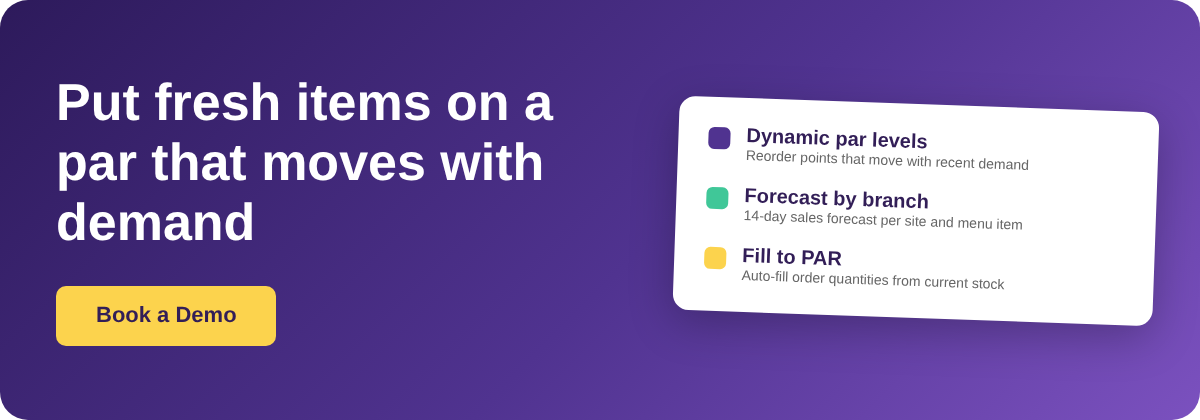
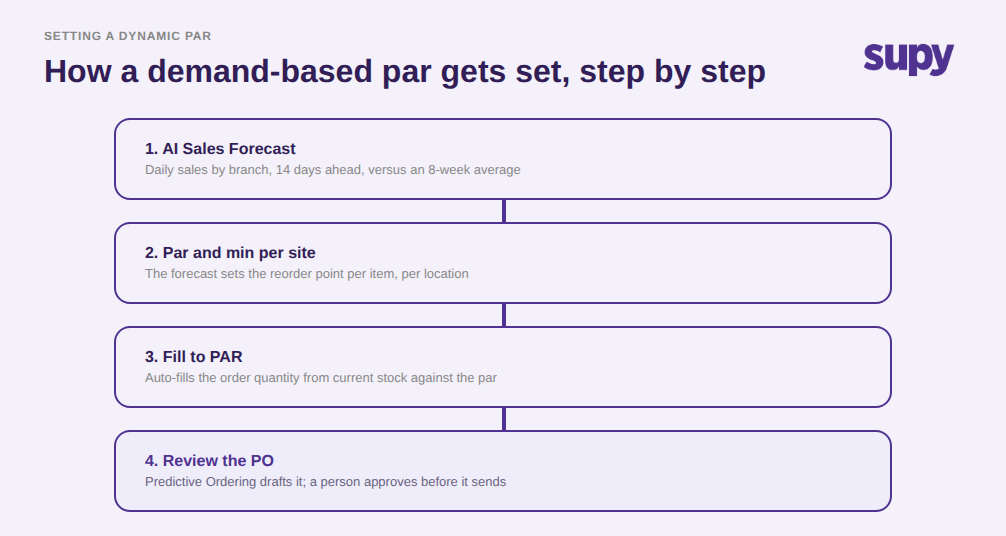
Die Umsatzprognose-KI von Supy prognostiziert die täglichen Verkaufszahlen je Standort 14 Tage im Voraus, bis auf Menüebene, und zeigt die Prognose im Vergleich zu einem 8-Wochen-Durchschnitt – mit einer Abweichung von weniger als 10 % zwischen Prognose und tatsächlichem Ergebnis für eine Mehrstandort-Marke. Diese Prognose speist die PAR- und Mindestmengenschwellenwerte, die Sie je Artikel und Standort pflegen, sodass der Bestellpunkt die tatsächliche Nachfrage widerspiegelt statt einem veralteten Schätzwert. Davon ausgehend füllt Fill to PAR die Bestellmenge automatisch aus dem aktuellen Bestand gegenüber diesem Bestand auf, und Predictive Ordering stellt eine versandfertige Bestellung zusammen, die Sie vor dem Absenden noch Zeile für Zeile prüfen. Der Wert passt sich dem Geschäft an, und keine Bestellung verlässt das System ohne menschliche Kontrolle. Da Schwellenwerte je Artikel und Standort gespeichert sind, können Sie all dies zusammen mit dem restlichen Lagerbestand in einer einzigen Warenwirtschaft-Ansicht verwalten.
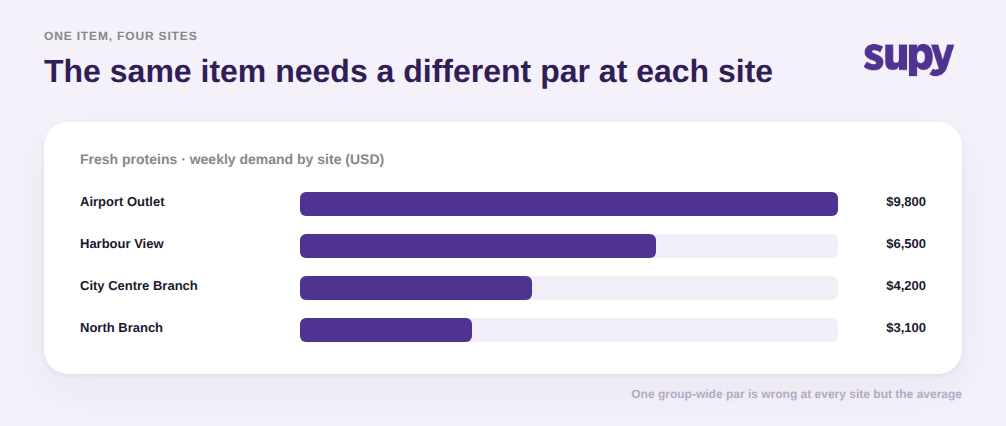
Warum derselbe Artikel an jedem Standort einen anderen Bestand benötigt
Die letzte Falle besteht darin, einen Bestand auf die gesamte Gruppe zu übertragen. Derselbe frische Artikel kann an einem geschäftigen Flughafenstandort 9.800 USD pro Woche und an einem ruhigen Vorortstandort 3.100 USD erzielen – mit zwei weiteren Filialen irgendwo dazwischen. Ein einziger gruppenweiter Bestand ist an jedem Standort falsch, außer an dem, der dem Durchschnitt am nächsten liegt – er führt gleichzeitig zu Überbestellungen und Abfällen an den kleinen Standorten und zu Lagerausfällen an den großen. Die standortspezifische Prognose behebt dies, da jeder Standort sein eigenes Modell und seinen eigenen Bestand erhält, statt eine zentrale Zahl für alle zu übernehmen.
Damit haben Sie einen klaren Ausgangspunkt für diese Woche. Nehmen Sie Ihre umsatzstärkste Frischkategorie am geschäftigsten Standort, ziehen Sie die letzten acht Wochen Verbrauchsdaten heran, und wenn die Schwankung mehr als etwa 20 % beträgt, nehmen Sie diesen Artikel von seinem statischen Wert und legen Sie einen bedarfsorientierten PAR-Bestand fest. Ist ein Artikel stabil und lagerstabil, lassen Sie seinen statischen Bestand unangetastet und konzentrieren Sie den Aufwand auf Bereiche, in denen die Nachfrage tatsächlich schwankt. Sie müssen nicht das gesamte Lager auf einmal umstellen – nur die Artikel in der verderblich-und-variablen Ecke, bei denen ein fester Wert von Anfang an falsch gewesen wäre.