.jpeg)


Durchschnittskostengenauigkeit im Restaurant-Inventar: Wie inaktive und nullpreisige Artikel sie verzerren
Wie ein verzerrter Durchschnittskostenwert Ihre Rezeptmargen beeinflusst
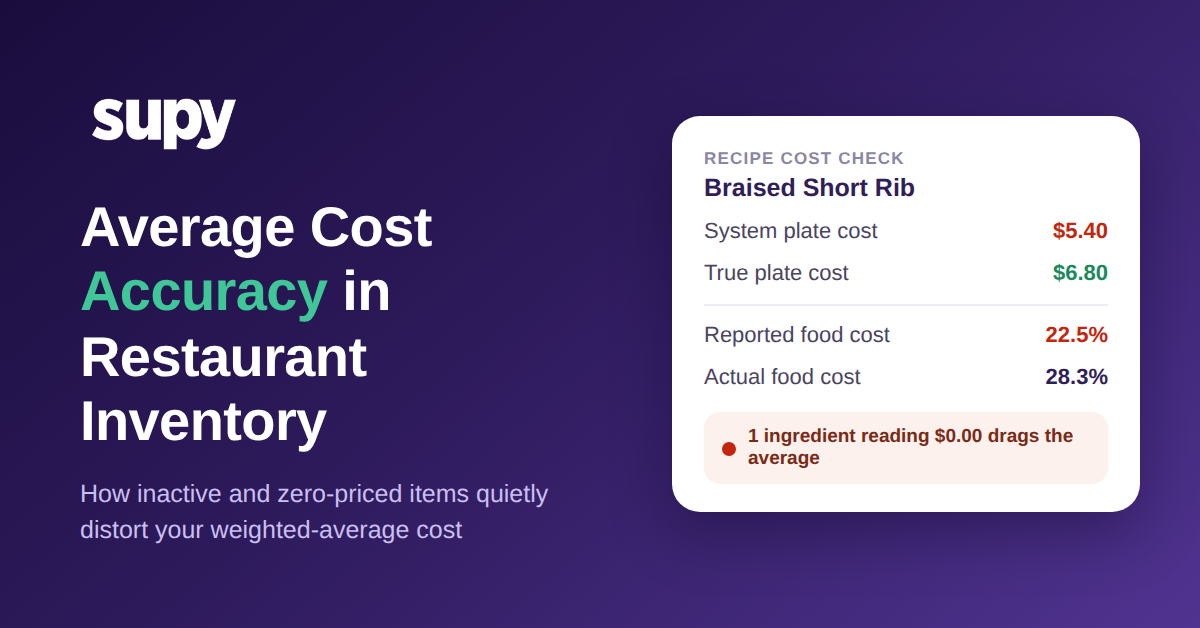
Ein Rezeptkostenwert, der still besser aussieht als er sein sollte, ist meist das erste Anzeichen dafür, dass Ihr gewichteter Durchschnittskostenwert falsch ist. Diese Zahl ist der einzelne laufende Stückpreis, den Ihr System für jede Zutat führt und jeden Wareneingang zu einer einzigen Zahl zusammenfasst, auf die Ihre Rezepte bei der Tellerpreisberechnung zurückgreifen. Fließt ein kostenfreier Wareneingang in die Berechnung ein, sinkt er unter das, was Sie tatsächlich zahlen – so unterbewertet jedes Rezept mit diesem Artikel seine Kosten und weist eine Marge aus, die Sie nicht erzielen.
Setzen Sie reale Zahlen an. Ein geschmorter Short Rib, der $6,80 pro Teller kosten sollte, wird als $5,40 angezeigt – eine Unterbewertung von 21 %, und bei einem Menüpreis von $24,00 sinkt der ausgewiesene Wareneinsatz von den tatsächlichen 28,3 % auf komfortabel wirkende 22,5 %. Am Teller änderte sich nichts. Irgendwo vorgelagert wurde ein Kosteneintrag auf null gesetzt, und diese 5,8-Punkte-Lücke steckt nun in jedem Margenreport, jeder Menü-Engineering-Entscheidung und jeder Überprüfung der Preise, die ihr vertraut. Zwei Artikelzustände verursachen fast alles davon: Artikel, die inaktiv geworden sind und ihren gespeicherten Kostenwert verloren haben, sowie Artikel, die mit dem Preis null erfasst wurden und trotzdem in den Durchschnitt einflieißen. Der Rest dieses Leitfadens zeigt, wie Sie erkennen, welchen Fall Sie vor sich haben, und wie Sie ihn jeweils beheben.

Warum inaktive Artikel ihren Kostenwert verlieren und den Durchschnitt senken
Ein Artikel ohne Lagerbewegung über sechs Monate oder länger wird häufig automatisch als inaktiv markiert, und Inaktivität löscht oft seinen gespeicherten Preis. Der Stückpreis, den er trug – der tatsächliche Preis, den Sie zuletzt bezahlten –, wird als null angezeigt. Ist dieser Artikel noch eine Zutat in einem aktiven Rezept oder wird er später erneut empfangen, fließt die null direkt in die gewichtete Durchschnittskostenberechnung ein und zieht sie nach unten.
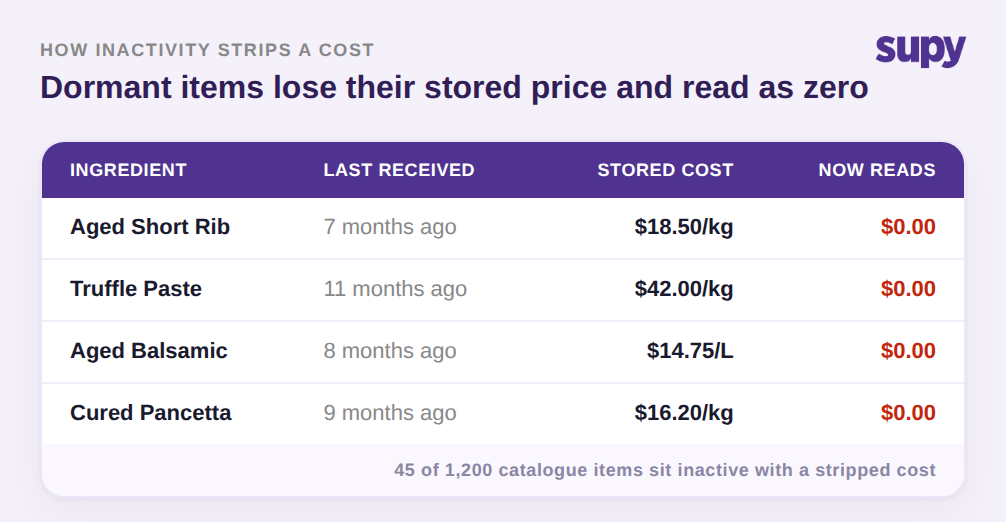
Die häufige Abhilfe verschlimmert das Problem. Um schnell einen Kostenwert wiederherzustellen, erstellen Betreiber eine Scheinrechnung: eine gefälschte Rechnung mit einem geschätzten Preis, nur damit eine Zahl wieder im Feld steht. Das stellt zwar einen Wert wieder her, aber es ist nicht der tatsächliche Kostenwert, kein Lieferant oder Dokument steht dahinter, und es hinterlässt ein Hygieneproblem in Ihren Einkaufsunterlagen, das jemand am Monatsende entwirren muss. Ein geschätzter Kostenwert ist immer noch ein falscher Kostenwert. Die saubere Lösung ist, den tatsächlichen letzten Preis zu ermitteln, was der nachfolgende Behebungsabschnitt beschreibt. Wenn auch doppelte oder schlecht strukturierte Artikel im Spiel sind, geht es um die breitere Disziplin der Artikelstammdaten-Hygiene.
Wie nullpreisige Artikel still in die Durchschnittskostenberechnung einfließen
Die zweite Ursache erfordert keine sechs Monate Inaktivität. Ein nullpreisiger Artikel – eine kostenlose Lieferantenprobe, ein nicht kalkulierter Filialtransfer oder ein zu Aktionszwecken empfangener Wareneingang, der nie in Rechnung gestellt wurde –, geht mit $0,00 in Ihre Unterlagen ein und wird in vielen Setups in die globale Durchschnittskostenberechnung einbezogen, sobald er eintrifft. Ein Nullpreis-Wareneingang unter einigen echten senkt den gemischten Kostenwert sofort.

Da diese Wareingänge legitim wirken – es sind echte Waren, die wirklich ankamen –, werden sie selten markiert. Das Finanzteam einer Multi-Standort-Gruppe bat um Kontrolle auf Kontoebene, um zu verhindern, dass nullpreisige Artikel überhaupt in den Durchschnittskostenwert einflieißen, was zeigt, wie verbreitet die Verzerrung ist. Solange nicht alle Wareingänge eines Artikels reale Preise tragen, ist sein Durchschnittskostenwert nur so vertrauenswürdig wie seine schlechteste Position.
Wie Sie einen falschen Durchschnittskostenwert auf den verursachenden Artikel zurückverfolgen
Wenn ein Rezeptkostenwert falsch aussieht, müssen Sie nicht den gesamten Katalog prüfen. Arbeiten Sie vom Rezept zu seinen Zutaten zurück und vergleichen Sie den aktuellen Stückpreis jedes Artikels mit dem, was Sie zuletzt bezahlt haben. Der Artikel, der null oder weit unter seinem tatsächlichen Preis anzeigt, ist der Verursacher, und eine Frage sagt Ihnen, welche Behebung er benötigt.
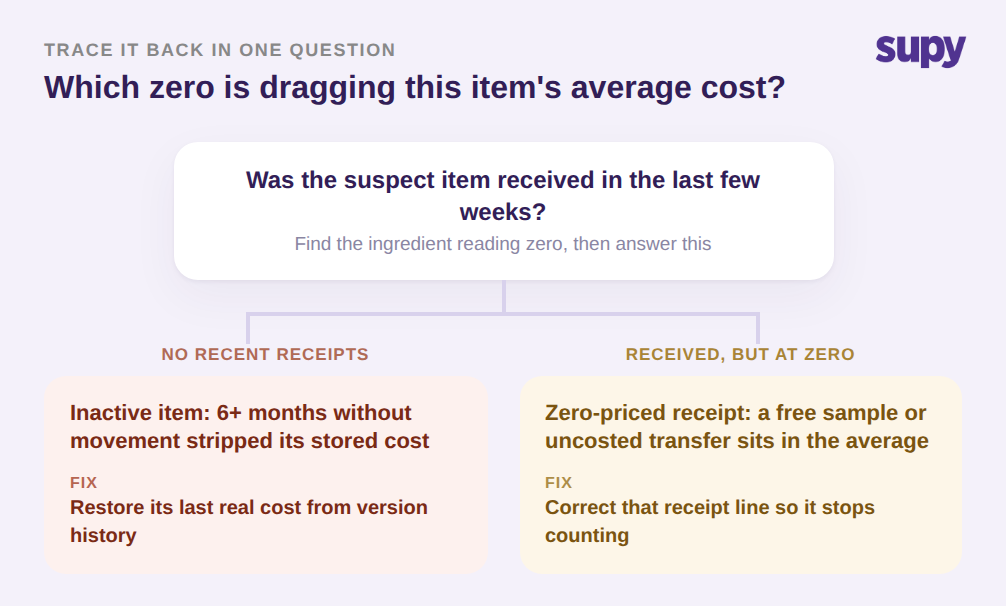
Fragen Sie: Wurde der Artikel in den letzten Wochen empfangen? Wenn er keine aktuellen Wareingänge hat und null anzeigt, ist es ein inaktiver Artikel, dessen gespeicherter Kostenwert gelöscht wurde – stellen Sie daher seinen letzten echten Kostenwert wieder her. Wurde er kürzlich zu $0,00 empfangen, liegt ein Nullpreis-Wareneingang in seinem Durchschnitt – korrigieren Sie diese Wareneingangsposition und verhindern Sie, dass der kostenlose oder nicht kalkulierte Eingang weiter einflieißt. In einem Katalog von 1.200 Artikeln sind die wenigen, auf die es ankommt – sagen wir 45 inaktive und 18 nullpreisige –, leicht zu isolieren, sobald Sie beide Merkmale kennen, und ein Kostenwechsel- oder gewichteter Durchschnittspüfbericht, der Artikel auflistet, deren Kostenwert kürzlich gesunken ist, führt Sie direkt zu ihnen.
Die saubere Lösung: Echte Kostenwerte wiederherstellen und den Prüfpfad nutzen
Das korrekte Beheben der Zahl erfordert vier Schritte – und keiner davon ist eine Scheinrechnung.

Erstens, erkennen: Führen Sie den Kostenbericht oder das Prüfprotokoll aus und finden Sie jeden Artikel, dessen Stückpreis null anzeigt oder ohne einen entsprechenden echten Wareneingang stark gesunken ist. Zweitens, den echten Kostenwert wiederherstellen: Wenn Sie einen Basisartikel pro Zutat mit vollständiger Versionshistorie führen, stellen Sie den letzten gültigen Kostenwert wieder her, den der Artikel tatsächlich trug, anstatt ihn zu schätzen, sodass die Zahl, die Sie zurücksetzen, die Zahl ist, die Sie wirklich bezahlt haben. Drittens, neu berechnen: Da Rezept- und gewichtete Kostenwerte bei Preisänderungen neu berechnet werden, fließt die Korrektur des Artikelkostenwerts in jedes Rezept ein, das ihn verwendet, und Ihre Tellerpreise sowie Wareneinsatz-Prozentwerte kommen wieder zur Wahrheit. Viertens, protokollieren: Ein Prüfprotokoll, das jeden Kostenwertwechsel mit Vorher- und Nachher-Werten aufzeichnet, verknüpft mit einem benannten Nutzer und Zeitstempel, und das niemand bearbeiten oder löschen kann, bedeutet, dass die Korrektur dokumentiert und nicht vergraben ist – sodass die nächste Person, die den Artikel sieht, sie nicht rükgängig macht oder auf eine weitere Scheinrechnung zurückgreift.
Bestimmen Sie also, in welchem Zweig Sie sich befinden. Wenn Ihr Rezeptkostenwert zu niedrig aussieht und der verdächtige Artikel seit Monaten nicht mehr empfangen wurde, befinden Sie sich im Zweig des inaktiven Artikels: Stellen Sie seinen letzten echten Kostenwert aus der Versionshistorie wieder her und lassen Sie den Rezeptkostenwert neu berechnen. Wenn der Artikel kürzlich zu null empfangen wurde, befinden Sie sich im Zweig des nullpreisigen Artikels: Korrigieren Sie diese Wareneingangsposition, damit der kostenlose oder nicht kalkulierte Eingang nicht länger den Durchschnitt senkt. In jedem Fall ist die eine Maßnahme, die ihn dauerhaft behebt, die Korrektur in einem Prüfpfad zu dokumentieren, anstatt sie mit einer geschätzten Rechnung zu kaschieren – denn ein Kostenwert, den Sie nachverfolgen können, ist ein Kostenwert, dem das gesamte Team vertrauen kann.