.jpeg)


Zentralküchen-Produktionsplanung: Tagesbedarf für mehrere Standorte richtig planen
Was ein Zentralküchen-Produktionsplan wirklich ist
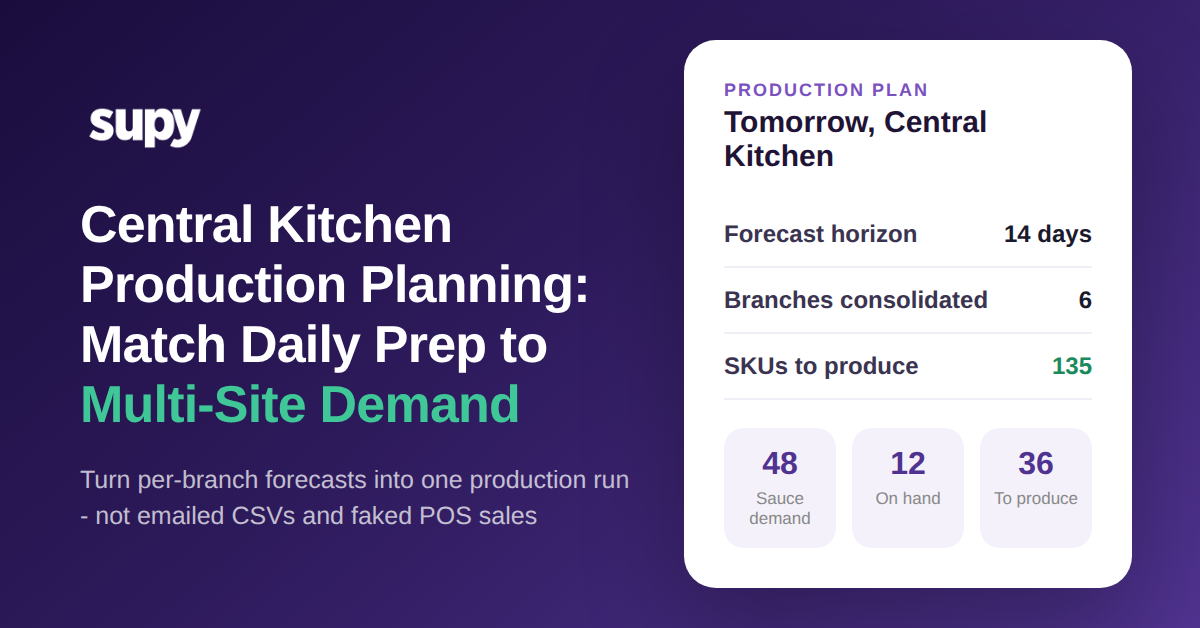
Ein Zentralküchen-Produktionsplan ist die tägliche Liste dessen, was Ihre Zentralküche herstellen wird und in welcher Menge – aufgebaut aus der prognostizierten Nachfrage jedes Outlets abzüglich der bereits vorhandenen Bestände. Bei sorgfältiger Erstellung sagt er dem Vorbereitungsteam genau, wie viele Chargen jeder Soße, jedes Teigs und jedes verpackten Artikels produziert werden müssen, bevor jemand eine Rührschüssel berührt.
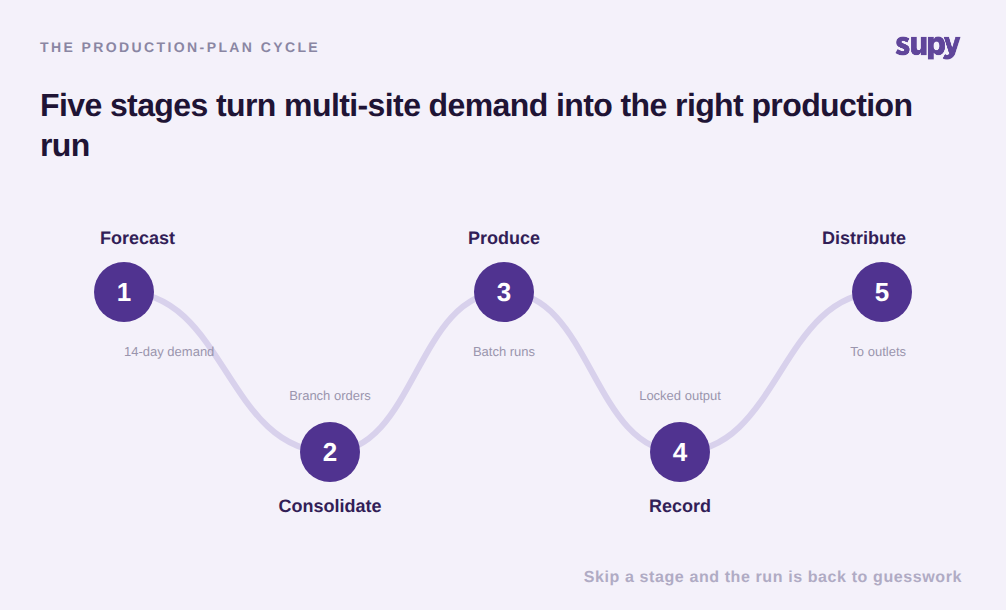
Der Plan ist kein stehendes Rezept oder ein unveränderlicher Vorbereitungszettel, der sich täglich wiederholt. Er ist ein bewegliches Ziel, das der tatsächlichen Nachfrage an Ihren Standorten folgt – sodass ein ruhiger Dienstag und ein geschäftiger Freitag nicht dieselben Mengen ergeben. Wenn der Plan stimmt, produziert die Küche genug, um jede Filialbestellung zu decken, ohne verderbliche Bestände überzuproduzieren, die als Verschwendung enden. Er steht im Mittelpunkt des übergreifenden Zentralküchenbetriebs und verbindet Ihre Nachfrageprognose, Ihre Filialbedarfsmeldungen und Ihre Produktionsvorbereitung in einer einzigen Abfolge.
Warum die Vorbereitungsplanung scheitert, wenn der Filialbedarf in E-Mails und im POS lebt
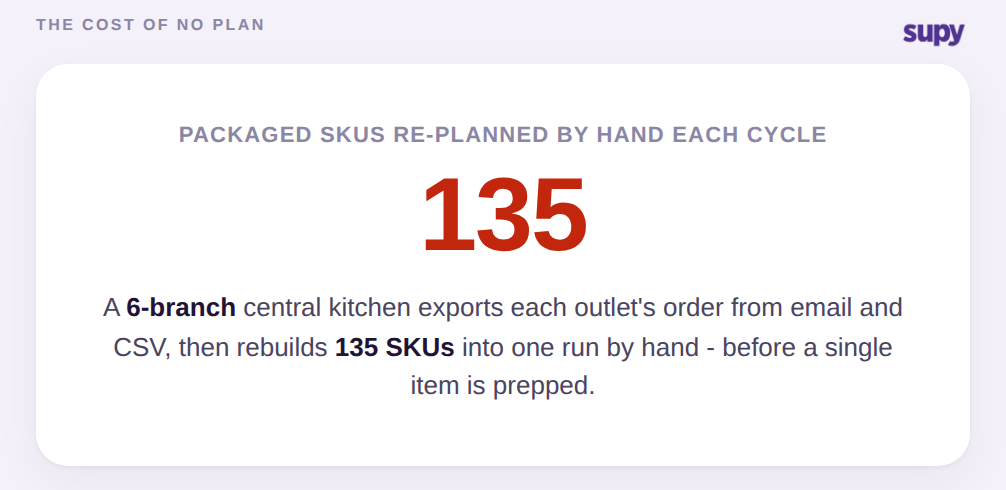
Die meisten Mehrstandort-Küchen scheitern nicht an der Planung, weil ihnen die Kompetenz fehlt. Sie scheitern, weil die benötigte Nachfrage verstreut ist. Jede Filiale sendet ihre Bestellung per E-Mail oder CSV-Export, und jemand in der Zentralküche gibt diese Daten bei jedem Zyklus manuell in eine einzige Liste ein. Eine Gruppe mit sechs Filialen, die weit über hundert verpackte Artikel herstellt, baut denselben Lauf täglich von Grund auf neu auf – und jede manuelle Eingabe bietet die Möglichkeit, eine Zeile zu übersehen oder eine Menge falsch einzutragen.
Die Umgehungslösungen sind schlimmer als das Problem selbst. Küchen ohne echte Zentralküchen-Software führen die Produktion oft über das Kassensystem durch – indem sie gefälschte Filialverkäufe eingeben, um den Bestand aus den Büchern zu nehmen. Rohzutaten und fertige Waren liegen dann in einer ungeteilten Bestandsansicht, sodass niemand erkennen kann, was tatsächlich produziert werden muss, gegenüber dem, was bereits hergestellt ist. Der Plan wird zum Rätselraten, das als Tabellenkalkulation verkleidet ist.
Nachfrage prognostizieren, bevor Sie den Produktionsplan aufstellen
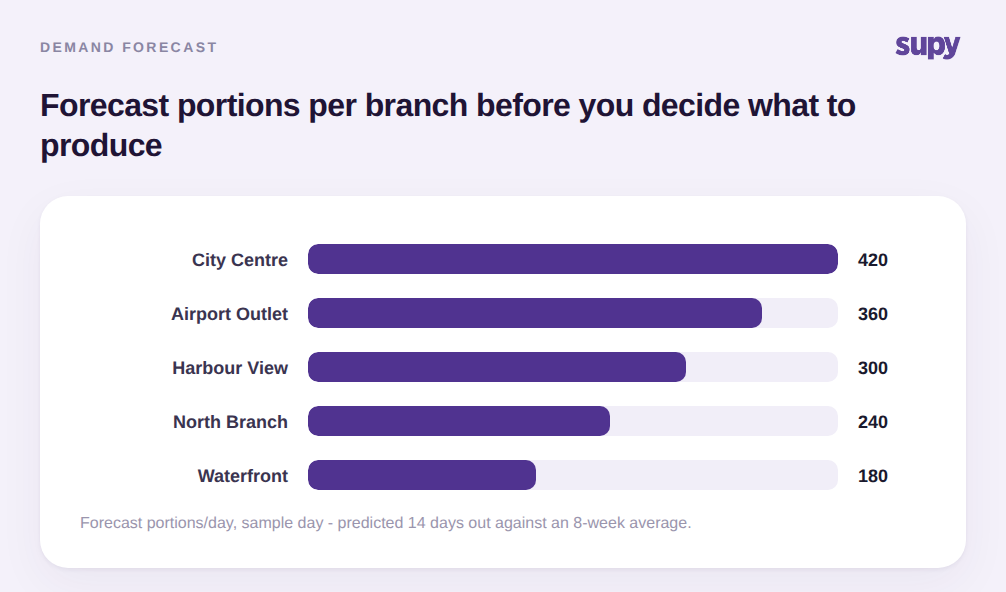
Ein Produktionsplan ist nur so gut wie die Nachfragezahl, mit der er beginnt. Mit den Zahlen der Vorwoche oder nach Bauchgefühl zu starten, verursacht die zwei klassischen Fehler: Überbestellung verderblicher Waren und Engpässe mitten im Service. Der erste Schritt ist die Prognose – pro Filiale –, was jeder Standort tatsächlich verkaufen wird.
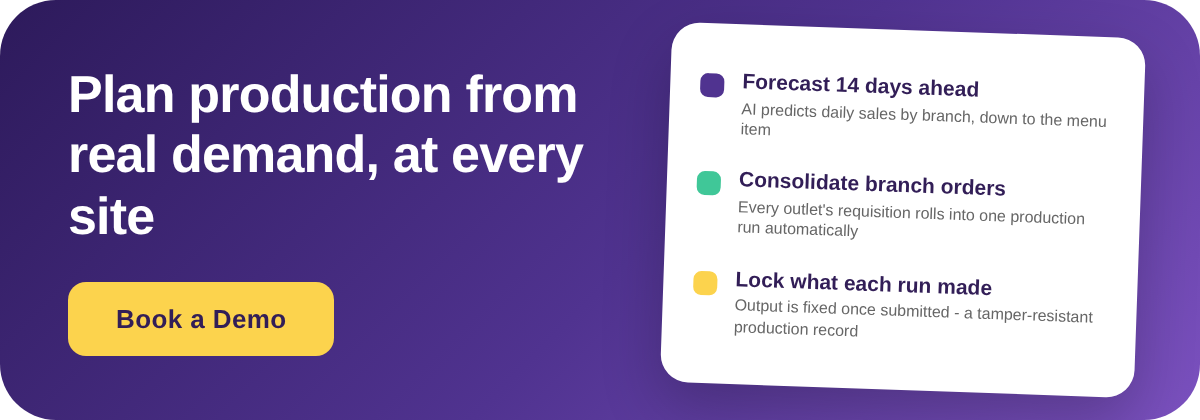
Supys Umsatzprognose-KI sagt täglich Verkäufe pro Filiale für 14 Tage im Voraus vorher – bis hin zum einzelnen Menüpunkt – und zeigt jede Prognose gegen einen 8-Wochen-Vergleichsdurchschnitt an, damit Sie Plausibilitätsprüfungen vornehmen können. Ein Manager, der von einem lokalen Ereignis weiß, das das Modell nicht kennt, kann beliebige Tage oder Artikel überschreiben, ohne das Modell neu zu trainieren. Diese Prognose ist der Input, der einen Produktionsplan von einer wiederholten Gewohnheit in eine nachfragegesteuerte Entscheidung verwandelt.
Filialbedarfsmeldungen in einen einzigen Produktionslauf konsolidieren
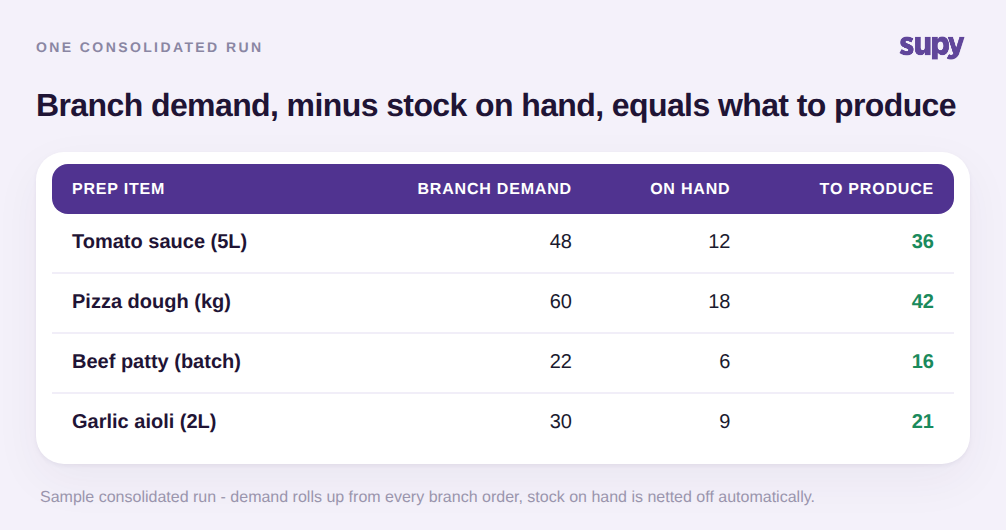
Sobald die Nachfrage jedes Outlets sichtbar ist, ist der Plan ein Subtraktionsproblem: Gesamtfilialbedarf für jeden Artikel minus dem, was die Zentralküche bereits vorrätig hat, ergibt die zu produzierende Menge. Das Schwierige ist, den gesamten Filialbedarf an einem Ort zusammenzuführen – ohne die manuelle Neueingabe, die so viele Küchen zum Scheitern bringt.
Mit dem Zentralküchen-Modul von Supy geben Filialen ihre Bestellungen direkt in der App auf, und diese Bedarfsmeldungen werden automatisch in einer konsolidierten, filialübergreifenden Ansicht pro Artikel zusammengefasst. Kein CSV-Export und kein manueller Neuaufbau. Die Küche sieht einen einzigen Produktionslauf für den Tag, und bei der Auswahl der herzustellenden Produkte erscheinen nur veröffentlichte Rezepte – sodass eine unfertige oder eingestellte Rezeptversion niemals versehentlich produziert werden kann. Genehmigungen können über bis zu 5 sequenzielle Genehmiger weitergeleitet werden, wenn eine Bestellung eine Freigabe benötigt, bevor sie zum Lauf wird.
Nach Ausbeute produzieren, das Ergebnis sperren und sauber verteilen
Beim Produzieren nach Plan entscheidet sich, wo Genauigkeit gewonnen oder verloren wird. Ein Vorbereitungsrezept erzielt selten genau seine spezifizierte Menge, daher muss der Plan aufzeichnen, was ein Lauf tatsächlich produziert hat – nicht was geplant war. Supys Zerlegungsproduktion unterstützt Rückwärtsfertigung, bei der ein Input mehrere Outputs ergibt: Sie zeigt eine Live-Ausbeute-Verteilung über Co-Produkte, Nebenprodukte und Verschwendung, warnt, wenn die Verschwendung 30 % des Inputs übersteigt, und blockiert einen Lauf, dessen Ausbeuten zusammen mehr als 100 % ergeben. Rezeptkosten werden automatisch auf die gesamte Produktion angewendet, sodass Ihre theoretischen Lebensmittelkosten ohne manuelle Neuberechnung aktuell bleiben.
Sobald ein Lauf den Entwurfsstatus verlässt, werden seine Ausgabemengen gesperrt, was eine manipulationssichere Aufzeichnung genau dessen liefert, was produziert wurde. Fertige Waren gelangen dann als Bestandstransfers an die Outlets – nicht als blinde Bestandsbuchungen: Die empfangende Filiale muss die Lieferung bestätigen, bevor der Bestand auf beiden Seiten aktualisiert wird. Das ist es, was den Phantombestand verhindert, der E-Mail-und-CSV-Verteilung plagt. Da Roh- und Fertigwaren separat filterbar bleiben, zeigt der Plan immer, was noch hergestellt werden muss, gegenüber dem, was bereits verpackt und versandt ist.

Für den Einstieg brauchen Sie keinen vollständigen Rollout. Ziehen Sie in dieser Woche die Filialbedarfsmeldungen eines Tages in eine einzige Tabelle und vergleichen Sie die Summe mit dem, was Ihre Zentralküche an diesem Tag tatsächlich produziert hat. Wenn die Lücke mehr als eine oder zwei Chargen bei Ihren wichtigsten Artikeln beträgt, läuft Ihr Plan auf Gewohnheit und nicht auf Nachfrage – und diese Lücke ist entweder Verschwendung oder ein bevorstehender Engpass. Beheben Sie die Abfolge der Reihe nach: Erstellen Sie eine Filialprognose, der Sie vertrauen, konsolidieren Sie die Bestellungen in einen einzigen Lauf, und rechnen Sie dann den vorhandenen Bestand heraus, bevor Sie die Mengen festlegen.
Die Betreiber, die das richtig hinbekommen, hören auf, die Produktionsplanung als tägliche Feuerlöschübung zu betrachten, und beginnen, sie als eine kurze, nachfragegesteuerte Routine zu behandeln. Dieser Wandel – mehr als jedes einzelne Merkmal – ist es, was eine wachsende Zentralküche davon abhält, jeden Morgen die Schätzung von gestern zu produzieren.