.jpeg)

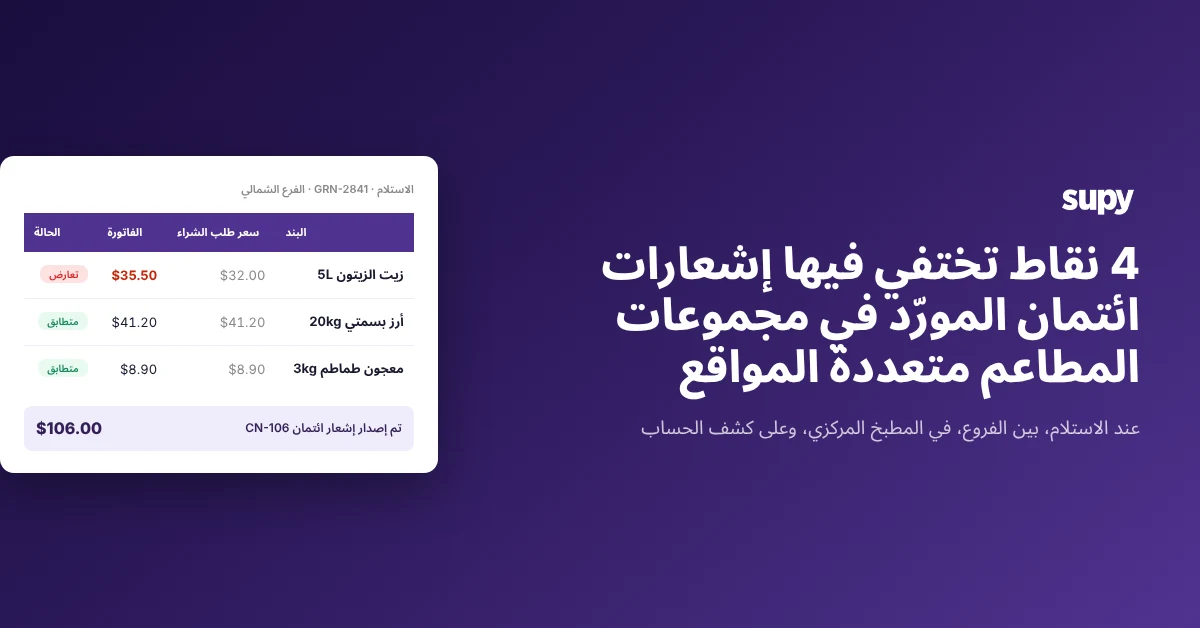
4 نقاط تختفي فيها إشعارات ائتمان المورّد في مجموعات المطاعم متعددة المواقع
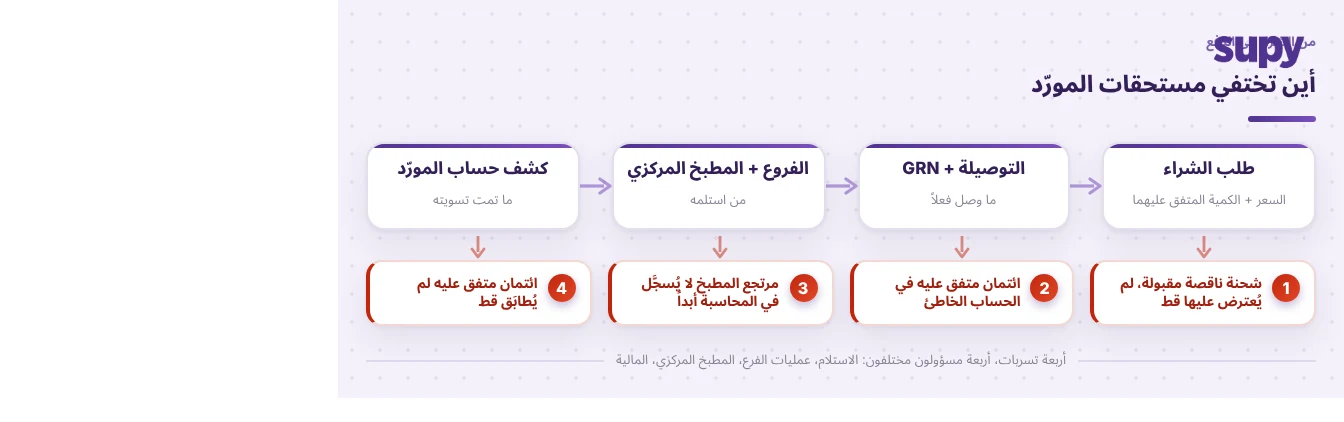
أين تختفي مستحقات المُوردين فعلياً؟
تتسرب مستحقات المُوردين في أربع نقاط: عند الاستلام، حين تُقبَل شحنة ناقصة أو بديلة دون رفع اعتراض؛ بين الفروع، حين يُتفق على ائتمان في حساب المورّد الخاطئ؛ في المطبخ المركزي، حين لا تصل المرتجعات إلى نظام المحاسبة قط؛ وعلى كشف الحساب، حين لا يُطابَق ائتمان متفق عليه مع ما طبّقه المورّد فعلياً.
لكل تسرّب مسؤول مختلف، وهذا هو السبب في فشل معالجة "المستحقات الضائعة" كمشكلة واحدة. يسهل التقليل من حجم الخسارة لأن كل ائتمان منفرد صغير القيمة. في مراجعة لأحد الأنظمة، رصد مدير عمليات متعدد المواقع 7 فجوات مستقلة في الاستلام وإشعارات الائتمان في جلسة واحدة. ووصف مدير مالي في مجموعة متعددة المواقع إدارة مستحقات المُوردين بأنها غائبة فعلياً عن سير عمل المشتريات: كانت المستحقات محفوظة في سلاسل البريد الإلكتروني وهوامش استمارات الاستلام، لا في أي نظام يمكن للمالية مطابقته. ليس هذا إهمالاً. تقع النقاط الأربع في نقاط عمياء لأربعة فرق مختلفة، ولا يرى شخص واحد المسار الكامل من شحنة ناقصة إلى كشف حساب مُسوَّى.
عند الاستلام: الشحنة الناقصة التي لا تتحول إلى اعتراض أبداً
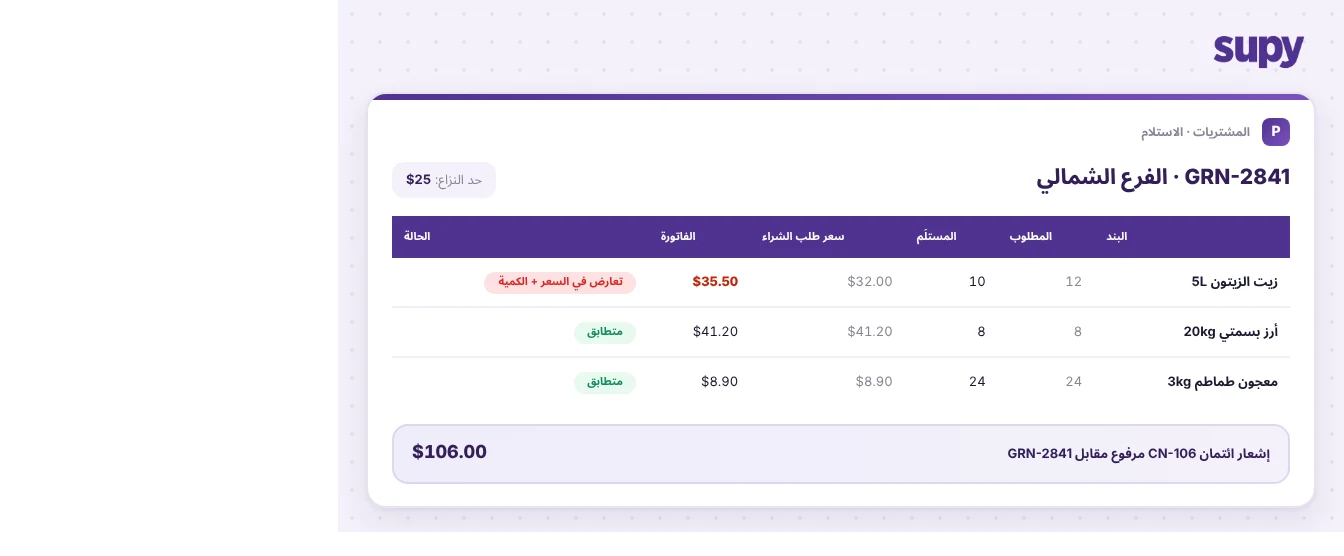
يُولَد الائتمان عند الاستلام، أو في الغالب لا يُولَد أصلاً. إذا لم تسجّل استمارة استلام البضائع (GRN) — أي سجل ما وصل فعلياً — الفجوة بين ما طُلب وما نزل من الشاحنة، أصبحت فاتورة المورّد السجل الوحيد، ولن يوجد الائتمان قط.
تعمل ظروف الاستلام ضد الدقة: توصيلات الفجر الباكر، والمنتجات متغيرة الوزن، وشخص واحد يراجع أربعين بنداً والسائق ينتظر. غير أن الحساب لا يتسامح مع هذه الظروف. مثال توضيحي بحت: موقع يستلم 200 توصيلة شهرياً، وإذا وصل 4% منها بعجز متوسطه 18$، فهذا يعني 144$ شهرياً تتسرب من موقع واحد، و1,728$ سنوياً، وعبر مجموعة من 12 موقعاً يتجاوز هذا 20,000$ من المستحقات التي لم تُطالَب قط. كل رقم هنا هو مثال مُحاسَب لا معيار صناعي؛ المغزى هو أن مبالغ التوصيلة الواحدة، الصغيرة جداً لملاحقتها منفردة، تتراكم لتصبح أموالاً حقيقية.
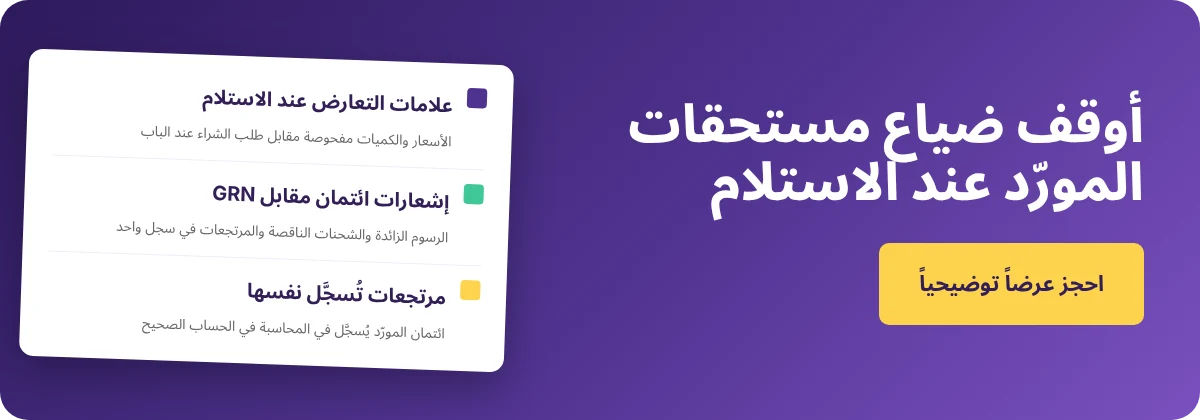
إغلاق هذا التسرب مسألة سير عمل لا مجهود. سير عمل الاستلام الفعّال يحقق أربعة أشياء: يحوّل طلب الشراء إلى GRN في خطوة واحدة، فيكون دائماً هناك خط مرجعي للمقارنة؛ ويتيح للمستلم تعديل الكمية والسعر عند الباب بينما الدليل لا يزال أمامه؛ ويُشير آلياً إلى تعارضات الأسعار والكميات مع طلب الشراء بدلاً من الاعتماد على الذاكرة؛ ويرفع إشعار الائتمان مقابل GRN نفسه، فيصبح النزاع وسجل التوصيلة كياناً واحداً. وثمة حارسان يمنعان الضوضاء من إخفاء الإشارة: حد النزاع، فتُطلق المستحقات على فجوات 80$ لا على فوارق التقريب البالغة 0.40$، وسقف للرسوم الإضافية لكل GRN حتى لا تمتص رسوم التوصيل تبايناً في أحد البنود بصمت. أما للمنتجات متغيرة الوزن، فتؤدي تفاوتات الوحدة نفس الدور: نقطة بداية عملية هي تفاوت ضيّق على البضائع المعبأة وأوسع على المواد الطازجة، يُعدَّل بمجرد أن تتمكن من رؤية سجل نزاعاتك الخاص.
بين الفروع والمطبخ المركزي: الائتمانات في الحساب الخاطئ
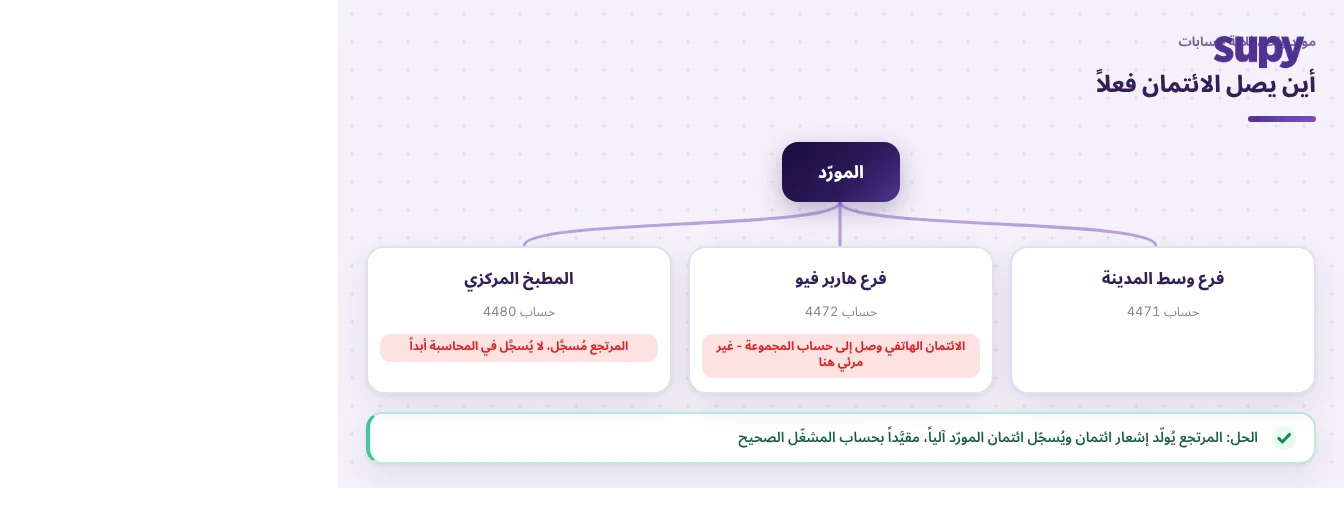
في المجموعة، السؤال ليس فقط "هل استلمنا الائتمان" بل "هل استلمه الكيان الصحيح". تمتلك المجموعات متعددة المواقع في الغالب رقم حساب مورّد مختلفاً لكل موقع، كما أن المطبخ المركزي يستلم من المُوردين ويشحن لفروعه في الوقت نفسه، فائتمان مُسجَّل في المكان الخاطئ يصل إلى الدفاتر الخاطئة ويختفي من نظر الشخص الذي يبحث عنه.
ثمة نمطا فشل رئيسيان. الأول هو الائتمان الهاتفي: يتفق مدير فرع على ائتمان مع سائق المورّد أو ممثله، فيُطبّقه المورّد على أي حساب يضبط نظامه عليه افتراضياً، ولا يرى الفرع الذي عانى من العجز الائتمان قط. الثاني هو النقطة العمياء في المطبخ المركزي: وصف أحد مدراء عمليات المطابخ المركزية مرتجعات مُوردين مُسجَّلة في المطبخ لم تصل إلى نظام المحاسبة إطلاقاً؛ واكتشفت الإدارة المالية الفجوة بعد أسابيع، خلال مطابقة كشوف الحساب، حين رفض رصيد المورّد ودفاتر المجموعة الاتفاق.
الحل بنيوي. حين تُسجَّل مرتجعات المورّد في نظام مُصمَّم لعمليات المجموعات، تُولّد عملية الإرجاع نفسها إشعار الائتمان وتدفعه إلى نظام المحاسبة المتصل كائتمان مورّد، فيكون الأثر الورقي موجوداً بصرف النظر عن تذكر أي شخص المتابعة. وإشعارات الائتمان مقيّدة بحساب مشغّل واحد، بمعنى أن مستحقات مُوردي علامة تجارية لا يمكن أن تختلط بعلامة أخرى حتى حين يخدم المورّد نفسه الاثنتين. مع هاتين الآليتين، يتوقف "من استلم ائتماننا" عن كونه مشروع بحث.
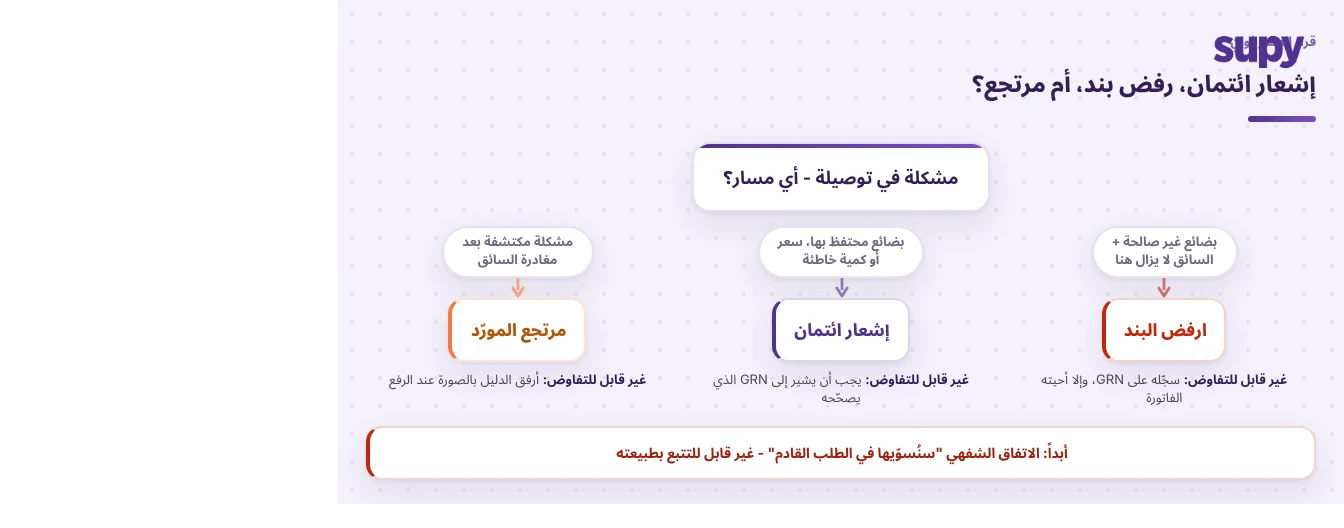
إشعار ائتمان أم رفض بند أم مرتجع: اختر في عشر ثوانٍ
القرار في لحظة الاكتشاف أبسط مما تجعله معظم الفرق. ارفض البند عند الباب حين تكون البضائع غير صالحة والسائق لا يزال حاضراً: لا حاجة لإشعار ائتمان، لأن الفاتورة المصحَّحة لا ينبغي أن تشمل هذا البند أصلاً. خذ إشعار ائتمان حين تحتفظ بالبضائع كلها أو بعضها لكن السعر أو الكمية خاطئ: رسوم مبالغة، أوزان ناقصة، بدائل متفق عليها بسعر مختلف. ارفع مرتجعاً للمورّد حين يظهر المشكل بعد مغادرة السائق: أضرار خفية، فشل في الجودة في منتصف الصندوق، منتج خاطئ مكتشف عند التحضير.
لكل مسار شرط غير قابل للتفاوض. يجب تسجيل الرفض على GRN لا مجرد إبعاده عن الشاحنة، وإلا ستُعيد الفاتورة إحياءه. يجب أن يشير إشعار الائتمان إلى GRN الذي يصحّحه، وإلا ستظل المالية تطابق ائتمانات يتيمة في نهاية الشهر. يحتاج المرتجع إلى إرفاق دليله في لحظة رفعه، لأن صورة التُقطت الساعة السابعة صباحاً تُحسم نزاعاً لا يستطيع بريد إلكتروني بعد ثلاثة أيام حسمه. المسار الواجب حظره كلياً هو الاتفاق الشفهي "سنُسوّيها في الطلب القادم"، وهو أقل كائن قابل للتتبع في مشتريات قطاع الضيافة وأعظم مفترس لكل رقم في هذا المقال.
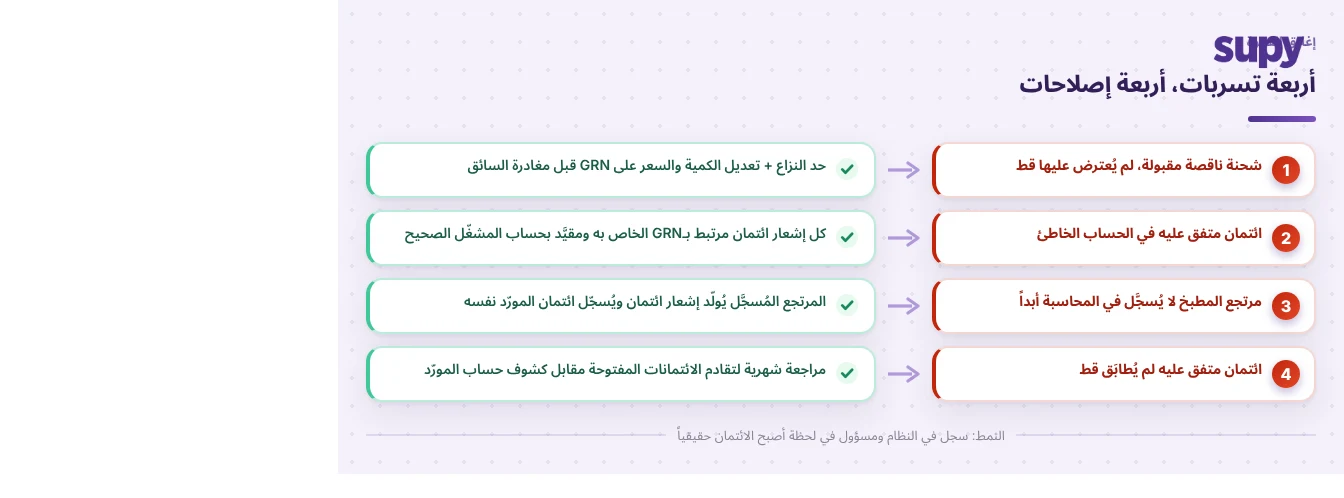
إغلاق التسربات الأربع
النمط خلف كل إصلاح واحد: يحصل الائتمان على سجل في النظام ومسؤول عنه في لحظة أصبح حقيقياً، لا في نهاية الشهر. مقيَّساً على النقاط الأربع: عند الاستلام، يحوّل حد النزاع والقدرة على تعديل الكمية والسعر على GRN كل فجوة إلى نزاع مُسجَّل قبل مغادرة السائق. وبين الفروع، يشير كل إشعار ائتمان إلى GRN الذي يصحّحه ويُقيَّد بحساب المشغّل الصحيح، فلا يقع أبداً في مكان لا يراه مسؤوله. وفي المطبخ المركزي، تُولّد عملية الإرجاع المُسجَّلة إشعار الائتمان وتُسجّل ائتمان المورّد في المحاسبة وحدها، مُزيلةً الخطوة اليدوية التي كانت تفشل باستمرار. وعلى كشف الحساب، تُمسك المراجعة الشهرية للائتمانات المفتوحة المتقادمة مقابل كشوف حسابات المُوردين بالمتبقي، لأن ائتماناً لا يطابقه أحد هو ائتمان لا يضطر المورّد قط إلى تسديده. بهذه الطريقة، تتوقف المستحقات عن كونها مصالح يُلاحَق أصحابها وتصبح مستحقات لها تقرير تقادم.
جرّب هذا الاختبار الذاتي هذا الأسبوع: استخرج كشف الشهر الماضي من أعلى موردَين من حيث الحجم لموقعَين من مواقعك، وأحصِ عدد المستحقات التي تستطيع تتبعها من الألف إلى الياء: من نزاع مُسجَّل عند الاستلام، إلى إشعار ائتمان في نظامك، إلى ائتمان مُطبَّق على الكشف. الائتمانات المتفق عليها دون سجل في النظام تعني أن التسرب في الاستلام. الائتمانات الجالسة في الكيان الخاطئ تعني أن التسرب في هيكل حساباتك. ابدأ بحد نزاع وقت الاستلام في كلتا الحالتين، لأن الاستلام هو المكان الذي تولد فيه المستحقات أو تضيع.
تُغلق منظومة المشتريات في Supy التسربات الأربع في سير عمل واحد: تحويل طلب الشراء إلى GRN بنقرة واحدة مع تحقق آلي من تعارضات الأسعار والكميات، وإشعارات ائتمان مرفوعة مباشرة مقابل GRN للرسوم الزائدة والرسوم الخاطئة والمرتجعات، وأحد حد النزاعات القابلة للتهيئة وسقوف الرسوم لكل GRN، ومرتجعات تُولّد ائتمان المورّد في نظام محاسبتك المتصل آلياً، مقيَّدة بحساب المشغّل الصحيح. اكتشف كيف يناسب مجموعتك من خلال صفحة منصة مشتريات المطاعم، أو ابدأ بمعرفة كيف تعمل إدارة GRN عبر مواقع متعددة.