.jpeg)


الجرد الدوري مقابل الجرد الشامل: كيف تحافظ المطاعم متعددة المواقع على دقة المخزون دون إغلاق المطبخ؟

ما الذي يُخبرك به الجرد الدوري والجرد الشامل؟
يحصي الجرد الشامل كل بند في الموقع في جلسة واحدة لإعداد تقييم مكتمل وآني للمخزون. أما الجرد الدوري فيفحص شريحة صغيرة متناوبة من المخزون — عادةً أقسامك الأعلى قيمةً أو الأسرع دورانًا — وفق جدول منتظم. يمنحك الأول خطًا أساسيًا لكامل الموقع بضع مرات في الفترة؛ بينما يحافظ الثاني على دقة هذا الخط في الفترات الفاصلة دون توقف الخدمة.
كثيرًا ما يُقدَّم الأسلوبان على أنهما منافسان، غير أنهما يُجيبان على أسئلة مختلفة. يُخبرك الجرد الشامل بقيمة العملية بأكملها الآن. بينما يُخبرك الجرد الدوراني المتجدد بما إذا كانت الأقسام الأكثر عرضة للانجراف — البروتينات والمشروبات الروحية والمنتجات عالية السرقة أو عالية التلف — لا تزال تتوافق مع النظام اليوم. تحصل مجموعات متعددة المواقع التي تتعامل مع الأسلوبين بوصفهما نظامًا متكاملًا، بدلًا من الاختيار بينهما، على تقييم دقيق وإشارة إنذار مبكر في آنٍ واحد. يُبيّن المقارنة أدناه أين يُحقق كل أسلوب قيمته.
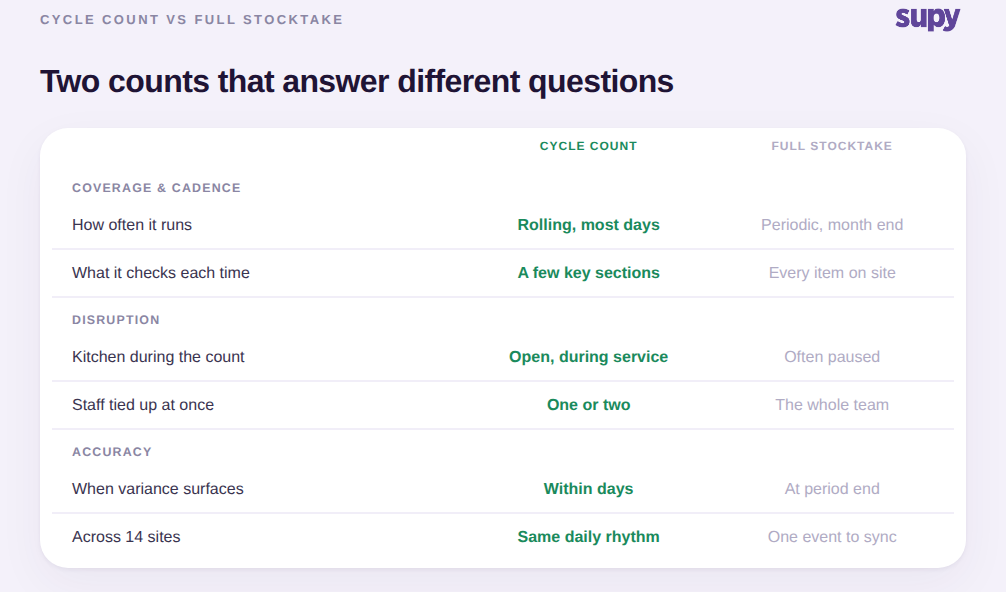
لماذا يختبئ التباين بين عمليات الجرد الشامل؟
يكمن ضعف الاعتماد على الجرد الشامل وحده في التوقيت. بين عمليات الجرد، يستمر المخزون في الحركة — التسليمات والتجهيز والهدر والأخطاء العرضية في الجرد — دون أن يظهر أي شيء مقابل النظام حتى عملية الجرد الشاملة التالية لكامل الموقع. بحلول ذلك الوقت، تكون الفجوة اليومية الصغيرة قد تراكمت إلى رقم لا يستطيع أحد تفسيره. في مراجعة مخزون إحدى مجموعات الفروع المتعددة، بلغت الفجوة ما يقارب 54,000 وحدة صافية بعد احتساب الفروق الإيجابية والسلبية، وهو انجراف تراكم بهدوء بين عمليات الجرد غير المتكررة.
تكلفة هذا التأخير ليست نظرية. فالفجوة التي لا تظهر إلا عند الجرد الفصلي تكون قد تراكمت طوال ربع عام كامل، فتجد نفسك تُسوّي السجلات التاريخية بدلًا من التعامل مع مشكلة حية. يُغلق الجرد الدوري هذه الفجوة بفحص الأقسام الأكثر خطورة بتكرار كافٍ ليظهر التباين بينما لا تزال قادرًا على التصرف. للاطلاع على معالجة أشمل لتتبع مصدر الفجوة، راجع دليلنا حول تحليل التباين في مخزون المطاعم.

إجراء جرد دوراني دون إغلاق المطبخ
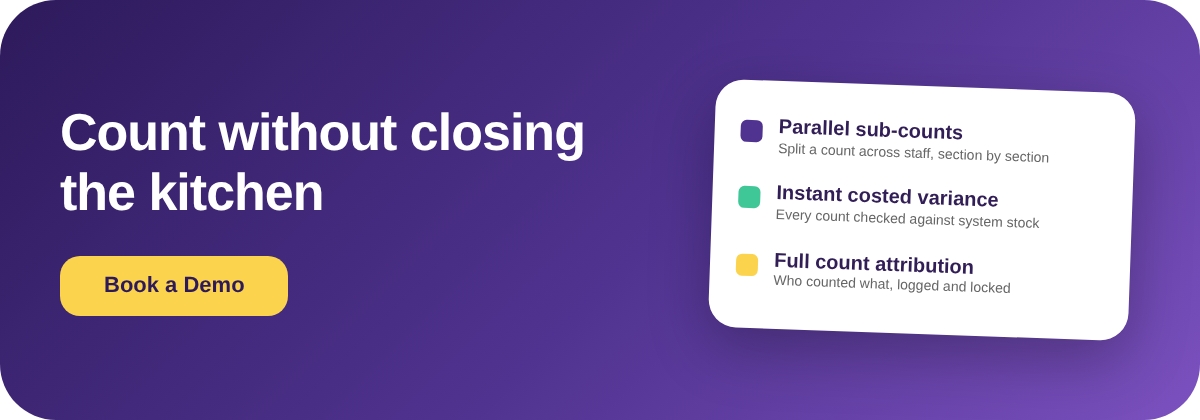
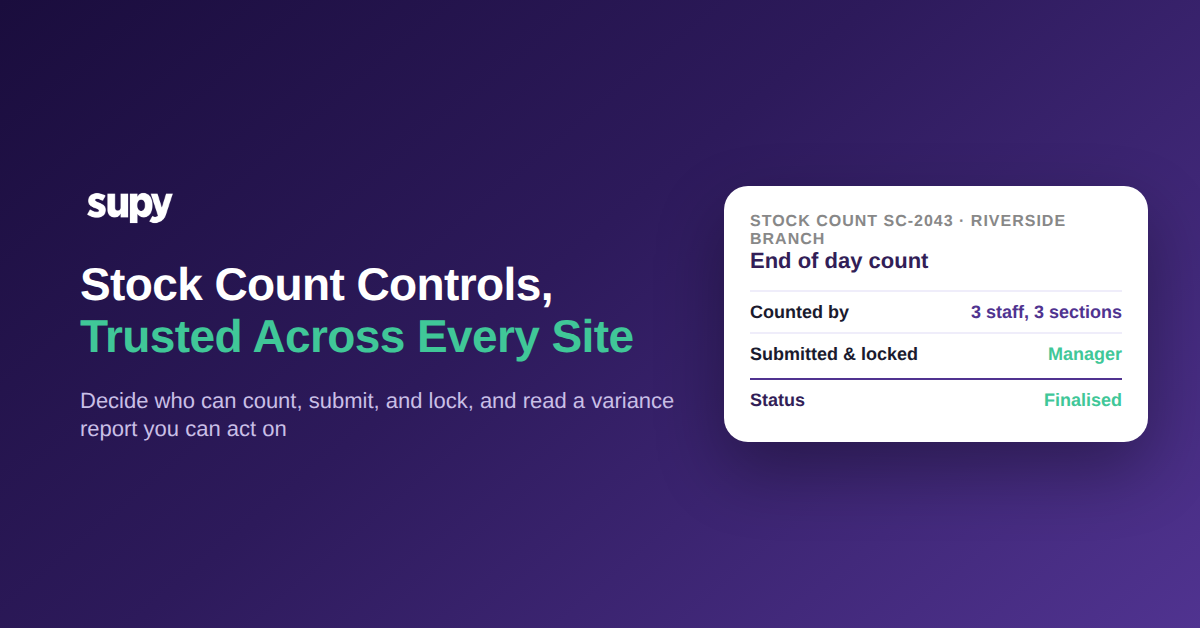
الاعتراض الذي يُبديه معظم المشغّلين عملي: من لديه وقت للجرد أثناء الخدمة؟ الجواب أن الجرد الدوري ليس جردًا شاملًا مُصغَّرًا، بل هو سير عمل مختلف. في Supy، يمكن تقسيم جرد مخزون واحد إلى جرد فرعية ليتمكن عدة أشخاص من جرد أقسام مختلفة في الوقت ذاته، يُغلق كل منهم قسمه عند الانتهاء حتى لا يُلغي أحد عمل الآخر. يجرد شخص غرفة التبريد قبل بدء الخدمة بينما يفحص آخر البار بعد الإغلاق، وتندمج الجرود تلقائيًا مع توثيق كامل لمن جرد ماذا.
ولأن كل جرد يُقارن بالمخزون النظري فور تسليمه، يُحدّد النظام تكلفة كل فجوة ويُسجّلها في دفتر المخزون على الفور. لن تضطر لانتظار مطابقة جداول البيانات؛ بل ترى ما وجده الجرد مقارنةً بما توقعه النظام، مع تكلفة كل فجوة، قبل بداية النوبة التالية. يُعدّ تحديد مدى تكرار جرد كل قسم سؤالًا مستقلًا، ونتناول الوتيرة المثلى في معيار تكرار جرد المخزون. الحيلة العملية هي جدول يُدرج المخزون عالي القيمة سريع الحركة في الجرد بشكل أكثر تكرارًا، والمخزون منخفض القيمة بطيء الحركة بشكل أقل.
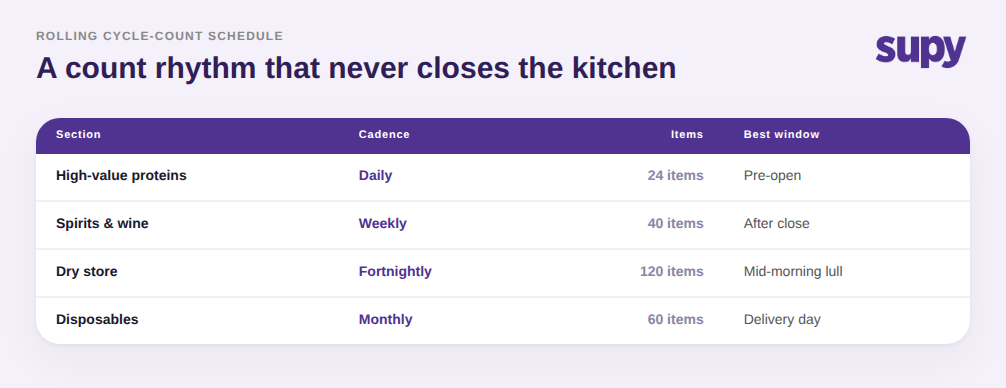
اختيار إيقاع الجرد — وما يُوفّره
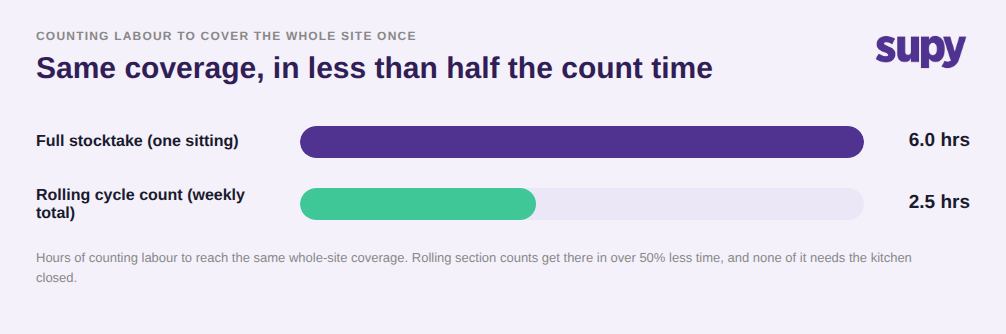
لا يعني هذا اختفاء الجرد الشامل. فهو يظل الخط الأساسي الدوري الذي يُعيد ضبط التقييم الكلي ويرصد ما فاته في الدورة. الهدف هو التوقف عن الاعتماد عليه وحده مصدرًا للحقيقة. يُغيّر تطبيق الجرد الدوراني المتجدد بالتوازي مع الجرد الشامل اقتصاديات الجرد أيضًا: يستلزم تحقيق التغطية الكاملة ذاتها لكامل الموقع من خلال جرد أقسام قصير ومتوازٍ عمالةً أقل بكثير من إغلاق الموقع لجرد طويل واحد، مما يُقلّص وقت الجرد بأكثر من 50% مع إبقاء المطبخ مفتوحًا.
القاعدة إذن بسيطة. استخدم الجرد الدوراني المتجدد حين تحتاج إلى الحفاظ على دقة المخزون عالي القيمة أو كثير الحركة يومًا بيوم، ورصد التباين بينما لا يزال صغيرًا، وتجنب إغلاق المطبخ للقيام بذلك. اعتمد على الجرد الشامل حين تحتاج إلى تقييم مكتمل ومُدقَّق للفترة، أو لحسابات نهاية الشهر، أو كخط أساسي لفتح موقع جديد. إن كنت لا تُجري سوى جرد شامل حاليًا، ابدأ بإدراج أعلى ثلاثة أقسام قيمةً في دورة أسبوعية وراقب مدى سرعة ظهور أول الفجوات. هذا عادةً كل ما يلزم لترى لماذا ينتمي الأسلوبان معًا لا في تنافس.