.jpeg)


برامج المشتريات للمطاعم مقابل جداول البيانات: متى تحتفظ بكل منهما
جداول البيانات مقابل برامج المشتريات: ما الفرق الحقيقي
جدول البيانات يسجل ما طلبته. برنامج المشتريات يربط كل طلب بأسعار المورّد الحالية، ووصفاتك ومخزونك. ثم يعيد حساب التكلفة فور تغير سعر أو جرد. هذا هو الفرق كله: سجل ثابت في مقابل رابط حي.
كلا الأداتين يمكنهما إدارة عملية شراء منظمة. السؤال الحقيقي ليس أيهما أكثر تطورًا، بل كم من المواقع والموردين وتغييرات الأسعار تتحمله قبل أن يكلفك الخيار اليدوي وقتًا وهامشًا أكثر مما يوفره.
جدول البيانات يحتفظ بالرقم الذي كتبته آخر مرة. نظام المشتريات يحتفظ بالرقم كما هو الآن، لأنه يقرأ أحدث سعر فاتورة ويدفعه إلى كل وصفة تستخدم هذا العنصر. في موقع واحد هذا الفارق صغير. عبر مجموعة، هذا الفارق هو الفاصل بين تقرير تكلفة تثق به وآخر تصحح أرقامه بعد الحدوث.
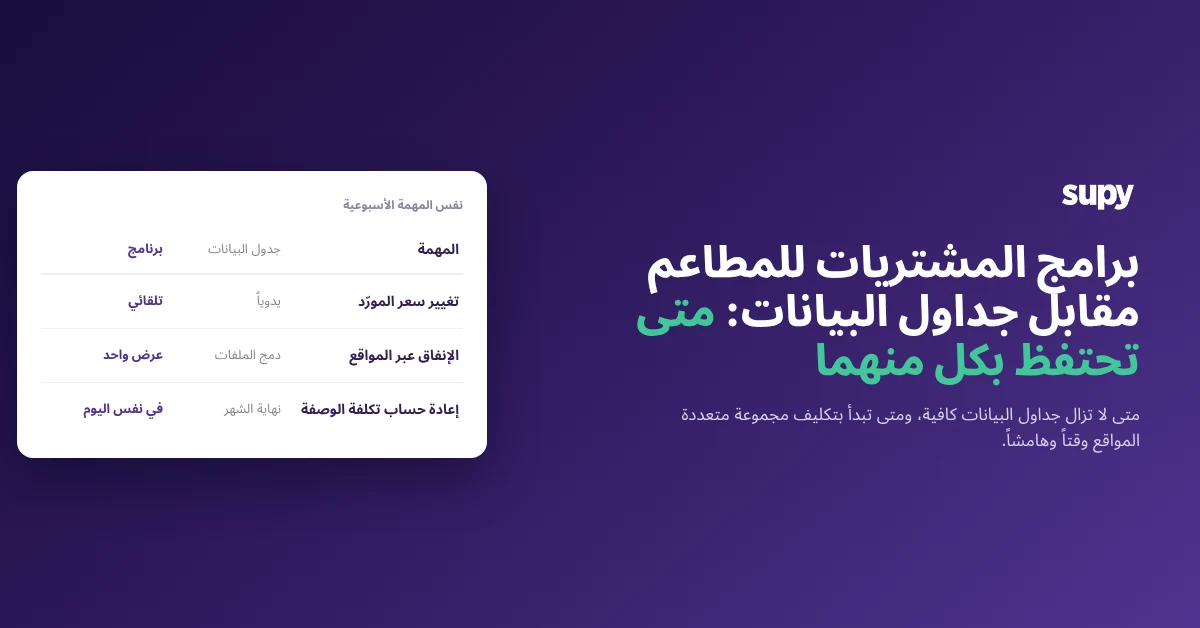
يقارن الجدول الأداتين في المهام التي يؤديها المشتري المتعدد المواقع كل أسبوع.
| المهمة الأسبوعية | جدول البيانات | برنامج المشتريات |
|---|---|---|
| تسجيل طلب | سريع، والجميع يعرف كيف | سريع، مع السعر والمورّد معبّأَين تلقائيًا |
| تتبع تغيير سعر | يكتشفه شخص على الفاتورة ويعدّله يدويًا | يُرصد عند الاستلام ويُطبَّق على كل وصفة |
| رؤية الإنفاق عبر المواقع | ورقة لكل موقع، تُدمج لاحقًا | عرض حي واحد للمجموعة كلها |
| إعادة تسعير وصفة بعد تغيير سعر | يدوي، ينتظر نهاية الشهر | تلقائي في اليوم ذاته |
| اكتشاف خطأ | تتبع الصيغ يدويًا | تنبيه مرتبط بالطلب والجرد |
متى يكون جدول البيانات لا يزال الخيار الصحيح
جدول البيانات هو الأداة المناسبة حين يظل العمل كله في رأس واحد. موقع واحد، وقائمة قصيرة، وقائمة مورّد نادرًا ما تتغير، نادرًا ما تحتاج أكثر من ورقة بيانات محكمة البناء. أحد المشغلين أخبرنا أنه يعمل بجدول بيانات ونظام داخلي، وهو راضٍ ولا يخطط للتغيير. لمطبخ واحد بأسعار ثابتة، هذا قرار سليم لا ثغرة.
قوة جدول البيانات أنه لا يكلف شيئًا للبدء وينحني لأي شيء تريده. سطر جديد، مورّد لمرة واحدة، حجم عبوة غريب: تكتبه ببساطة. هذه المرونة حقيقية، وهي السبب في أن كثيرًا من المشغلين الجيدين يبقون على جداول البيانات أطول مما يعترف أي بائع برامج.
احتفظ بجدول البيانات ما دامت هذه الشروط صحيحة:
- موقع واحد، أو مواقع تطلب بشكل مستقل. لا شيء يحتاج إلى تسوية عبر مواقع، فورقة لكل مطبخ كافية.
- قائمة قصيرة ومستقرة. وصفات قليلة تعني أن تغيير سعر يمس خلايا قليلة.
- حفنة من الموردين الذين نادرًا ما تتغير أسعارهم. التعديلات اليدوية تبقى سريعة حين تكون نادرة.
- شخص واحد يمتلك جدول البيانات. الصيغ والتفاصيل تعيش مع شخص يراجعها.

النقطة التي تتوقف عندها جداول البيانات عن التوسع
جداول البيانات تنكسر عند الدرزات التي لا تراها. مجموعة من أربعة مواقع تشغّل ورقة لكل مطبخ لا ترى الإنفاق الكلي حتى يدمج أحدهم الملفات، وحينها تكون الأسبوع قد انتهى. أحد المشغلين ذوي أربعة مواقع كان يتتبع تكلفة الغذاء وبيانات الفواتير يدويًا ولم يكن لديه رؤية في الوقت الفعلي عبر المواقع. طاهٍ على ورقة قديمة وصف إدارة المخزون بأنها مرهقة وعرضة للأخطاء.
التوسع يضيف موردين إلى جانب المواقع. مشغل يدير عشرة موردين كثيرًا ما ينتهي به الأمر بتشغيل الطلبات عبر رسائل ولقطات شاشة وقوائم منفصلة، مع ورقة مختلفة لكل موقع. كل تسليم هو مكان يمكن فيه أن يضيع رقم. المطبخ المركزي يغذي عدة منافذ يجعل الأمر أصعب، لأن النقل الداخلي يجب تسعيره وتسجيله بعناية كفاتورة المورّد. المطبخ المركزي يحتاج رقابة دقيقة.
الإجهاد يظهر في أماكن متوقعة:
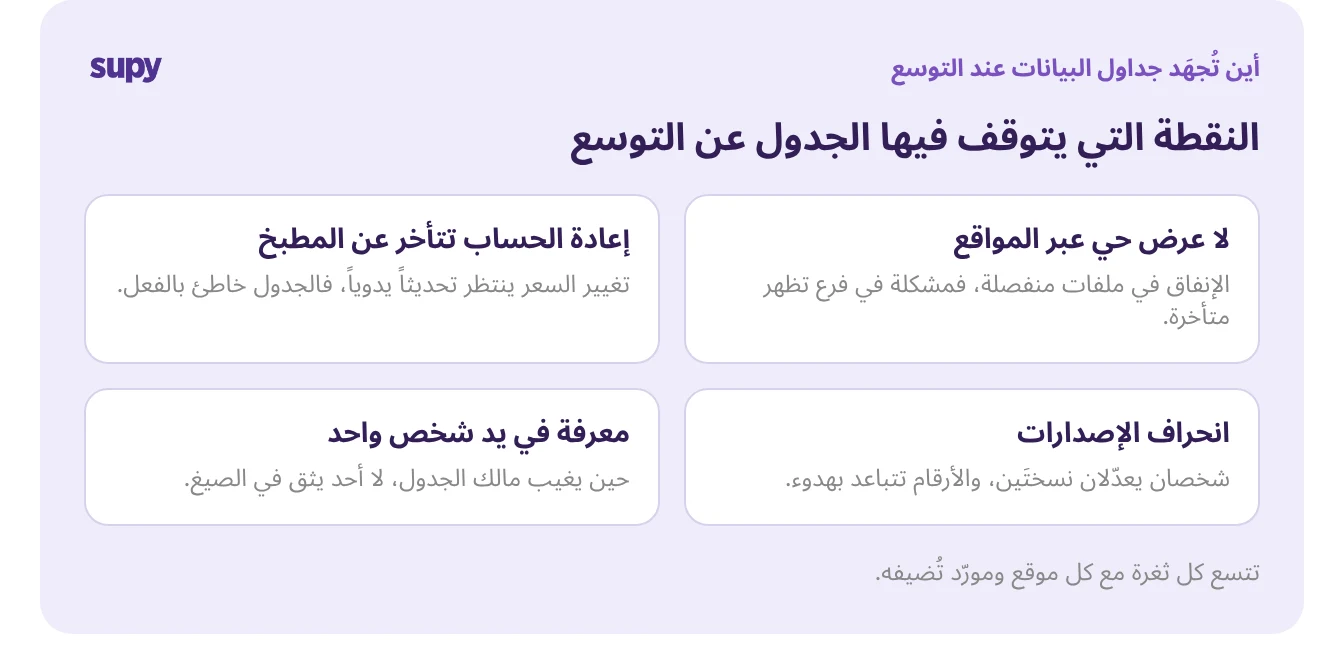
- لا رؤية حية عبر مواقع الشركة. الإنفاق والهامش يجلسان في ملفات منفصلة، فمشكلة في فرع تظهر متأخرة.
- إعادة التسعير تتخلف عن المطبخ. تغيير السعر ينتظر تحديثًا يدويًا، فالتكلفة في الورقة صارت خاطئة بالفعل.
- انجراف الإصدارات. شخصان يعدلان نسختين، والأرقام تتباعد بصمت.
- المعرفة على عمق واحد. حين يغيب صاحب الورقة، لا أحد يثق في الصيغ.
تغييرات أسعار الموردين: التكلفة التي تخفيها جداول البيانات
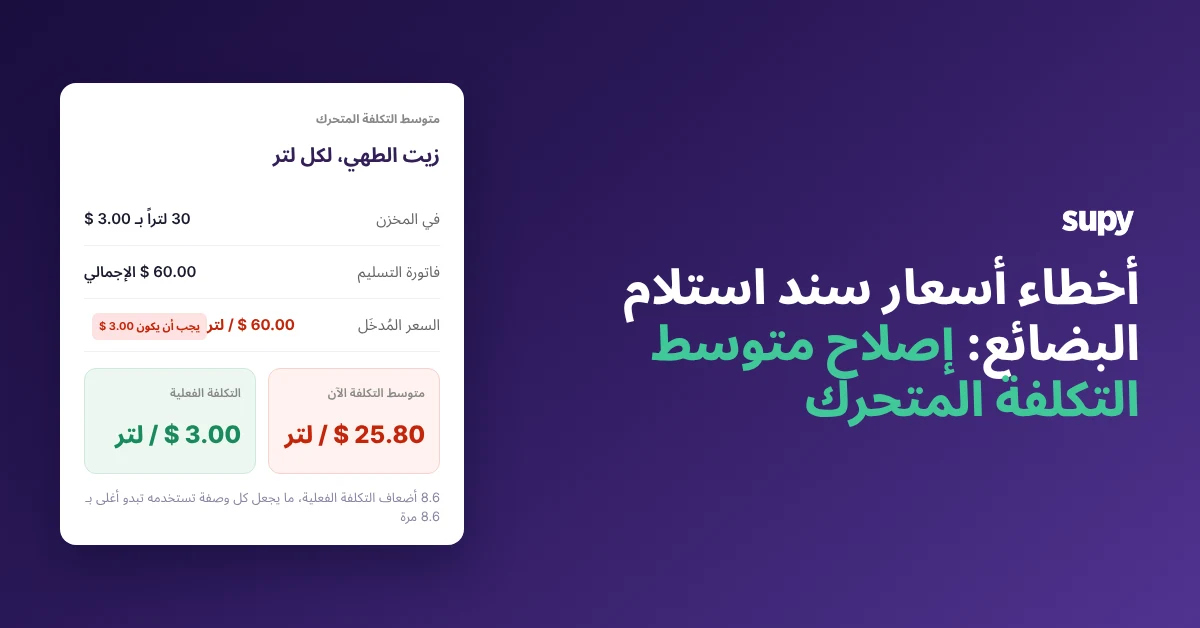
نقطة الانكسار الأوضح هي السعر. أحد المشغلين رأى أسعار المورّد ترتفع من سندات التسليم واحتفظ بأسعار القائمة ثابتة على أي حال، فانزلق الهامش دون أن يقرر أحد السماح بذلك. على جدول البيانات، الارتفاع لا يُرصد إلا إذا قرأ شخص ما كل فاتورة وعدّل كل وصفة تمسّها.
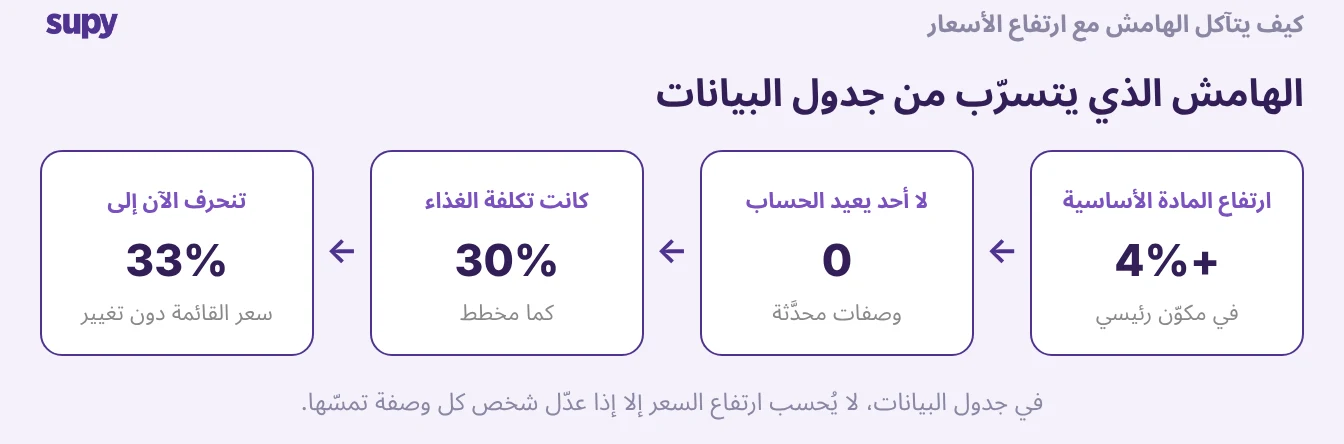
التكلفة تتراكم بصمت. لنفترض أن خطًا أساسيًا يرتفع بنسبة 4% ولا أحد يعيد تسعير الأطباق التي تستخدمه. طبق مبني بتكلفة غذاء 30% قد ينجرف إلى 33% بينما سعر القائمة لا يتحرك. عبر عشرة موردين وعدة مواقع، بضعة ارتفاعات غير ملحوظة هي الفجوة بين الهامش الذي خططت له والذي حصلت عليه.
هذه هي المهمة الوحيدة التي تُجيد فيها الورقة الأداء الأسوأ، لأنها تعتمد على شخص يلاحظ. النظام يقرأ السعر الجديد عند الاستلام ويطبقه على كل وصفة متأثرة قبل خروج الطلب التالي. اصطياد تحركات السعر مبكرًا هو محور دليلنا لـإدارة أسعار الموردين، وهو حيث تفترق الأداتان أحد الافتراقات الأبرز.
كيف تقرر: احتفظ بجدول البيانات أم انتقل
طابق الأداة بشكل مجموعتك، لا بالتقويم. احتفظ بجدول البيانات ما دام العمل يناسب رأسًا واحدًا والأسعار ثابتة. انتقل إلى برنامج مشتريات المطاعم حين يبدأ تتبع الأسعار والرؤية عبر المواقع وإعادة التسعير في أكل الأسبوع.
| الإشارة | احتفظ بجدول البيانات | انتقل إلى برنامج |
|---|---|---|
| المواقع | موقع واحد، أو مستقلة تمامًا | عدة مواقع تشترك في موردين أو وصفات |
| تحركات سعر المورّد | نادرة وسهلة الملاحظة | متكررة وتمر من دون أن تلاحظها |
| الإنفاق عبر المواقع | غير مطلوب | مطلوب أسبوعيًا لا في نهاية الشهر |
| إعادة التسعير | تواكب يدويًا | دائمًا خطوة متأخرة |
اختر الصف الذي يصف هذا الشهر. إذا هبط صفّان أو أكثر في العمود الأيمن، فجدول البيانات يكلفك بالفعل هامشًا، والتبديل يستعيد تكلفته من أول تحركات الأسعار التي يرصدها.