.jpeg)


تتبع مردودات وصفة التحضير وإنتاج الدفعات: أين تتسرب تكلفة الغذاء في المواقع المتعددة بين الشراء والطبق
مرحلة التحضير التي لا يقيسها أحد – وما تكلفها
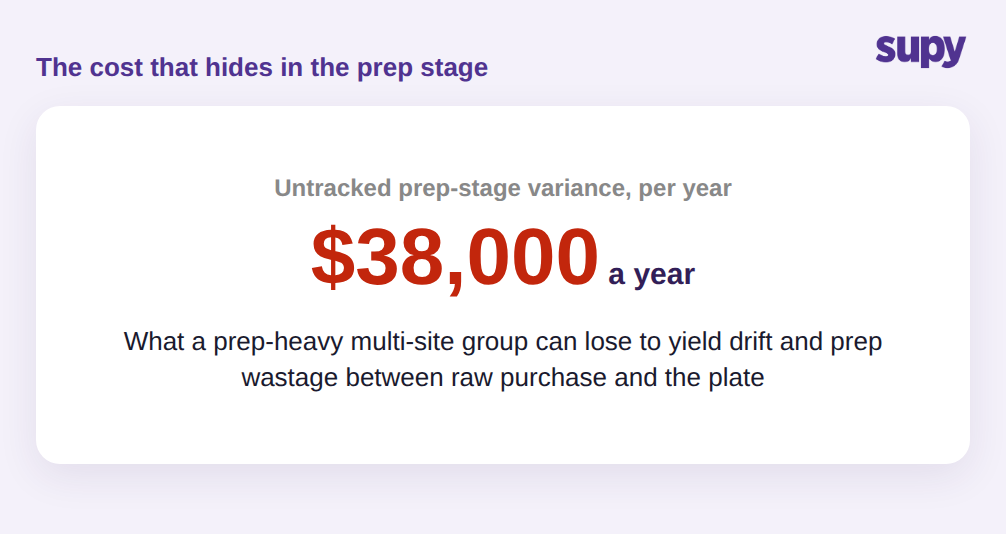
تشمل مرحلة التحضير كل خطوة بين وصول المكوّن الخام ووجود عنصر قابل للبيع: التشذيب، والتقسيم، والطهي، وإنتاج الدفعات. لها تكاليفها ومردوداتها وفاقدها الخاص، وفي معظم المجموعات لا يُقاس شيء من ذلك. يتوقف احتساب التكاليف عند الطبق النهائي، فتبقى الخسارة بين الفاتورة والمنتج شبه الجاهز غير مرئية. يمكن لمجموعة متعددة المواقع كثيفة التحضير أن تخسر ما يقارب 38,000 دولار سنوياً بسبب الانحراف في المردود والفاقد في التحضير الذي لا يُسجَّل في أي تقرير، لأن الأرقام لا توجد إلا في ذهن الطاهي.
يسد Supy هذه الفجوة باحتساب تكلفة الوصفات في مرحلة الإنتاج، لكل موقع ولكل تاريخ، مستخدماً متوسط التكلفة أو آخر سعر شراء، بحيث تعكس نسبة تكلفة الغذاء التكلفة الفعلية للإنتاج في كل موقع بدلاً من متوسط المجموعة. الخطوة الأولى هي قبول أن مرحلة التحضير مركز تكلفة وليست صندوقاً مجهولاً. حين يصبح كل منتج شبه جاهز وصفةً محسوبة، تتحول الخسارة من مجرد رواية إلى رقم يمكن رؤيته والمقارنة بينه بين المواقع وإدارته. تكتشف المجموعة التي تفعل ذلك أن أكبر مفاجآتها نادراً ما تكون في البروتينات الغالية التي يراقبها الجميع، بل في عناصر التحضير عالية الحجم التي لم يفكر أحد في احتسابها.
لماذا لا يتطابق المردود النظري مع المردود الفعلي في المطبخ
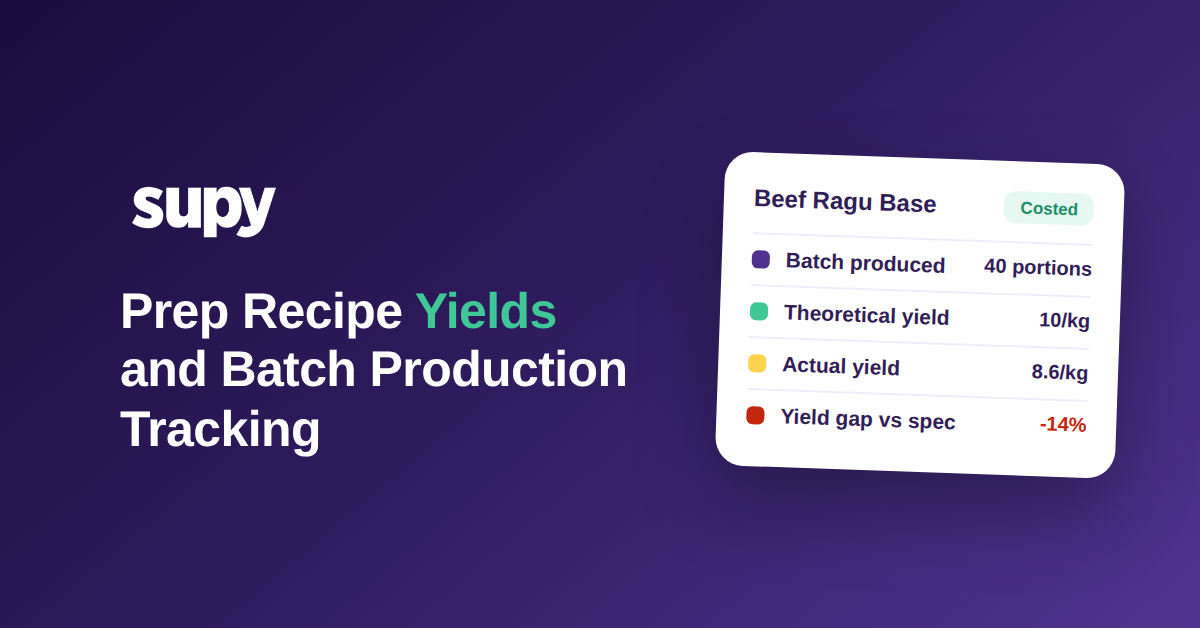
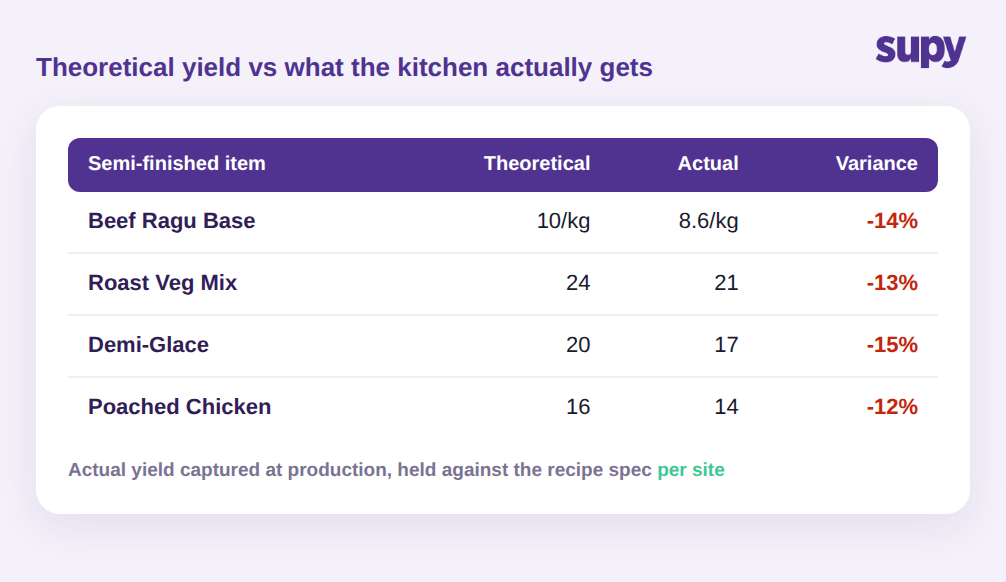
تشير وصفة ما إلى أن كيلوغراماً واحداً من اللحم المشذَّب يعطي 10 حصص. يحصل المطبخ على 8.6. فجوة الـ 14% هذه ليست خطأً؛ إنها تفاوت طبيعي ناتج عن طريقة تشذيب الفريق، وكيفية تصرف القطعة في يوم معين، وكيفية تقسيم الطاهي تحت الضغط. المشكلة أن المردود النظري المحفوظ في جدول بيانات لا يتعلم أبداً. حين يُنتج المشغّلون من وصفة، يحتاجون إلى تسجيل الكمية الفعلية المستخدَمة والمنتَجة أثناء الإنتاج، لا القيمة النظرية وحسب، حتى تُقارن الاستهلاك الفعلي بمواصفات الوصفة. بدون ذلك، يُبنى كل احتساب لاحق على مردود لم يبلغه المطبخ منذ أشهر.
يسجّل Supy الكمية الفعلية عند نقطة الإنتاج، بحيث يجلس المردود النظري والفعلي جنباً إلى جنب لكل منتج شبه جاهز. على مستوى المجموعة، هذه المقارنة هي المكان الذي يتضح فيه النمط: موقع يحافظ على مردود الوصفة بينما آخر يقصر باستمرار – هذا إشارة تدريب وتقسيم، لا خطأ تقريب. المنهجية النظرية-مقابل-الفعلية ذاتها التي تطبقها المجموعات بالفعل على مقال مدونة Supy: التباين في تكلفة الغذاء للأطباق النهائية تعمل الآن في مرحلة أسبق، على التحضير نفسه، قبل أن تتراكم التكلفة وتصل إلى الطبق.
منتجات شبه جاهزة بلا قيمة في المخزون
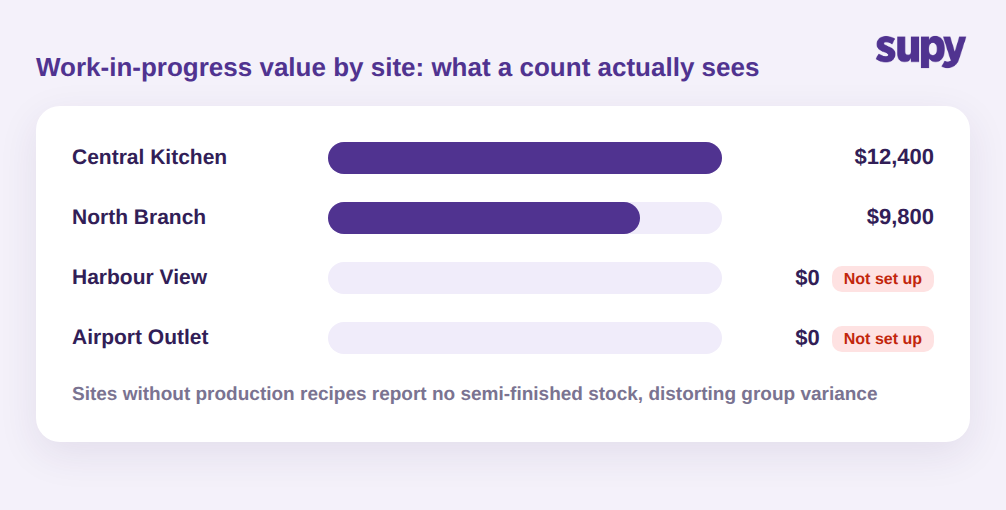
اسأل معظم الأنظمة عن قيمة دفعة صلصة محضَّرة أو صينية بروتينات مقسَّمة وستعود بلا إجابة. العناصر قيد التصنيع غير مرئية لأن المادة الخام استُهلكت لكن لم يُبَع أي منتج نهائي، فتقع القيمة في فجوة. أشار رئيس الطهاة في مجموعة متعددة المواقع إلى هذا بالضبط: حين لا تُهيَّأ وصفات الدفعات والإنتاج، لا تستطيع أحداث الإنتاج تحويل المواد الخام إلى منتجات شبه جاهزة، وتُظهر تلك العناصر قيمة مخزون صفرية. موقع كثيف التحضير قد يحمل أموالاً حقيقية في أواني وحاويات لا يراها تقرير الجرد ببساطة.
يهم هذا أكثر عبر مجموعة تكون فيها بعض المواقع قد هيّأت الإنتاج وأخرى لم تفعل. المواقع غير المهيَّأة تُبلَّغ فيها مخزونات فعلية أقل مما هو موجود في كل جرد، مما يُشوّه بصمت التباين وطلبيات الشراء والتقييم للمجموعة بأكملها، ويجعل فرعَين متطابقَين بخلاف ذلك يبدوان مختلفَين كلياً على الورق. إعداد وصفات الإنتاج لكي يحمل المخزون شبه الجاهز قيمته الحقيقية هو الحل – وهو قرار إعداد، لا قيد برمجي. حين يصير ذلك نافذاً، يعكس الجرد كل ما تحتفظ به المطبخ فعلياً، خاماً وشبه جاهز على حد سواء.
كيف يرفع الفاقد والانكماش في التحضير تكلفة الطبق بصمت
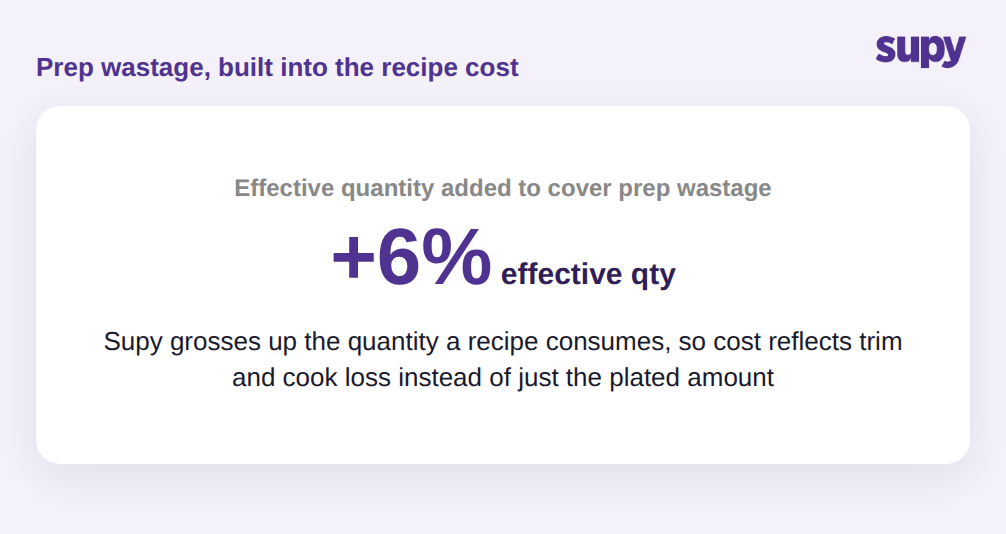
كل وصفة تستهلك أكثر مما يبدو. يعني التشذيب والتقشير والتبخر وخسائر المناولة أن الكمية الفعلية المستخدَمة أعلى من الكمية التي تصل إلى الطبق. إن احتُسبت التكلفة على الكمية المقدَّمة وحدها، تكون الوصفة ناقصة التكلفة وتبدو الهامش أفضل مما هي عليه. يُضخّم Supy الكمية الفعلية لتغطية فاقد التحضير، فتُحتسب وصفة تحمل مثلاً 6% فاقد تحضير على ما تستهلكه المطبخ فعلياً، مع إدراج نسبة المردود والفاقد كليهما في التكلفة لكل موقع. الرقم لا يشمل الضريبة، فتُحتسب نسبة تكلفة الغذاء على السعر الصافي للمكوّن.
الأثر العملي أن الانكماش يتوقف عن كونه مفاجأة نهاية الشهر ويصبح سطراً في تكلفة الوصفة نفسها. يمكن للمجموعة مقارنة الوصفة ذاتها عبر المواقع ورؤية أين يرتفع فاقد التحضير، وهو عادةً مشكلة تدريب أو تقسيم تتنكر في هيئة مشكلة تكلفة. إصلاح ذلك في موقع واحد ومشاهدة تكلفة الوصفة تنخفض يُقنع رئيس الطهاة أكثر بكثير من محاضرة في جدول بيانات عن الهدر.
سجّل دفعة مرة واحدة – يتحدث المخزون والتكاليف تلقائياً
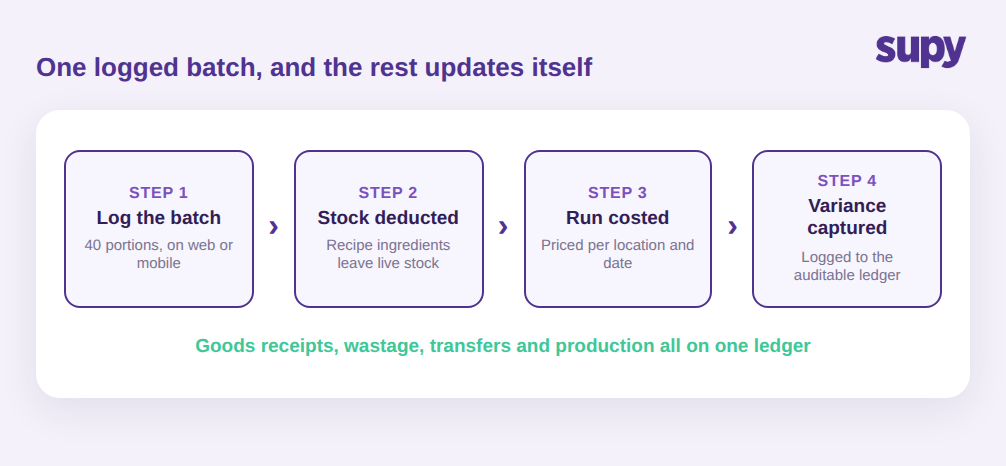
سبب إهمال تتبع التحضير هو الاحتكاك: لا أحد يريد إدخال الإنتاج في نظام ثانٍ بعد نوبة طويلة. يُزيل Supy ذلك بتمكين فرق المطبخ من تسجيل حدث إنتاج دفعة على الويب أو الجوال، مع إمكانية البحث في الوصفات التحضيرية المؤهَّلة حسب الموقع والتاريخ. سجّل دفعة من 40 حصة من صلصة شبه جاهزة ويُقلّص Supy الكميات الصحيحة من المكوّنات من المخزون الفعلي في ذلك الموقع، ويحتسب تكلفة الدورة ويعكسها في مستويات المخزون تلقائياً. كل دورة إنتاج تُسجَّل في دفتر أستاذ قابل للتدقيق يجمع استلام البضائع والفاقد والتحويلات، بحيث يمكن لاستعلام نهاية الشهر أن يُظهر بالضبط كيف تغيّر المخزون في أي موقع ولماذا.
بالنسبة للمجموعات التي تشغّل وصفات تحضير شبه جاهزة، يتتبع Supy أيضاً كميات الإنتاج تلقائياً حين يُكتشف مخزون سالب، فيلتقط التباين دون إدخال يدوي منفصل من الفريق. هذا هو الفرق بين نظام يطلب من المطبخ مزيداً من الإدارة ونظام يحوّل ضغطة واحدة إلى مخزون دقيق وتكاليف وتباين عبر كل موقع. كلما قل الاحتكاك، زاد اتساق التقاط البيانات – والاتساق هو ما يجعل المقارنة بين المواقع موثوقة أصلاً.
مكوّن خام واحد، منتجات متعددة: احتساب مردودات التفكيك بدقة
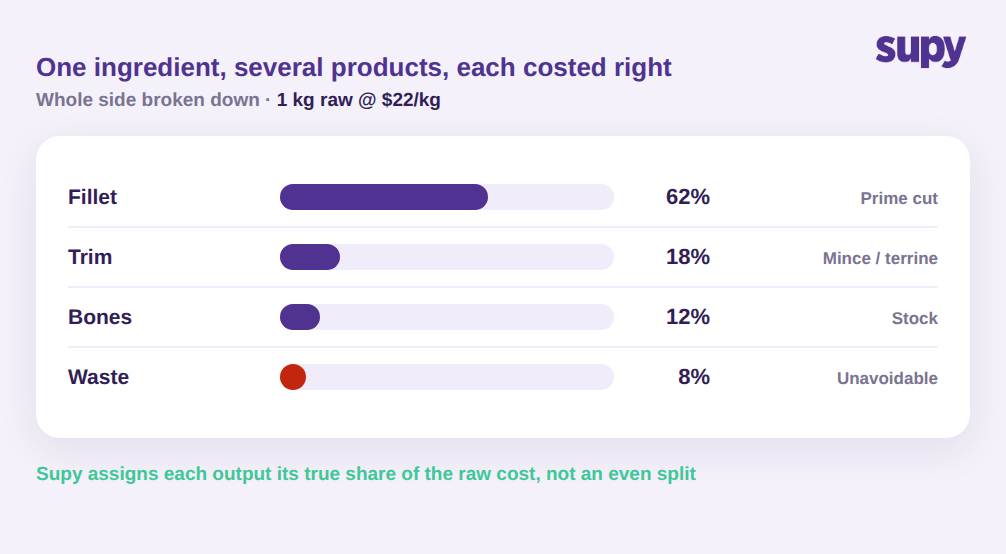
أصعب ما يُحتسب في التحضير هو ما يُنتج أكثر من نتيجة واحدة. فكّك سمكة كاملة وستحصل على شريحة، وقصاصات صالحة للاستخدام، وعظام للمرق، وفاقد لا مفر منه، كل منها بقيمة مختلفة لكل كيلوغرام. توزيع التكلفة الخام البالغة 22 دولاراً للكيلوغرام بالتساوي يؤدي إلى تسعير خاطئ لكل طبق لاحق. يدعم Supy وصفات التفكيك، حيث يُقسَّم مكوّن خام واحد إلى منتجات مشتركة وثانوية متعددة: تُحدد نسبة المردود لكل ناتج – مثلاً 62% شريحة، و18% قصاصات، و12% عظام، و8% فاقد – ويُخصّص Supy الحصة الصحيحة من التكلفة لكل منتج تلقائياً. تحمل القطعة الفاخرة هامشها الحقيقي وتحمل المنتجات الثانوية هامشها، بحيث تُحتسب تكاليف العناصر المباعة المبنية عليها بصدق.
في حالة المطبخ المركزي الذي يزوّد عدة فروع، هذا ما يُبقي تكاليف التحويل وتكاليف الطبق اللاحقة دقيقة حين تتحول شحنة واحدة إلى عشرات بنود مختلفة. يُغلق هذا الفجوة الأخيرة في احتساب تكاليف الوصفة والتحضير، النقطة التي يتحول فيها شراء واحد إلى عدة مشتريات وتُثقّل فيها حصة متساوية بصمت الأطباق الرخيصة وتُخفّف من الأطباق الغالية.
دقة التكلفة في مرحلة التحضير ليست ميزة تُفعّلها مرة واحدة؛ إنها عادة مبنية على ثلاثة فحوصات يمكنك إجراؤها هذا الأسبوع. أولاً، اختر المنتج شبه الجاهز الأعلى حجماً واسأل إن كان أحد يستطيع ذكر مردوده الفعلي مقارنةً بمردود الوصفة. إن لم يستطع أحد، فهذا العنصر ناقص التكلفة اليوم. ثانياً، أجرِ جرداً وانظر هل تُظهر مواقعك الكثيفة التحضير أي قيمة لقيد التصنيع على الإطلاق. موقع لا يُبلّغ عن مخزون شبه جاهز هو موقع تنقصه وصفات الإنتاج. ثالثاً، خذ مكوّناً خاماً تُفككه إلى عدة منتجات وتحقق أن كل ناتج يحمل تكلفة الغذاء الخاصة به، لا حصة متساوية. أصلح هذه الثلاثة وتتوقف الخسارة بين الشراء والطبق عن كونها لغزاً لتصبح رقماً مُداراً في كل موقع.