المخزون

عناصر المكوّنات المكرّرة والتباين في المخزون: لماذا يضخّم الشراء من مورّد متعدد المصادر الأرقام
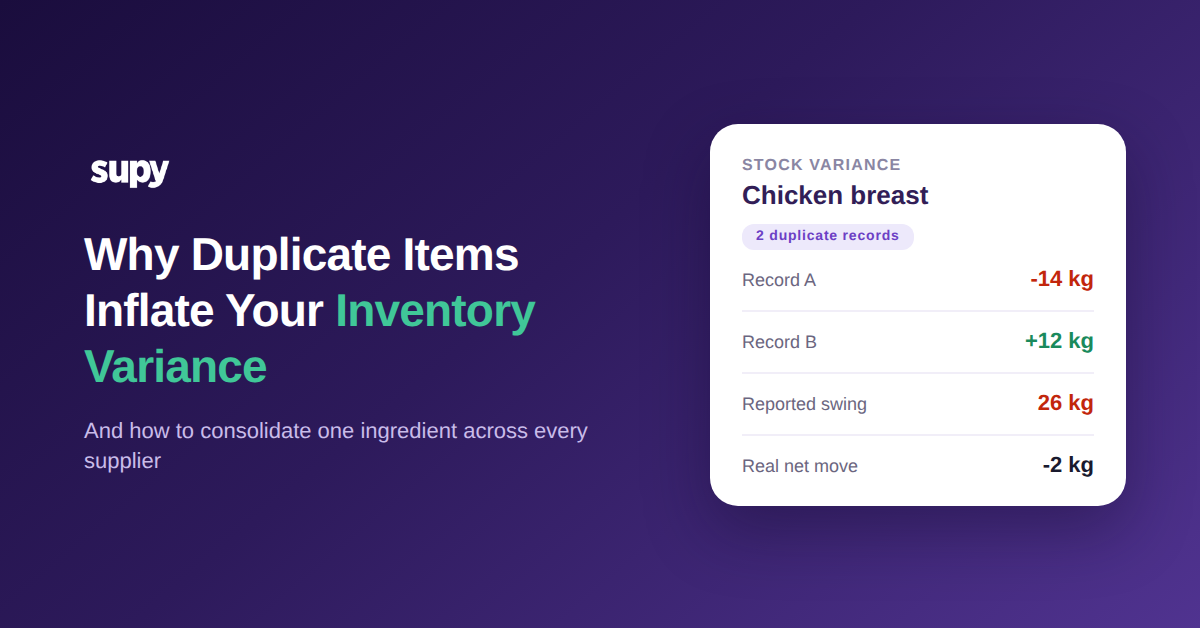
Why duplicate ingredient items inflate inventory variance, and how to consolidate across suppliers

كيف تضخّم عناصر المكوّنات المكرّرة التباين في مخزونك في صمت

تضخّم عناصر المكوّنات المكرّرة التباين في مخزونك لأن نفس المكوّن الفعلي موزَّع على سجلَّين أو أكثر، فيُبلّغ كل سجل عن فجوته المنفردة بين النظري والفعلي حتى حين يكون صافي الحركة الحقيقية قريباً من الصفر. الحل هو دمج كل المكرَّرات في مكوّن أساسي واحد لكل عنصر، ثم إعادة ضبط الأعداد لتعكس الواقع.

في التقارير يسهل إغفال ذلك. لا ترى مكوّناً واحداً بفجوة صغيرة مفهومة، بل ترى سطرَين أو ثلاثة تبدو متطابقة تقريباً يحمل كل منها تبايناً يبدو كهدر أو سرقة أو خطأ في العدّ. تتبّعها واحداً تلو الآخر فتُهدر نوبة عمل في اختلافات تلغي بعضها في معظمها.
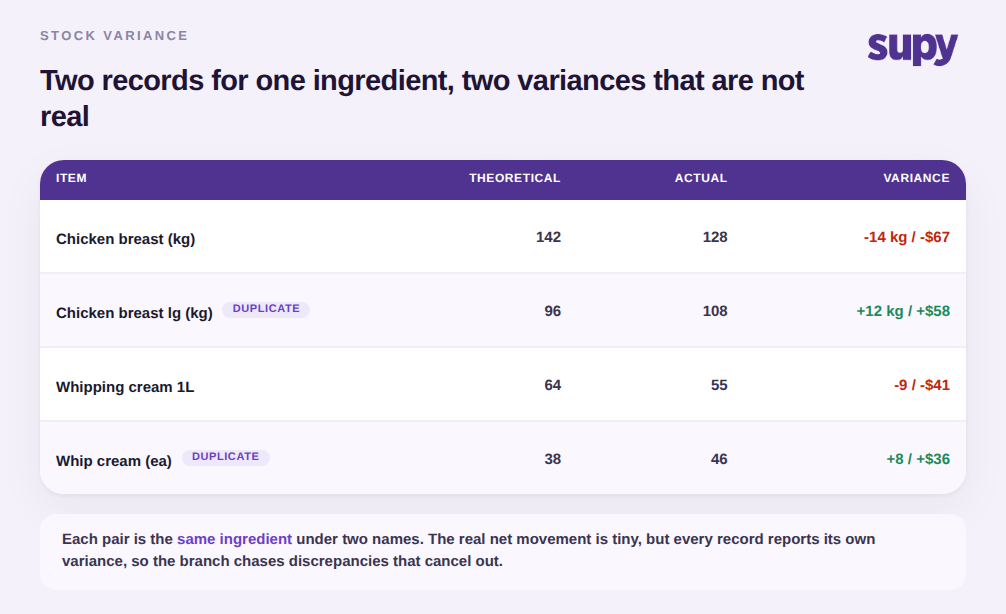
جدول تباين المخزون يُظهر سجلَّين مكرَّرَين للمكوّن ذاته يُبلّغ كل منهما عن تباين يلغي الآخر


لماذا يُفضي شراء مكوّن واحد من عدة موردين إلى تكرار العناصر

السبب الجذري دائماً تقريباً هو التأمين متعدد المصادر بالطريقة الخاطئة. حين تشتري نفس المكوّن من ثلاثة موردين وتُنشئ عنصراً منفصلاً لكل منهم، تنتهي بثلاثة سجلات لمكوّن واحد: "صدر دجاج" من مورّد، و"صدر دجاج كبير" من آخر، وSKU طرد من ثالث. يحدث الشيء ذاته مع الوحدات حين يُدخَل أحد الموردين بالكيلوغرام وآخر بالقطعة.

يحمل كل سجل رصيد مخزونه الخاص ومتوسط تكلفته الخاص وسطر التباين الخاص به. الهيكل الصحيح هو العكس: مكوّن أساسي واحد لكل عنصر تُربط به كل SKU وأحجام التعبئة. تقوم إدارة المكوّنات ومُسبّبات الحساسية في Supy على هذا تماماً — مكوّن أساسي واحد لكل عنصر تُربط به جميع SKU وعبوات الموردين، فلا يولّد الشراء من أي مورّد جديد عنصراً جديداً للتسوية لاحقاً.
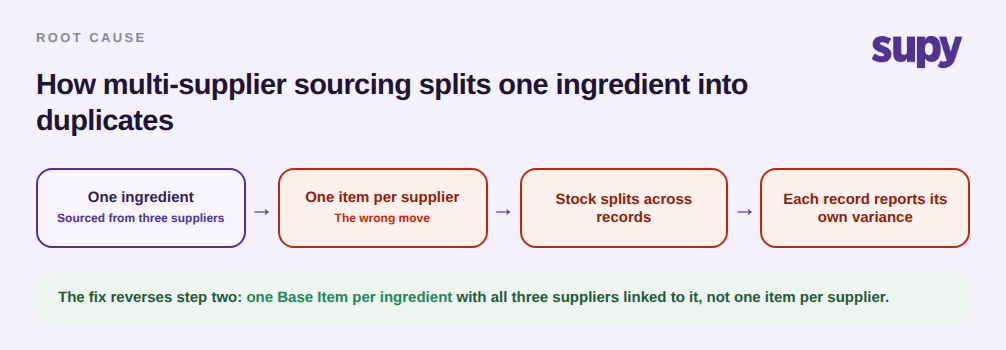
مخطط سير العملية يُظهر مكوّناً واحداً مصدَراً من ثلاثة موردين ينقسم إلى سجلات منفصلة مما يضخّم التباين


تمييز التباين الناجم عن التكرار عن الهدر الحقيقي أو السرقة

قبل الشروع في التحقيق، استثنِ قائمة العناصر. للتباين الناجم عن التكرار سمة مميّزة: سطران يسمّيان بوضوح نفس المكوّن يتحرّكان في اتجاهين متعاكسين بمقادير متقاربة. سجل يُظهر عجزاً لأن المبيعات استنزفته، وآخر يُظهر فائضاً لأن ذلك حيث هبطت آخر شحنة. متجمعَين يقتربان من الصفر، لكن في التقرير يظهران كمشكلتين منفصلتين.

الهدر والإفراط في التقديم والسرقة لا تلغي بعضها هكذا، لذا فصلهما هو خطوة الفرز الأولى في أي تحليل لتباين المخزون في مدونة Supy. في أحد الفروع، تباين شهري بلغ 18,400 دولار كان يُلاحَق كخسارة تبيّن أنه سجلات مكرّرة بالكامل اختفت حين دُمجت. لم يكن ثمة أي حركة مخزون حقيقية.
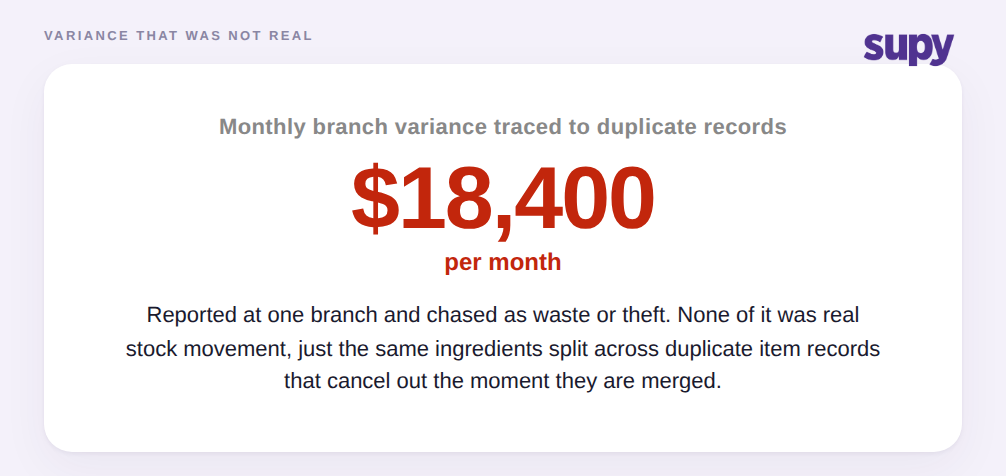
ملخص إحصائي يُظهر 18,400 دولار من التباين الشهري للفرع يعود كلياً إلى سجلات مكرّرة لا إلى خسارة حقيقية


الدمج في مكوّن أساسي واحد لكل عنصر

الدمج إجراء قصير قابل للتكرار. ابحث عن مجموعة المكرَّرات لأي عنصر، ثم قرّر أي سجل يبقى مكوّناً أساسياً. اربط كل SKU وأحجام التعبئة لكل مورّد بذلك العنصر الواحد حتى يبقى لكل مورّد سعر الشراء الخاص به، لكنها جميعاً تُغذّي رصيداً واحداً للمخزون وتكلفة مدمجة واحدة. ثم أعِد توجيه أي وصفات كانت تشير إلى مكرَّر نحو المكوّن الأساسي الباقي.

الخطوة التي يقلق منها المشغّلون هي السجل التاريخي، وهي الخطوة التي يجب إتقانها. استخدم استبدالاً جماعياً للمكوّنات مع التأريخ الرجعي لتصحيح الوصفات التي استخدمت المكرَّر من تاريخ دخول التبديل، لا من الآن فقط، واحتفظ بسجل كامل للإصدارات احتياطاً للاستعادة. هكذا يُنظّف الدمج قائمة العناصر دون تشويه بيانات التكلفة للأشهر السابقة.
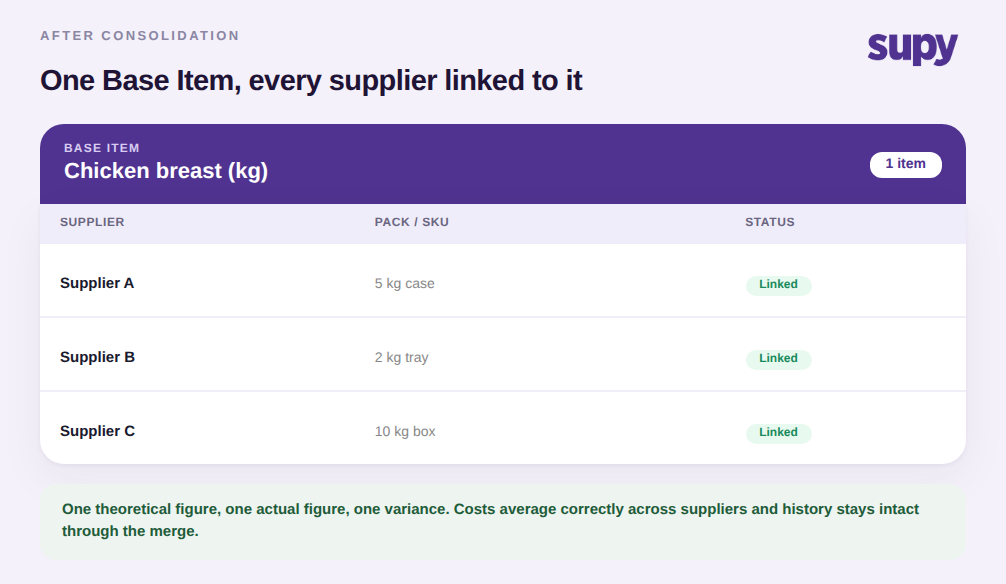
بطاقة المكوّن الأساسي الموحَّد تُظهر مكوّناً واحداً بثلاثة موردين مرتبطين به بعد التنظيف


إعادة الضبط الأساسي حتى يعكس رقم التباين الواقع

دمج العناصر يُصلح الهيكل، لكن رقم التباين سيظل مضطرباً حتى تُعيد ضبط الأساس. قدّم جرداً جديداً للعناصر الموحّدة لتمنح النظام رصيداً افتتاحياً دقيقاً يقيس الفترة التالية منه. من هناك يتحدّث المخزون النظري تلقائياً من كل استلام بضاعة وحدث استهلاك الوصفات، فالتباين الذي تراه في الجرد التالي يُقاس مقابل الاستخدام المتوقع الحقيقي لا نقطة انطلاق قديمة أو مجزّأة.

الثمرة رقم يمكن الوثوق به. في الفرع أعلاه، انخفض التباين المُبلَّغ عنه من 9% إلى 3%، في النطاق الصحي 2-3%، دون تغيير واحد في المخزون الفعلي على الرفّ. إن أردت الصورة الأشمل لمصدر رقم التباين المشروع، يُعدّ الفرق بين تتبع التباين اليدوي والآلي قراءةً تالية ممتازة.
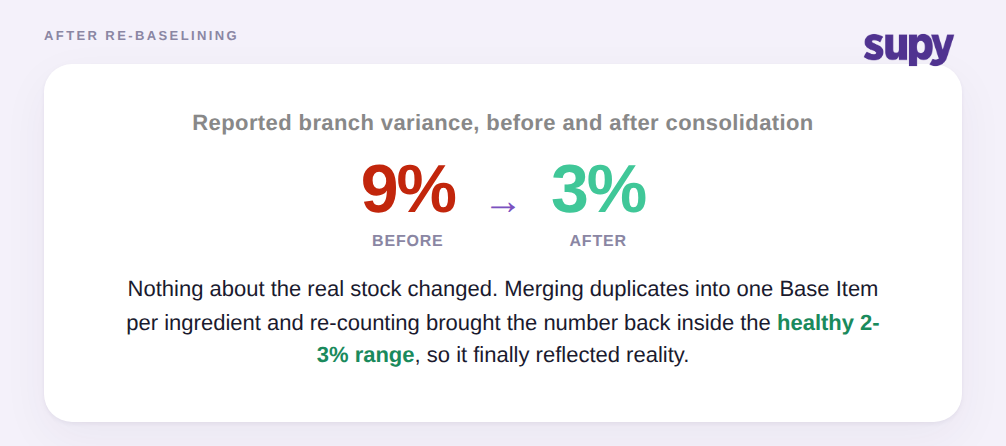
إحصاء قبل وبعد يُظهر انخفاض التباين المُبلَّغ للفرع من 9 بالمئة إلى 3 بالمئة بعد الدمج وإعادة الضبط الأساسي


أجرِ هذا الفحص السريع قبل مراجعة التباين التالية: أخرج التقرير ورتّبه حسب العنصر، وابحث عن أزواج من السطور تسمّي نفس المكوّن وتتأرجح في اتجاهين متعاكسين. كل ما تجده فهو مكرَّر لا خسارة. إن كان التباين المُبلَّغ يتجاوز النطاق الصحي 2-3% وعدد من هذه الأزواج يفسّر معظمه، ادمجها في مكوّن أساسي واحد لكل عنصر وأعِد العدّ قبل أي خطوة أخرى. ستستعيد في الغالب رقماً كـ18,400 دولار شهرياً لم يكن مفقوداً فعلاً، وكل تحقيق بعده سينطلق من رقم ذي معنى.
احجز عرضاً توضيحياً مع Supy - دمج عناصر المكوّنات المكرّرة وإصلاح تباين المخزون

Ready to optimize your restaurant operations?

مدونة

رؤيتنا التشغيلية

Your questions 
answered

Everything you need to know about Supy — from setup to integrations, pricing, and daily use. If it’s not covered here, just ask.

What are duplicate ingredient items in restaurant inventory?
+

Duplicate ingredient items are two or more separate records in your inventory system that represent the same physical ingredient. They usually appear when the same product is entered under slightly different names, units, or supplier SKUs, for example chicken breast in kilograms from one supplier and the same chicken breast as a case pack from another. Each record holds its own stock balance, average cost, and variance line, so a single ingredient behaves like several. Left unmerged, duplicates quietly split your stock and cost data and make every variance report harder to read than it should be.

How do duplicate ingredient items inflate inventory variance?
+

Variance is measured per item record, not per real ingredient. When one ingredient is split across duplicate records, sales and receipts land unevenly across those records, so one shows a shortfall and another shows a surplus. Netted together the ingredient barely moved, but the report shows two separate variances that each look like a loss or an error. The more suppliers and units involved, the more the noise compounds. This is why a branch can show a large, alarming variance figure that turns out to be an artefact of the item list rather than anything happening on the shelf.

Why does buying from multiple suppliers create duplicate items?
+

It happens when operators create a separate item for each supplier instead of one item with every supplier linked to it. Sourcing the same ingredient from three suppliers then produces three records, often under different names or units of measure. It also creeps in at import or onboarding, when a data load groups distinct products under single base items or splits one product across several. The trigger is structural, not careless: the natural instinct is one item per supplier. The fix is to invert that habit and keep one base item per ingredient, with each supplier and pack size attached underneath it.

How can I tell duplicate-driven variance from real waste or theft?
+

Look for the signature. Duplicate-driven variance shows up as two lines that clearly name the same ingredient, moving in opposite directions by similar amounts, so they roughly cancel when you net them. Real waste, over-portioning, and theft do not offset like that; they leave a genuine shortfall that does not have a matching surplus elsewhere. So before opening an investigation, sort your variance report by item and scan for these mirrored pairs. Ruling out the item list first stops you from spending a shift chasing a loss that was never missing, and it sharpens every real investigation that follows.

What is the right way to consolidate duplicate ingredient items?
+

Work one ingredient at a time. Identify the full duplicate set, then choose the record that will survive as the base item. Link every supplier SKU and pack size to that single item, so each supplier keeps its own buying price but they all feed one stock balance and one blended cost. Repoint any recipes that referenced a duplicate to the surviving item. Use a bulk ingredient swap with backdating so recipe corrections apply from the right effective date rather than only going forward, and keep the version history in case you need to restore. Finish by re-counting the consolidated items.

Will merging duplicate ingredient items break my historical cost data?
+

Not if you merge with backdating and version history. The risk is applying a swap only from today, which leaves prior months costed against the old duplicate and distorts historical margins. Doing it properly means the bulk swap corrects recipes from the date the change should have taken effect, so past periods recost cleanly, and a full version history lets you restore if something looks wrong. Handled this way, consolidation tidies the item list and improves cost accuracy without corrupting the record. The one deliberate change afterwards is a fresh stock count to reset the baseline the next period is measured against.

What is a healthy inventory variance percentage for a restaurant?
+

A commonly cited healthy target is around 2% to 3% of expected usage, with anything materially above that worth investigating. The important caveat is that the number only means something once your item list is clean. If duplicate records are splitting ingredients across multiple lines, a reported variance well above the healthy range may be measuring your data quality rather than your operation. Consolidate duplicates into one base item per ingredient and re-baseline first, then judge the percentage. A trustworthy 3% after cleanup tells you far more than an alarming 9% that was inflated by duplicate items.

هل أنت مستعد لتطوير عملياتك؟

انضم إلى أكثر من 3500 مُشغلي مطاعم يخفضون التكاليف، ويبسطون العمليات، ويتخذون قرارات أكثر ذكاءً مع Supy