.jpeg)


الوصفات المكتملة ونصف المصنعة في المطبخ المركزي: كيف تُصنّف وصفات المكوّنات للحفاظ على دقة التكاليف واستنزاف المخزون
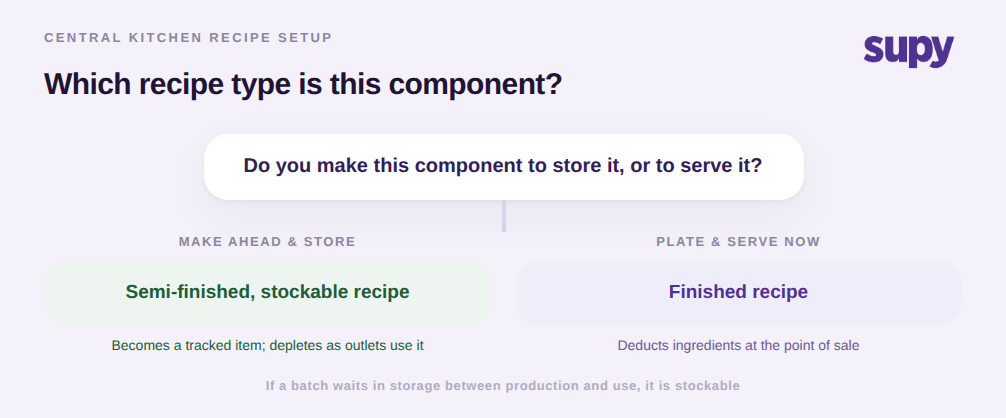
ابدأ من هنا: هل تُعدّ هذا المكوّن للتخزين أم للتقديم؟
أسرع طريقة لتصنيف وصفة في المطبخ المركزي هي سؤال واحد: هل تنتجها على دفعات للاحتفاظ بها وإصدارها لاحقاً، أم تجمّعها بحسب الطلب وتقدّمها فوراً؟ المكوّن الذي تُعدّه مسبقاً وتخزّنه - صلصة، أو مرق، أو عجينة، أو بروتين مطهي جزئياً - هو وصفة نصف مصنعة، ويجب تتبّعه كمخزون. أما الطبق الذي يُقدَّم في الحال فهو وصفة مكتملة، وتُستنزف مكوّناته عند نقاط البيع مباشرة.
هذا الفارق البسيط هو المكان الذي تنهار فيه معظم عمليات إعداد المطبخ المركزي. يرى المشغّلون قائمة طويلة من عناصر التحضير فيختارون "مكتملة" لأن الدفعة بمعناها الحرفي انتهى طهوها. لكن في عالم المخزون، "مكتملة" تعني عكس ما يحتاجه المكوّن المُخزَّن. أجب عن سؤال التخزين أو التقديم أولاً، وسيأتي باقي الإعداد من تلقاء نفسه.
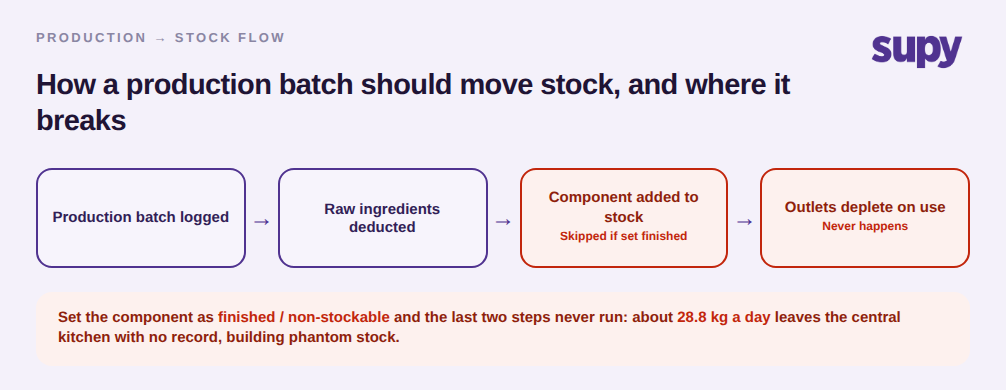
لماذا تُوقف وصفة التحضير المُصنَّفة خطأً استنزافَ مخزون المكوّن
إليك الآلية التي تعطل العملية. عندما تُصنّف مكوّناً نصف مصنعاً كصنف قابل للتخزين، يُنشئ النظام له صنفاً مُتتبَّعاً في المخزون، ويقصر إنتاجه على المواقع التي فعّلتها، ويُحدِّث كل وصفة أصل تستخدمه. يؤدي تسجيل دفعة الإنتاج بعد ذلك إلى خصم المواد الخام من المخزون الفعلي وإضافة المكوّن المُنتَج إلى مخزون المطبخ المركزي. ومع استهلاك الفروع له، يتناقص المكوّن.
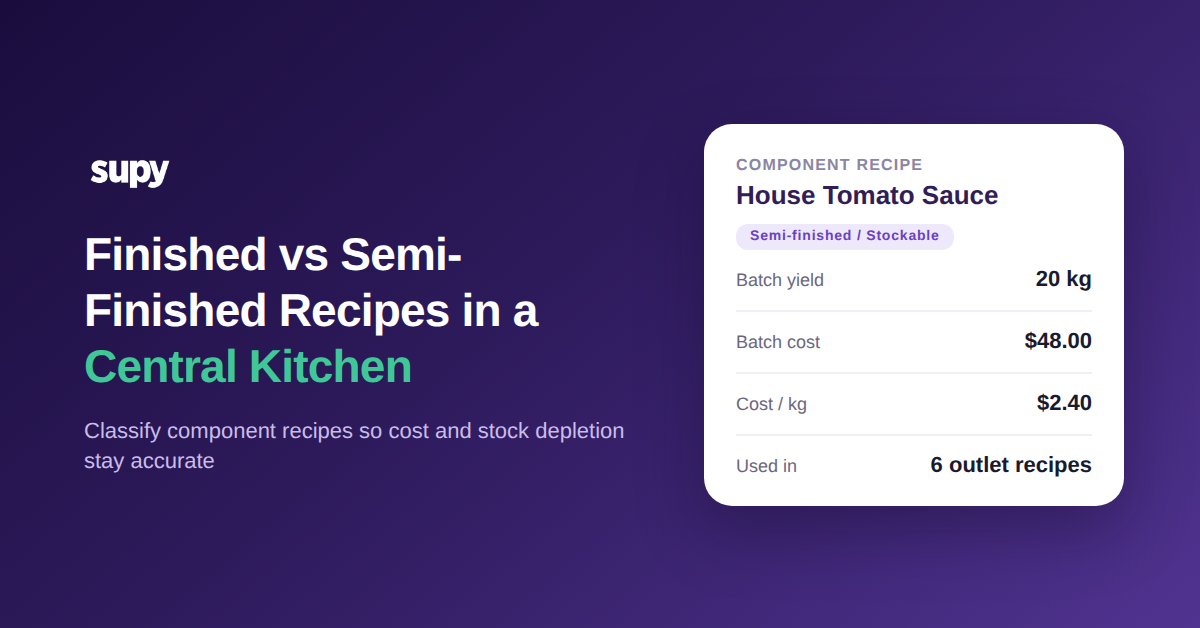
صنّف هذا المكوّن ذاته كوصفة مكتملة غير قابلة للتخزين ولن يحدث شيء من ذلك. لن يُنشأ أي صنف مُتتبَّع، فإنتاجه لن يُضيف مخزون مكوّن، والفروع التي تستهلكه لن تستنزف أي شيء. خذ مثلاً صلصة محلية تُحضَّر على دفعات بمقدار 20 كجم بتكلفة دفعة 48.00. إذا سحبت منها ستة فروع 120 جم لكل طبق عبر 240 غطاء يومياً، فهذا 28.8 كجم يغادر المطبخ المركزي يومياً دون أن يُسجّله النظام. وعلى مدى شهر، يصل الأمر إلى نحو 864 كجم من المكوّن الوهمي الذي يظهر متوفراً بينما الرف فارغ.
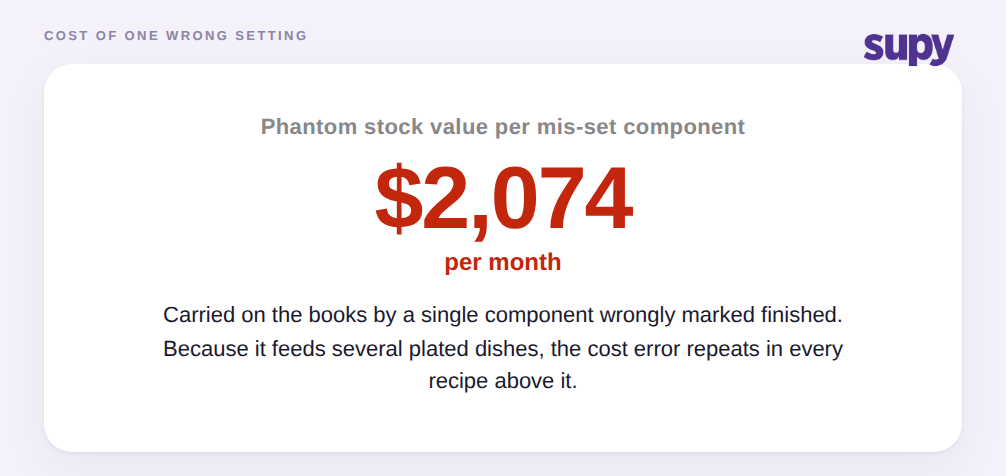
كيف يُشوّه إعداد واحد خاطئ التكلفة في كل وصفة فوقه
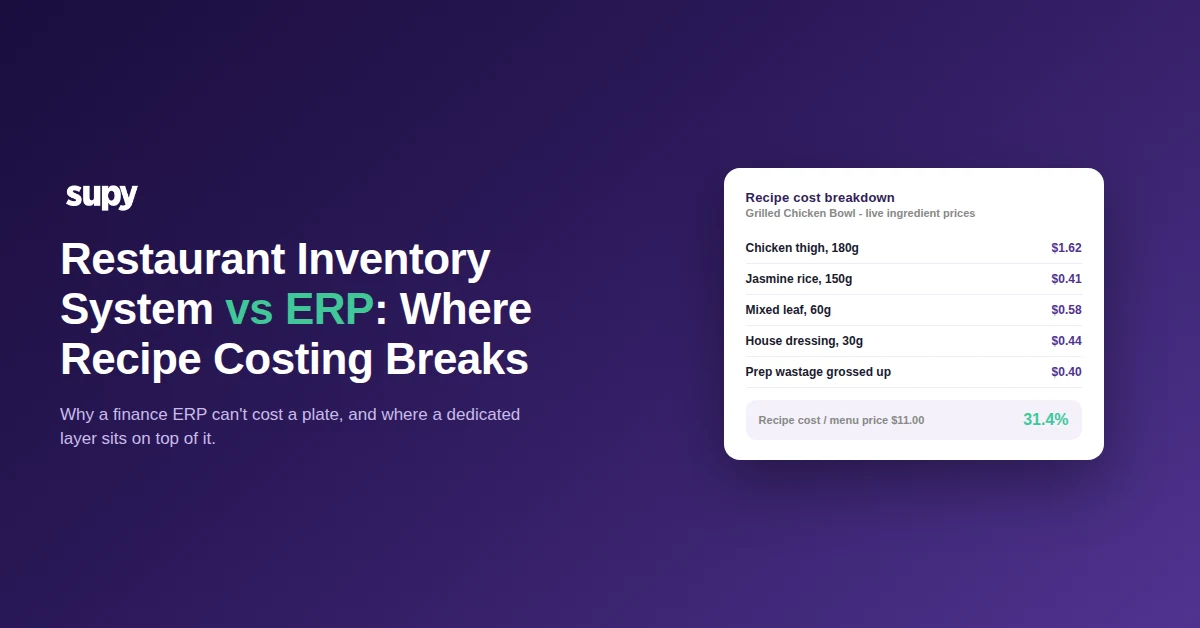
ضرر التكلفة أهدأ لكنه أكبر. تحمل الوصفة نصف المصنعة المُعدَّة بشكل صحيح تكلفتها الإنتاجية الحقيقية - تكلفة الدفعة موزَّعة على المردود الفعلي ومُعدَّلة بهدر التحضير - إلى كل وصفة فرع تستخدمها. عند 2.40 لكل كجم، يحمل طبق يستخدم 120 جم من المكوّن 0.29 من تكلفة المكوّن، وهذا الرقم يعكس ما استهلكه المطبخ فعلاً.
حين يكون المكوّن غير قابل للتخزين، تُحتسب تكلفته بمعدل الوصفة لا كحركة مخزون فعلية، فلا يُرصد تباين الإنتاج في تلك الدفعة وتنحرف تكلفة الغذاء في الوصفة الأصل عمّا أنفقه الفرع فعلاً. يحمل مكوّن واحد مُعدَّ بشكل خاطئ نحو 2,074 شهرياً من قيمة المخزون الوهمي في الدفاتر، ولأنه يُغذّي عدة أطباق مقدَّمة، يتكرر الخطأ في كل وصفة فوقه. وهذا مُساهم مباشر في الفجوة بين تكلفة الغذاء النظرية والفعلية التي تُهدر مراجعات التباين ساعاتٍ في ملاحقتها.
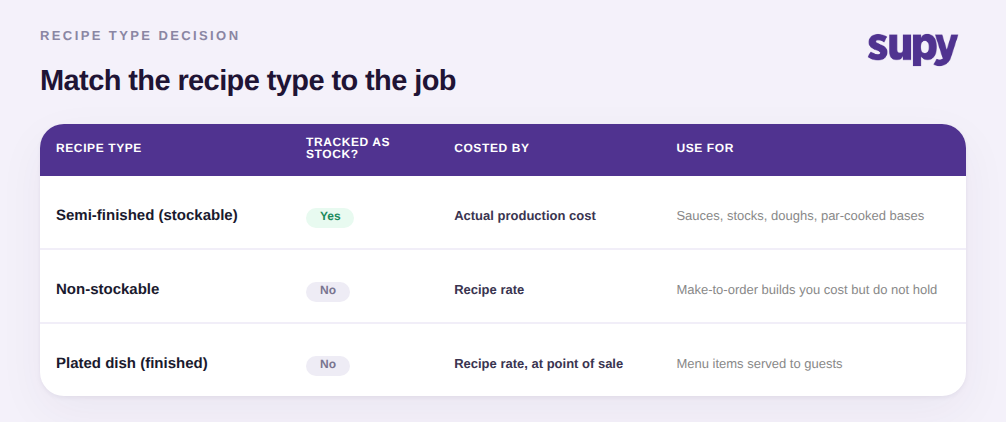
مطابقة نوع الوصفة مع وظيفتها: قابلة للتخزين، وغير قابلة للتخزين، والمقدَّمة
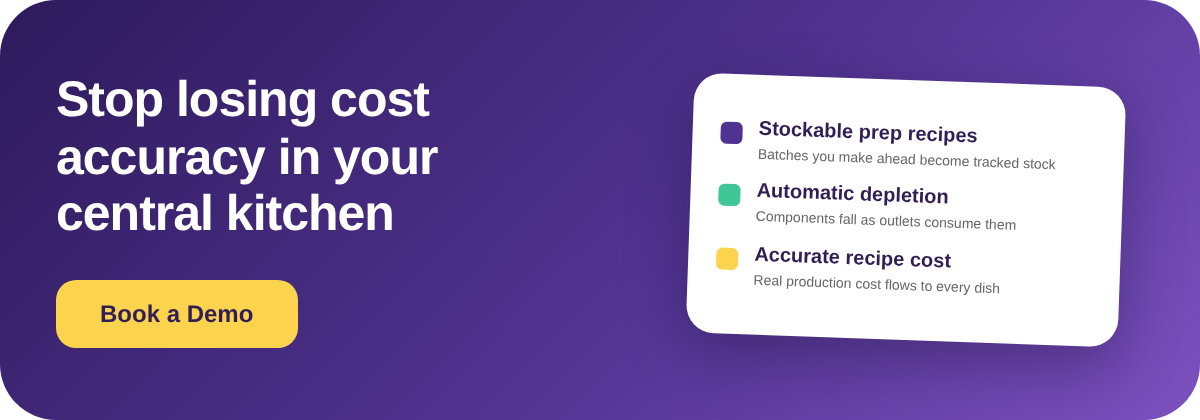
ثمة ثلاثة أنواع من الوصفات، كل منها مناسب لوظيفة محددة. الوصفة نصف المصنعة القابلة للتخزين مخصصة لكل ما تُنتجه مسبقاً وتحتفظ به: الصلصات، والمرق، والعجائن، والتتبيلات، والقواعد المطهية جزئياً، والمكوّنات التي يشحنها المطبخ المركزي إلى الفروع. تُصبح صنفاً مُتتبَّعاً، ولا تُنتَج إلا في المواقع المُفعَّلة للإنتاج، وتتناقص عند استخدامها.
الوصفة غير القابلة للتخزين مخصصة للتحضير الذي تحسب تكلفته لكن لا تحتفظ به كمخزون - مكوّن يُجمَّع عند الطلب حيث لا توجد دفعة على الرف تستوجب العدّ. أما الطبق المقدَّم فهو صنف قائمة طعام مكتمل: يرتبط بصنف نقاط البيع ليخصم المبيعات المكوّناتِ الصحيحة بما فيها المُعدِّلات. الاختبار دائماً هو السؤال ذاته: تخزين أم تقديم؟ إذا كانت دفعة تنتظر فعلياً في برادة أو على رف بين الإنتاج والاستخدام، فهي نصف مصنعة وقابلة للتخزين دون استثناء. للإعداد التفصيلي للمردود وهدر التحضير وإنتاج الدفعات، كل ذلك يعمل على منصة الوصفات والمخزون من Supy.
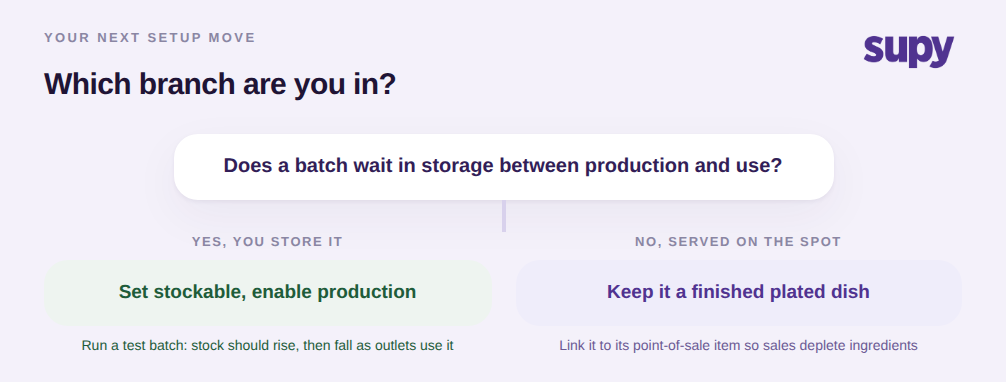
في أي فرع أنت؟ الخطوة الإعدادية الواحدة لكل حالة
حدّد فرعك وأنجز الخطوة الواحدة التي يحتاجها. إذا كنت تُعدّ المكوّن مسبقاً وتخزّنه، فاضبطه كوصفة نصف مصنعة قابلة للتخزين وفعّل الإنتاج في موقع مطبخك المركزي - ثم أجرِ دفعة إنتاج تجريبية وتأكد من أن المكوّن يظهر كصنف مُتتبَّع يرتفع مخزونه عند الإنتاج وينخفض عند استهلاك الفروع له. أما إذا كان الصنف يُقدَّم مباشرة، فاجعله طبقاً مكتملاً مرتبطاً بصنف نقاط البيع لتستنزف المبيعات مكوّناته مباشرة.
إذا لم تكن متأكداً من صحة إعداد مكوّن معين الآن، فأسرع طريقة للتدقيق هي دفعة الاختبار ذاتها: أنتج كمية معلومة، ثم تحقق من أن المخزون المتوفر من المكوّن قد تحرّك. إن لم يتحرك، فالمكوّن مُصنَّف خطأً كوصفة مكتملة، وكل وصفة فرع تستخدمه تحمل اليوم خطأً في التكلفة والمخزون. تصحيح النوع تغيير إعدادي لمرة واحدة يوقف الانحراف من مصدره قبل أن يصل إلى تقارير مدونة عمليات المطبخ المركزي.