

The Top Features to Look For in Modern Restaurant Management Platforms
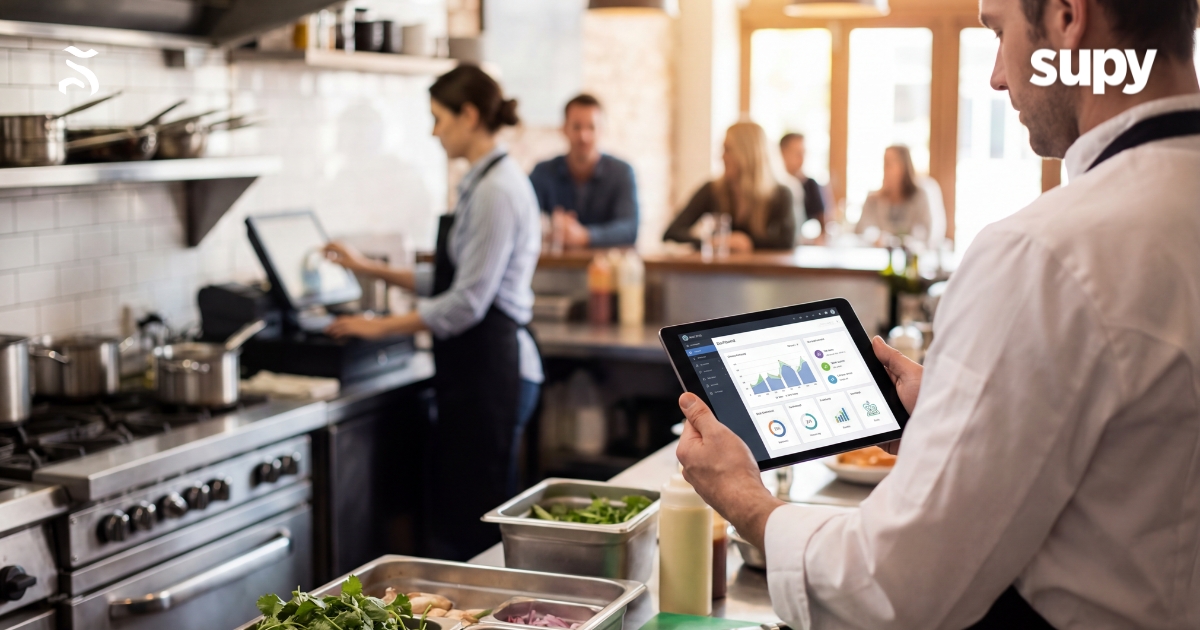
Modern restaurant management platforms are often judged by how many features they advertise. In practice, what matters far more is what those features actually replace, reduce, or clarify inside the operation.
Most restaurant groups don’t struggle because they lack tools. They struggle because their tools don’t talk to each other, data arrives too late to act on, and teams spend hours reconciling numbers instead of improving performance.
In an industry operating on margins that often sit between 3–5%, that friction matters. Small inefficiencies compound quickly, especially as locations, suppliers, menus, and channels scale.
A modern restaurant management platform isn’t defined by dashboards or buzzwords. It’s defined by whether it creates a clean, reliable control loop between purchasing, inventory, recipes, and financial outcomes. Increasingly, AI plays a critical role in making that loop work at scale.
Why “modern” means something different today
Ten years ago, restaurant software focused on digitisation. Replace pen and paper. Move spreadsheets online. Centralise data.
Today, digitisation is table stakes. The real challenge is data quality, timing, and actionability.
Costs change faster than menus. Suppliers vary more frequently. Invoices arrive in dozens of formats. Multi-location teams operate asynchronously. Manual review simply doesn’t scale.
This is why modern platforms increasingly rely on AI. Not to make decisions for operators, but to handle the volume, inconsistency, and noise that humans shouldn’t have to manage.
Feature 1: Invoice digitisation that works in real kitchens
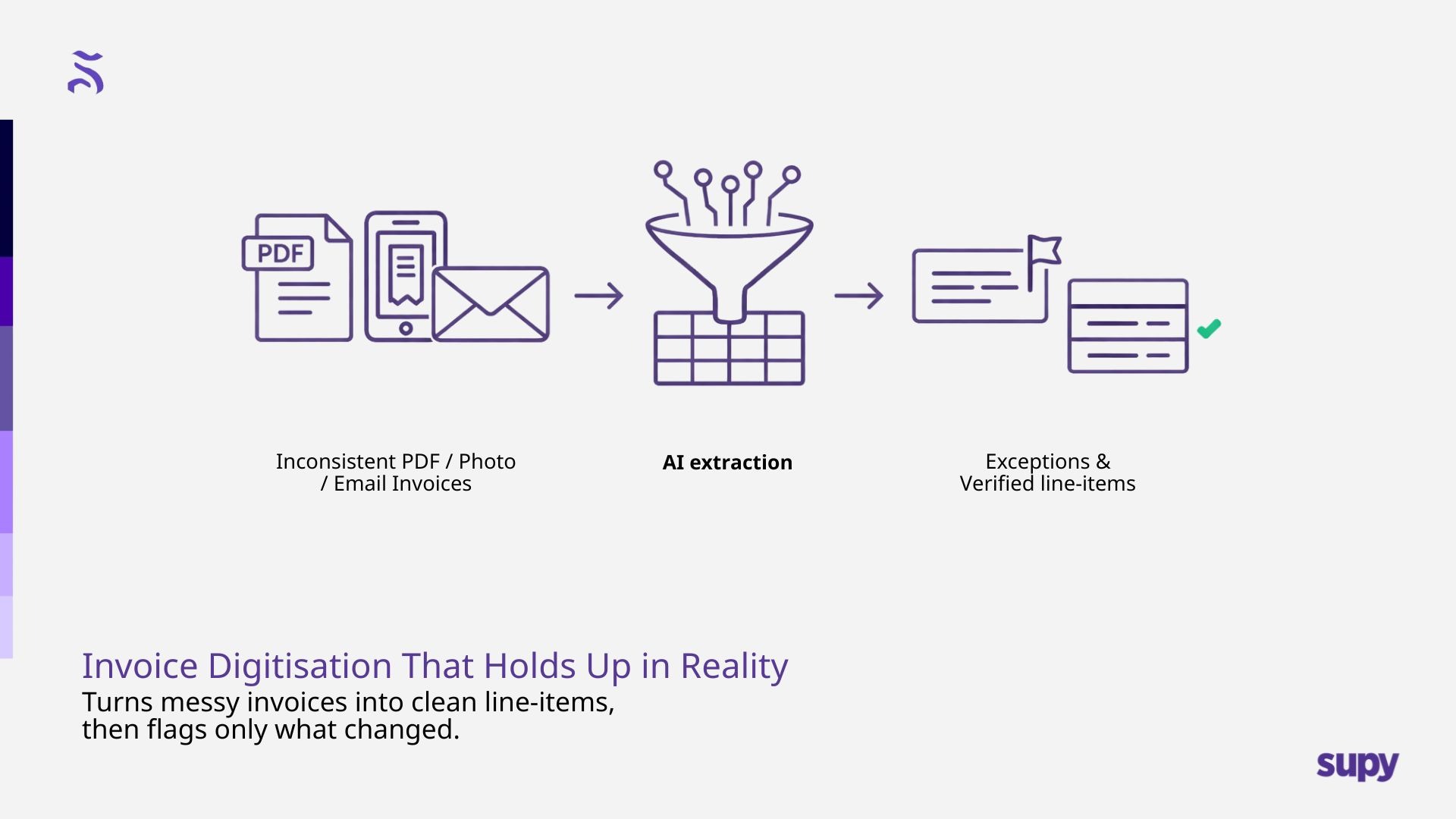
Invoice processing is where cost control either starts or fails. A modern platform must handle invoices as they actually arrive:
- PDFs, scans, photos, emails
- Inconsistent supplier naming
- Varying pack sizes and units
- Tax and surcharge complexity
The key is line-item accuracy and exception handling. AI matters here because it can extract, normalise, and validate invoice data at scale, flagging only what changed or looks wrong. The goal is not to eliminate review. It’s to eliminate unnecessary review.
Platforms like Supy use AI invoice receiving to turn invoices into structured data automatically, so teams focus on discrepancies, not data entry.
Feature 2: Procurement controls that scale with complexity
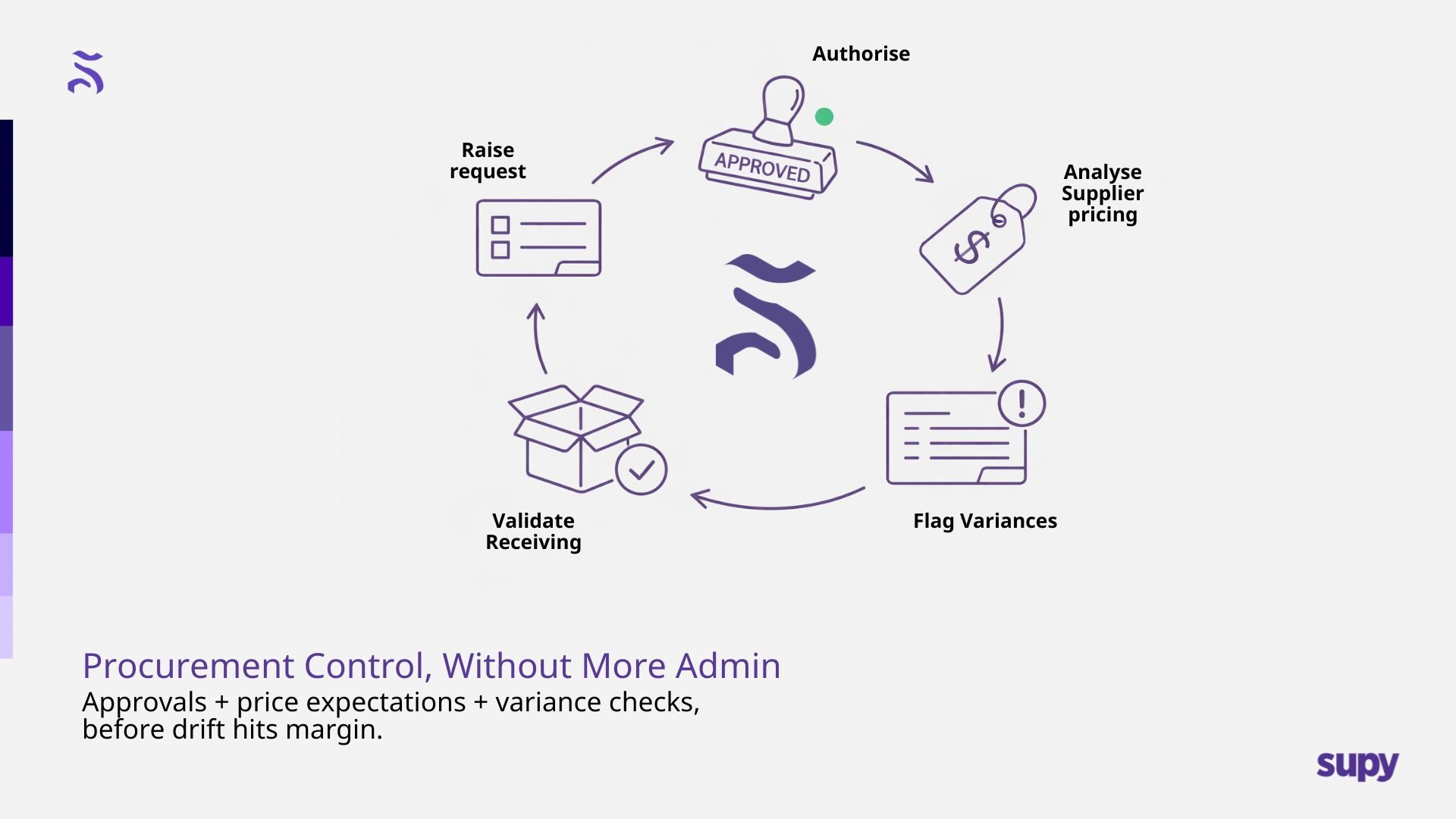
As operations grow, informal purchasing rules break down. Modern procurement features should support:
- Requisitions and approvals by role and location
- Supplier-specific pricing expectations
- Price variance detection
- PO matching and receiving validation
AI adds value by monitoring patterns across suppliers and time, surfacing anomalies early rather than after month-end. This turns procurement into an exception-driven workflow instead of a reactive one. Without this layer, overcharges, substitutions, and quiet price drift go unnoticed until margins have already moved.
Feature 3: Inventory visibility grounded in reality
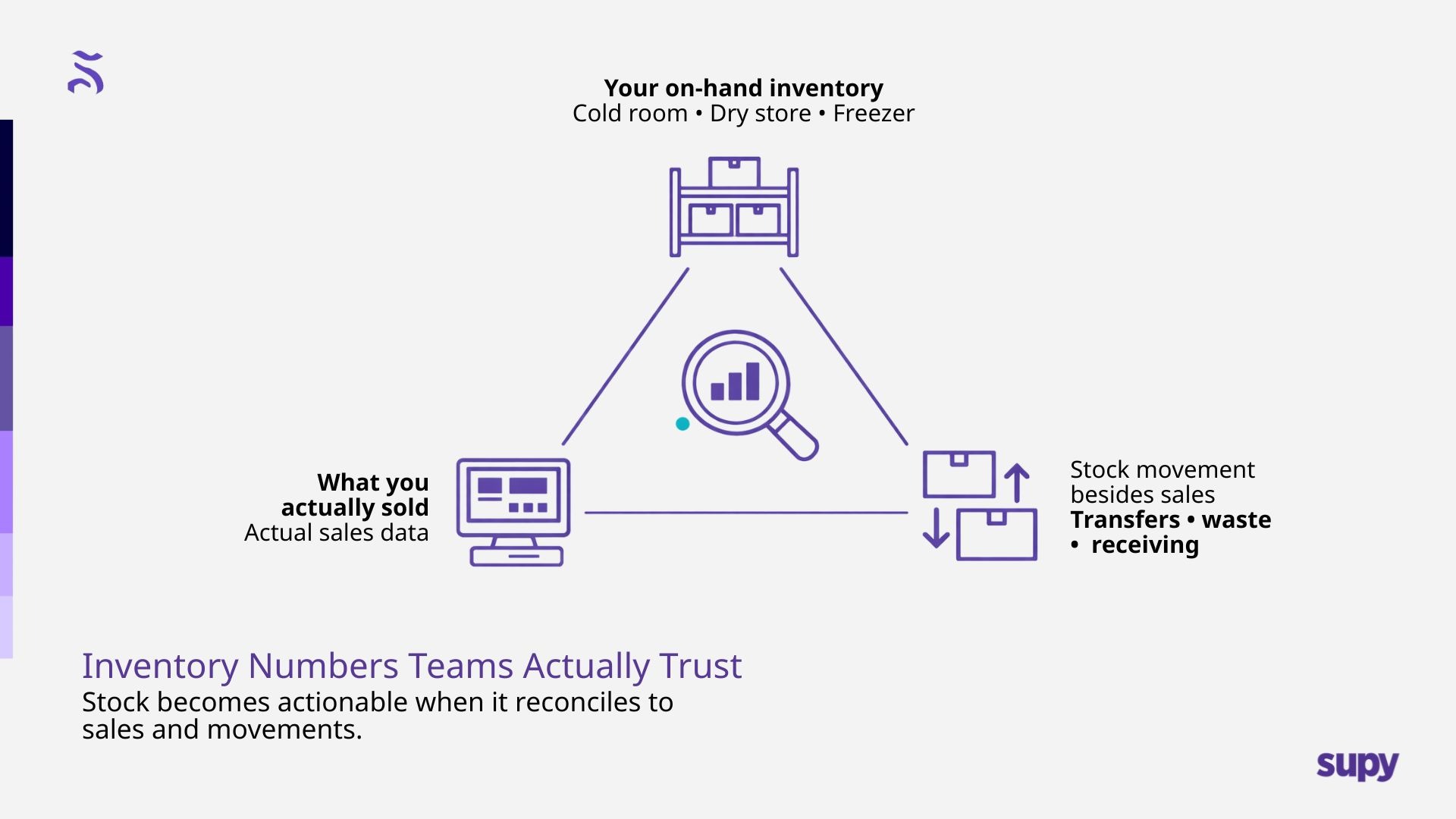
Inventory systems fail when teams don’t trust the numbers. A modern platform needs to reflect:
- Live stock levels by location and storage area
- Inter-branch and central kitchen transfers
- Disciplined counting workflows
- Variance that can be traced back to behaviour
AI supports this by reconciling expected usage against real sales and movements, helping teams understand why variance exists instead of just reporting that it does.
When inventory data is reliable, it becomes actionable. When it isn’t, it gets ignored.
Feature 4: Recipe costing that updates with real costs
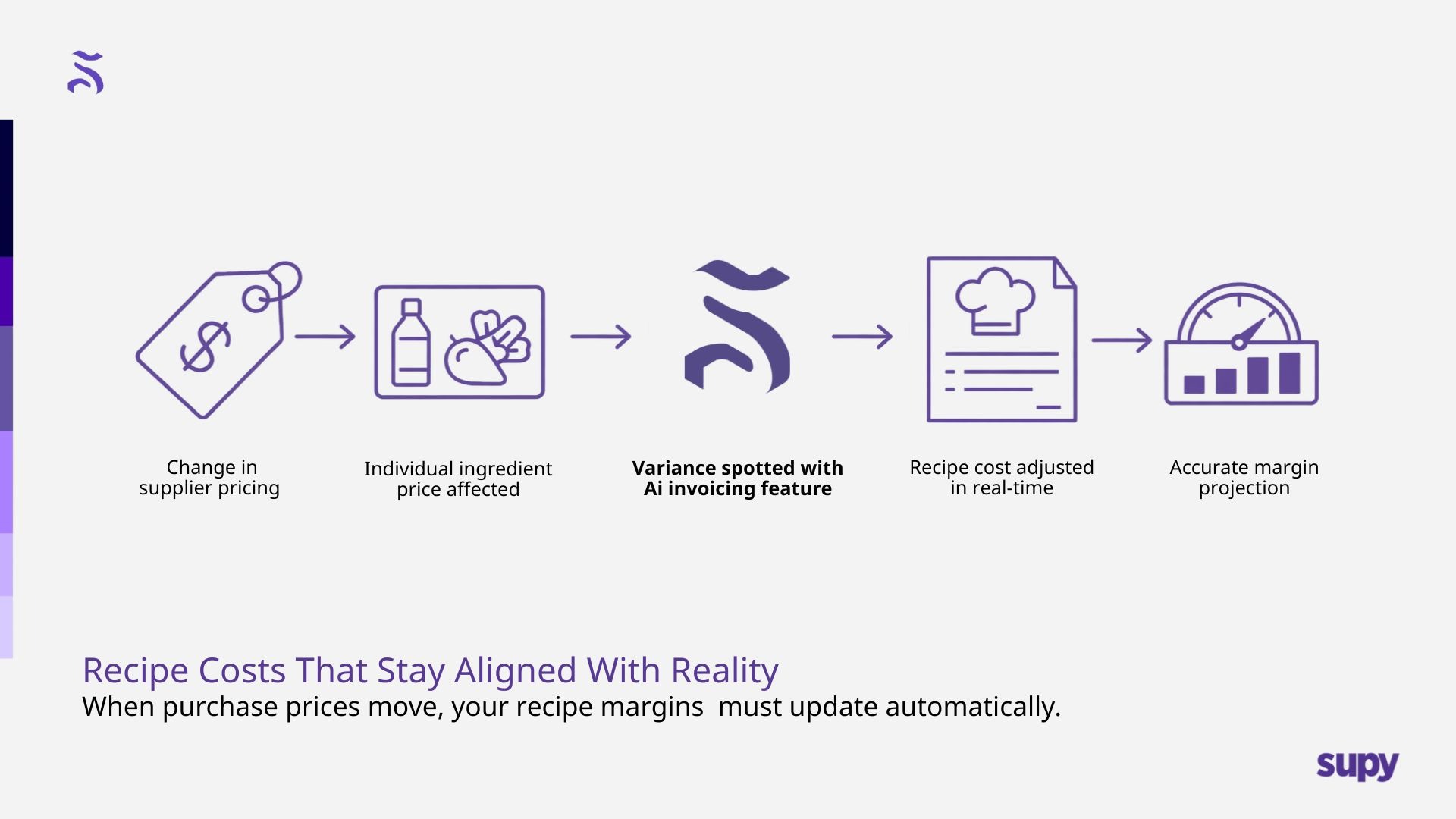
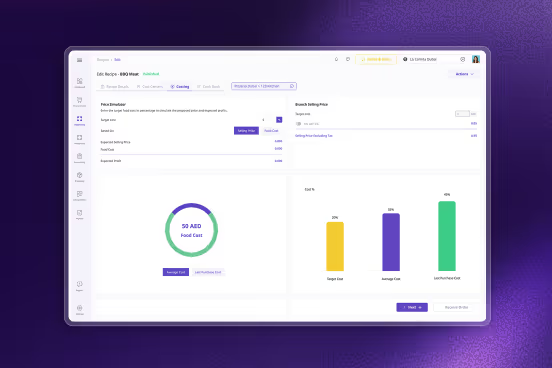
Static recipe costing no longer works in volatile supply environments. Modern platforms must link recipes to:
- Actual supplier purchase prices
- Yields and prep loss
- Unit and pack size changes
- POS sales mix
This is where AI quietly matters again. By standardising item data and updating costs automatically when inputs change, platforms keep recipe margins aligned with reality without manual recalculation.
Supy’s Recipes & Prep functionality is built around this principle: recipes remain connected to live ingredient costs and operational usage, not theoretical price lists.
Feature 5: AI that reduces workload, not trust
The best AI in restaurant operations is almost invisible. It doesn’t make grand predictions or override human judgement. It handles the messy work:
- Normalising inconsistent data
- Detecting outliers and anomalies
- Highlighting what needs attention
- Routing issues to the right people
Modern platforms should use AI to reduce cognitive load, not increase it. If teams don’t trust the system, they won’t use it.
Supy positions AI as a support layer that strengthens existing processes rather than replacing them.
Feature 6: Integrations that prevent double work
A modern restaurant management platform must integrate cleanly with:
- POS systems (sales and item-level data)
- Accounting or ERP systems (financial reporting)
- Aggregators and channels where relevant
Integration quality matters more than quantity. Good integration means:
- Item-level mapping, not just totals
- Timely syncs, not delayed exports
- Visibility when mappings break
Supy sits between POS and accounting systems, acting as the operational data layer where costs are verified before flowing into finance. That position is critical for clean reporting and scalable growth.
Feature 7: Reporting that leads to decisions
Dashboards don’t create control. Decisions do. Modern reporting should answer specific questions:
- Where did costs move, and why?
- Which suppliers drive the most variance?
- Which items or locations need attention now?
- What changed since last week?
AI helps here by prioritising insights, not just presenting charts. The best reports lead operators directly to action, with drill-downs to invoices, items, and recipes.
Feature 8: Governance, auditability, and accountability
As teams grow, clarity matters. Modern platforms must support:
- Role-based permissions
- Approval trails
- Change history on recipes, suppliers, and pricing
- Clear ownership of decisions
These features aren’t glamorous, but they are essential for trust, compliance, and operational discipline.
How to evaluate platforms without getting distracted
When comparing restaurant management platforms, ask:
- How quickly does the system surface problems?
- How much manual work does it actually remove?
- Does AI reduce review volume or add noise?
- Can the data be trusted without constant reconciliation?
- Will this still work when we double locations?
The strongest platforms don’t promise miracles. They make everyday decisions easier, faster, and more consistent.
Where Supy fits
Supy is built as an operational control layer, not a surface-level reporting tool.
It connects invoice-verified costs, procurement workflows, inventory movement, recipes, and reporting into a single system, then integrates outward to POS and accounting platforms. AI is used where it adds leverage: data extraction, standardisation, anomaly detection, and exception routing.
The result is not fewer people involved, but better-informed teams making decisions earlier.
Final thoughts
Modern restaurant management platforms aren’t about having more features. They’re about building tighter feedback loops.
AI matters because it handles scale, inconsistency, and timing better than humans should be expected to. When used correctly, it strengthens control rather than replacing judgement.
The platforms that deliver the most value are the ones that reduce noise, surface issues early, and let operators focus on running the business, not reconciling it.
.png)
