.jpeg)


Warum Warenwirtschaftssoftware für wachsende Restaurants nicht nachrangig sein sollte
Wenn Sie eine Restaurantgruppe skalieren, gibt es immer viel in Bewegung – neue Standorte, POS-Upgrades, Lieferantenwechsel, Teamschulungen. Und inmitten all dessen landet die Warenwirtschaftssoftware oft auf der „Später“-Liste.
Das ist völlig verständlich.
Aber aus unserer Erfahrung mit Multi-Standort-Betreibern weltweit wissen wir: Die Gruppen, die die Warenwirtschaft früher priorisieren, erschließen sich ein Maß an Kontrolle, Klarheit und Sicherheit, das jeden weiteren Schritt einfacher macht.
Hier erfahren Sie, warum es sich lohnt, die Warenwirtschaft zur Priorität zu machen – und nicht zur Nachrangigkeit.
1. Was Sie nicht sehen, können Sie nicht beheben
Neue Standorte eröffnen, Lieferkanäle ausbauen, die Speisekarte verfeinern – das sind alles kluge Wachstumsschritte. Aber sie sind noch wirkungsvoller, wenn sie durch klare Daten darüber gestützt werden, was wirklich funktioniert.
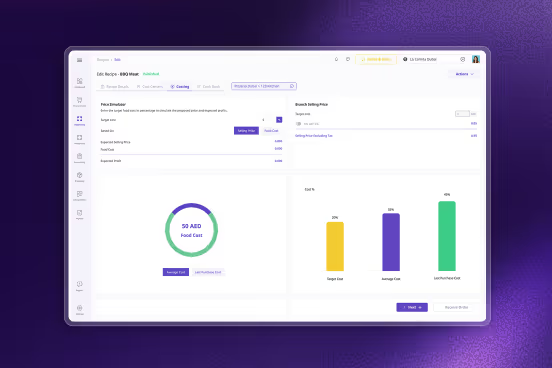
Warenwirtschaftssoftware liefert Ihnen präzisen Wareneinsatz in Echtzeit, aktuelle Lagerbestände und die tatsächliche Rentabilität auf Gerichtsebene. So skalieren Sie nicht einfach – Sie skalieren mit Zuversicht.
Tipp: Nutzen Sie Bestandsdaten, um die Standortleistung zu benchmarken, bevor Sie expandieren. Das hilft Ihnen, das zu verstärken, was funktioniert – und das zu beheben, was es nicht tut.
2. Umsatz ≠ Gewinn
Es ist leicht, Umsatzwachstum zu feiern, besonders mit einem aktiven Lieferkanal. Aber Plattformen wie Uber Eats und DoorDash können die Margen still auffressen – mit Provisionen von bis zu 29%.
Wir haben Fälle erlebt, wo die Top-Line-Umsätze hervorragend aussahen, aber sobald Lieferkosten und Lebensmittelverschwendung eingerechnet wurden, erzählte die tatsächliche Leistung des Standorts eine andere Geschichte.
Warenwirtschaftstools wie Supy machen es einfach, die Zusammenhänge zwischen Umsatz, Channel-Mix und tatsächlicher Rentabilität zu verstehen.
Häufiger Fehler: Sich nur auf den POS-Umsatz zu verlassen, ohne Echtzeit-Kostendaten zu berücksichtigen.
3. Warenwirtschaft vor dem POS einzuführen macht das Leben leichter
Viele Betreiber beginnen naturgemäß mit dem POS – aber in Wirklichkeit kann die Erstellung Ihrer Rezepte und Kalkulation in Supy zuerst den POS-Rollout genauer und effizienter machen.
Wir haben gesehen, wie Betreiber ihre Menüs in Supy aufgebaut haben und dann festgestellt haben, dass sie ihr POS-Setup an Portionsgrößen oder Modifier anpassen müssen. Der umgekehrte Weg führt oft zu Duplikaten und manuellen Korrekturen.
Tipp: Lassen Sie Supy Ihnen Markteinblicke geben, welche POS-Marken in der Praxis am besten geeignet sind. Wir wissen, wer gut angesehen ist und wer Kunden verliert, und führen Sie stets zum Anbieter, der am besten zu Ihrem Restaurantbetrieb passt.
4. Skalieren ohne Lagerkontrolle ist kostspielig
Margen sind bei Skalierung wichtiger. Was sich bei zwei Standorten wie ein kleiner Verlust anfühlt, wird bei zwanzig zu einem sechsstelligen Problem.
Deshalb verwenden so viele schnell wachsende Marken Supy, um ihre Systeme frühzeitig einzurichten – Sichtbarkeit, Konsistenz und Margenkontrolle zu sichern, bevor es unübersichtlich wird.
Häufiger Fehler: Davon ausgehen, dass Sie die Warenwirtschaft später ohne Störungen integrieren können. Es ist viel einfacher, sie frühzeitig einzubetten und von dort aus aufzubauen.
5. Die Dynamik des Change Managements hält nicht ewig an
Wenn Sie Technologie überprüfen – sei es ein neuer POS, Küchensoftware oder anderes – ist es ein guter Zeitpunkt, auch die Warenwirtschaft einzuführen. Ihr Team denkt bereits über Workflows nach. Sie befinden sich bereits im Entscheidungsmodus.
Wir haben gesehen, wie effektiv es ist, diese Änderungen aufeinander abzustimmen, und unser Team unterstützt Kunden dabei, diese Systeme reibungslos zu verknüpfen.
Tipp: Supy integriert sich mit allen führenden POS-Systemen – und unser Team kann Ihnen helfen, beide einzuführen, mit minimaler Unterbrechung für Ihren Betrieb.
Abschließender Gedanke: Machen Sie die Warenwirtschaft zur Priorität – nicht zur Nachrangigkeit.
Jede wachsende Restaurantgruppe muss Prioritäten setzen. Aber wenn die Warenwirtschaft auf der Liste nach unten gedrückt wird, verschwindet sie nicht – sie schafft nur mehr Unsicherheit im weiteren Verlauf.
Die Betreiber, mit denen wir zusammenarbeiten, liegen nicht zurück. Sie sind der Kurve voraus, indem sie die Warenwirtschaft zu einer strategischen Säule machen – nicht nur zu einer Back-Office-Aufgabe.
Wenn Sie darüber nachdenken, ist jetzt der perfekte Zeitpunkt.
Brauchen Sie Hilfe bei der Einführung? Das Team von Supy aus ehemaligen Betreibern und F&B-Experten ist für Sie da – mit praktischer, praxisorientierter Unterstützung, um Sie schnell live zu bringen. Demo buchen.