
المخزون

طرح برنامج إدارة المخزون لمجموعة مطاعم متعددة الفروع: من التجربة إلى المجموعة الكاملة
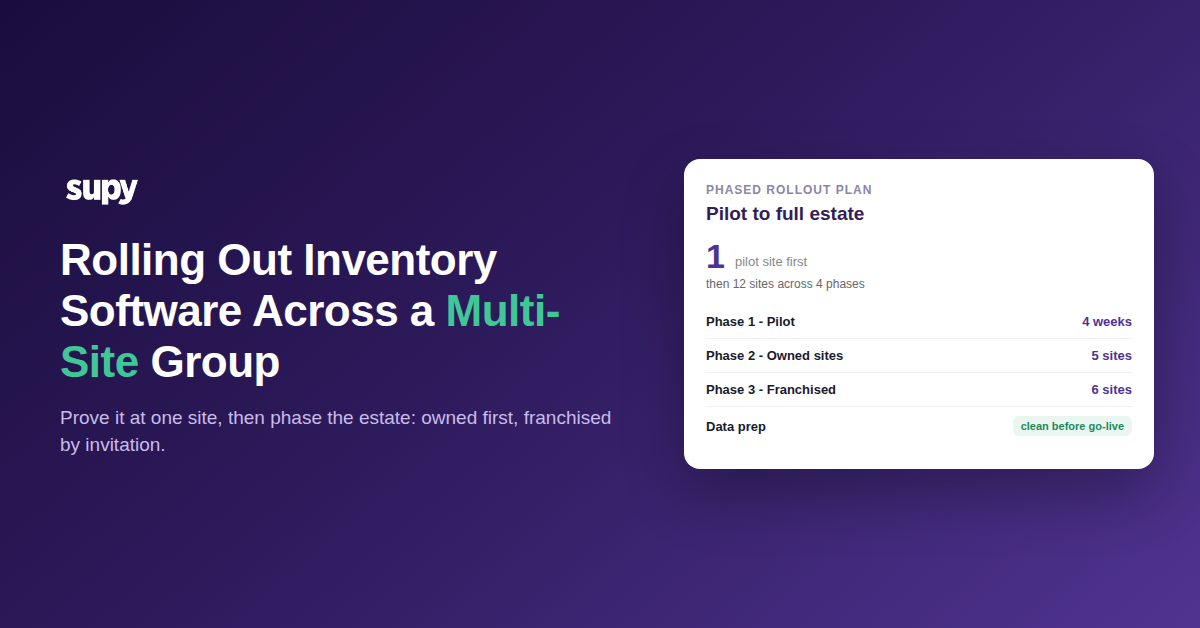
ابدأ بموقع واحد لا بالمجموعة بأكملها

النشر التدريجي لبرنامج إدارة المخزون يعني تشغيل موقع تجريبي واحد أولاً وإثباته وفق معايير نجاح محددة، ثم التوسع موقعاً بموقع بدلاً من تحويل المجموعة كلها دفعة واحدة. في مجموعة مطاعم متعددة الفروع، يتيح الموقع التجريبي اكتشاف ثغرات البيانات وعقبات التبني ومشكلات التكامل بتكلفة منخفضة قبل أن تتضاعف عبر جميع الفروع.

الميل الطبيعي عند إبرام صفقة للمجموعة هو تفعيل كل شيء دفعة واحدة والانتهاء منه، غير أن هذا بالضبط هو ما يُفضي إلى الفشل. طرحت مجموعة كبيرة متعددة الدول وحدة إدارة المخزون على جميع أصحاب الامتياز في آنٍ واحد، ثم أمضت أشهراً في حل المشكلات التي أوجدتها. التحويل الجماعي يُخفي أي الإخفاقات سببها البرنامج وأيها سببها البيانات وأيها سببها الفريق، لأنها كلها تظهر معاً.

اختر موقعاً تجريبياً يُمثل سائر مواقع المجموعة لا الأسهل منها. فالموقع الرائد بمدير قوي سيجتاز أي اختبار دون أن يُعلمك شيئاً عن الفرع الذي يعاني من نقص في الموظفين ويعمل بالروتين المعتاد. اختر موقعاً بقائمة موردين عادية وقائمة طعام عادية وفريق عمل عادي، واتفق مسبقاً على ما يجب أن يُثبته التجريب قبل أن يُوافق أي شخص على التوسع.
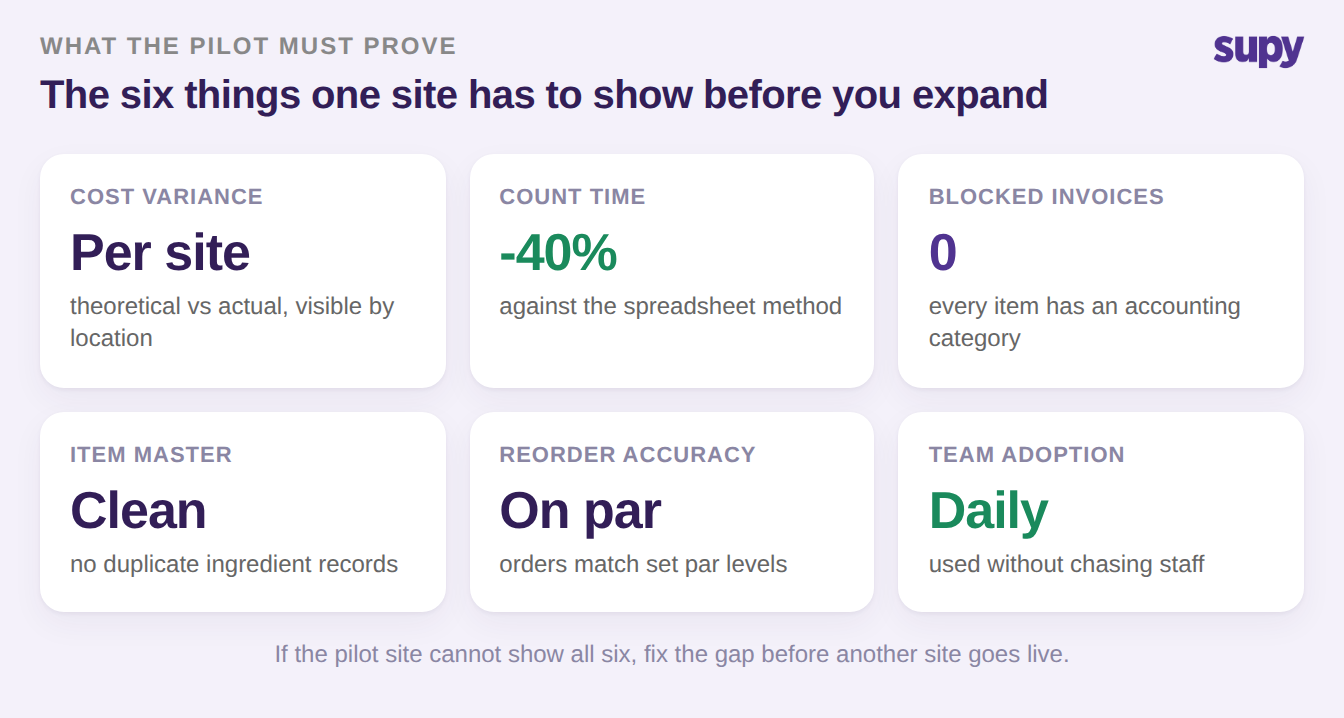
Six pilot success criteria a multi-site restaurant group should prove before expanding an inventory rollout

تهيئة البيانات قبل أي إطلاق

معظم عمليات النشر لا تتعثر بسبب البرنامج، بل بسبب البيانات التي لم تُنظَّف مسبقاً. العمل الذي يُحدد مدى سلاسة الإطلاق يتم في الأسابيع التي تسبقه، وكاد ألا يكون ظاهراً في عروض المنتجات. وحّد أسماء المواد عبر الماركات والكيانات، وخصص فئة محاسبية لكل مادة، وربط كل بند في نقاط البيع بوصفته، وإلا ستكشف أول فاتورة وأول جرد الثغرات أمام الفريق بأكمله.

قائمة الأصناف الرئيسية الموحدة هي ما يُتيح إدارة ذلك على نطاق واسع: حدد كل مكوّن مرة واحدة بأكوادٍ لدى مورّد كل صنف وأحجام تعبئته ومُسبّبات الحساسية الخاصة به، ودعه ينتشر عبر كل فرع بدلاً من إعادة إدخاله موقعاً بموقع. تحقيق ذلك يعني حل السجلات المكررة قبل الإطلاق لا بعده، وهو عمل يستحق القيام به بعناية (دليلنا حول نظافة بيانات مرجع المواد يُغطي الآليات). كما أن هذه اللحظة هي الأمثل للتحقق من تكاليف الوصفات بينما الكتالوج محدّث، وهو ما تُيسره حاسبة تكلفة الغذاء المجانية.

مهمة تحضير البياناتما يتعطل إذا أُهملت
توحيد أسماء المواد عبر الماركاتمواد مكررة وتقارير لن تتوحد عبر المواقع
تخصيص فئة محاسبية لكل مادةالفواتير لا تُسجَّل بصمت ولا يعلم أحد حتى نهاية الشهر
ربط بنود نقاط البيع بالوصفاتلا التكلفة النظرية ولا التقارير المتعلقة بالتباين النظري قابلة للاستخدام
تحديد مستويات الطلب لكل موقعتبقى إعادة الطلب يدوية ولا يستطيع النظام اقتراح الطلبات
تحديد هيكل المجموعة (الكيانات ومراكز التكلفة)إعادة العمل لاحقاً لأن التسلسل الهرمي يصعب تغييره بعد الإطلاق

المواقع المملوكة أولاً والامتياز بالدعوة: ترتيب تسلسل المجموعة

بعد إثبات كفاءة التجربة، رتب بقية مواقع المجموعة بدلاً من فتح الأبواب للجميع. ابدأ بتشغيل المواقع المملوكة: فهي تحمل منحنى التعلم وتستوعب تغييرات العمليات ويمكنك توجيهها مباشرة. حين تصل إلى مواقع الامتياز، يكون الدليل جاهزاً والأسئلة الصعبة قد وُجدت لها إجابات.

مواقع الامتياز مشكلة مختلفة لأنك في الغالب لا تستطيع إلزامها بالنظام. يجب كسب التبني لا فرضه بالأوامر، خاصة في الأسواق التي يتحفظ فيها المشغلون على برامج الخلفية الجديدة. قدم الحافز الذي يشعر به المالك فعلاً: وقت أقل في الجرد وأخطاء أقل في الطلبات ورؤية واضحة لمواطن تسرب الهامش. نشّر على دفعات بحيث تمتلك كل مجموعة مواقع موقعاً مرجعياً يعمل بالفعل على النظام.

عمليات النشر التي تتعثر تفعل ذلك عادةً لأحد ثلاثة أسباب. الأول هو الاعتماد على شخص واحد: يُعدّ شخص متحمس كل شيء ويتجمد الموقع بأكمله عند غيابه. الثاني هو انحراف مرجع المواد، حيث تضيف المواقع بصمت موادها المكررة الخاصة حتى يتدهور الكتالوج المشترك. الثالث هو دليل الحسابات غير المكتمل، حيث تظل المواد التي تفتقر إلى فئة محاسبية تعطل تسجيل الفواتير طويلاً بعد الإطلاق. حدد مالكاً لكل من هذه النقاط قبل التوسع لا بعده.
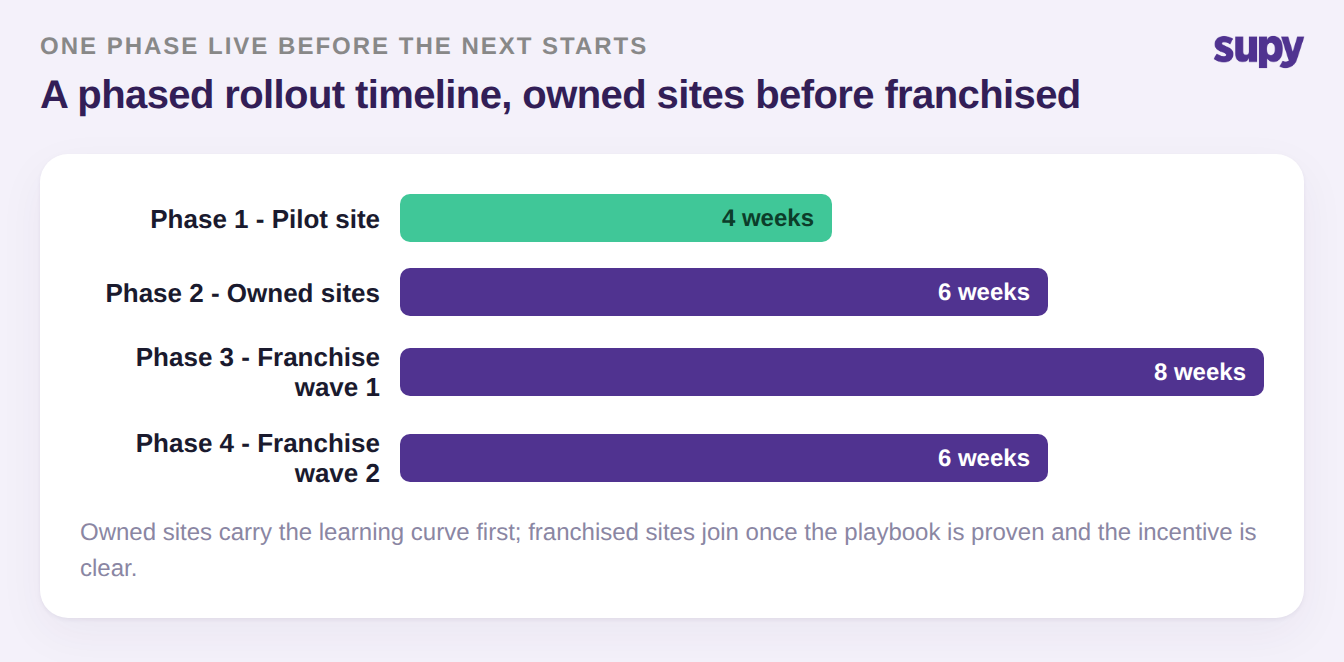
A phased rollout timeline for a multi-site restaurant group, owned sites before franchised, four phases

خطوتك الأولى

قبل التخطيط لأي تاريخ إطلاق، أجرِ فحصاً صادقاً: هل تستطيع تسمية الموقع التجريبي ومعايير النجاح الدقيقة والشخص المسؤول عن مرجع المواد والفئات المحاسبية والتبني في كل موقع؟ إذا كان أي منها لا يزال مبهماً فتلك هي الثغرة التي تستحق المعالجة أولاً. نجاح النشر يعتمد على جاهزية البيانات وعمدية التسلسل، لا على أن التحويل تم في كل مكان دفعة واحدة. توفر Supy للمجموعة البنية اللازمة لتخطيطه بشكل منضبط: تسلسل هرمي ثلاثي المستويات للمجموعة ونقطة البيع والموقع، ومرجع مواد موحد متزامن، وخرائط تكامل لكل موقع تتيح لكل فرع الإطلاق وفق جدوله الزمني الخاص مع الحفاظ على إعداد إدارة المخزون سليماً.
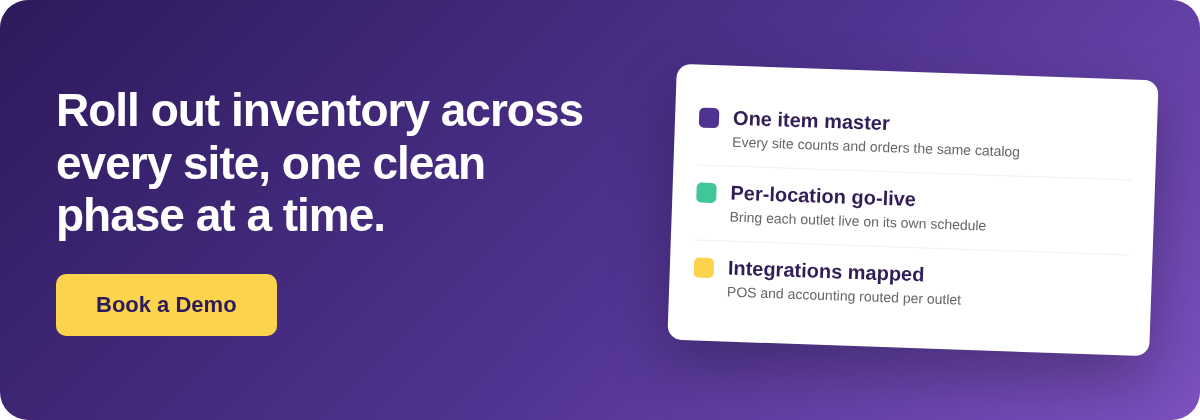
Book a Demo with Supy to roll out inventory across every restaurant site one phase at a time

Ready to optimize your restaurant operations?

مدونة

رؤيتنا التشغيلية

Your questions 
answered

Everything you need to know about Supy — from setup to integrations, pricing, and daily use. If it’s not covered here, just ask.

How long should an inventory rollout take across a multi-site restaurant group?
+

How long a rollout takes depends on estate size and data readiness, not software speed. A sensible shape is a four-week pilot at one site to prove the success criteria, then owned sites in a wave of about six weeks, followed by franchised sites in one or two later waves. The variable that moves the timeline most is data prep: standardised item names, accounting categories on every item, and point-of-sale-to-recipe mapping. Groups that finish that work before each go-live move quickly; groups that discover it at go-live stall. Sequence by readiness, and let each phase go live only once the one before it is stable.

Why start with a pilot site instead of rolling out to every location at once?
+

Starting with one pilot site keeps failures cheap and legible. When you switch a whole group on at once, software issues, data gaps and adoption problems all arrive together, and you cannot tell which is which. A pilot isolates them at a single site you can watch closely and fix fast. Choose a site that looks like the rest of the estate rather than your strongest one, agree in advance what the pilot has to prove, and only expand once it clears every criterion. The pilot is also where your rollout playbook gets written, so later sites inherit answers instead of repeating the same mistakes.

What data needs to be ready before an inventory go-live?
+

Before any go-live, three pieces of data matter most. First, standardise item naming across brands and entities so reports consolidate and duplicates do not multiply. Second, assign an accounting category to every item, because items without one silently block invoice posting and nobody notices until month-end. Third, map each point-of-sale item to its recipe, or you get no theoretical cost and no usable variance reporting. Set par levels per location too, so the system can suggest orders instead of leaving reordering manual. This work is invisible in a demo but decides whether the first invoice and first count go smoothly or expose the gaps in front of the team.

How do you roll out inventory software to franchised sites you cannot mandate?
+

Franchised sites often cannot be ordered onto a system, so adoption has to be earned. Lead with the incentive a franchise owner actually feels: less time spent counting, fewer ordering errors, and a clear view of where margin leaks. Roll franchised sites in waves rather than all at once, and make sure each wave has a nearby reference site already running well, so owners can see it working before they commit. Bring owned sites live first to build that proof and write the playbook. In markets where operators are wary of new back-of-house software, a working neighbour is far more persuasive than a mandate.

What is the most common reason a multi-site inventory rollout stalls?
+

Rollouts usually stall for one of three reasons, and none of them is the software. The first is single-person dependency, where one champion configures everything and the site freezes whenever they are away. The second is item-master drift, where individual sites quietly add their own duplicate items until the shared catalog is unreliable. The third is an unfinished chart of accounts, where items created without an accounting category keep blocking invoice posting long after go-live. The fix is to name an owner for each of these before you scale, not after. Assigning accountability early is what keeps a rollout from unravelling as it expands.

Should owned sites or franchised sites go live first in a rollout?
+

Owned sites should go live first. You can direct them, they absorb the process changes, and they carry the learning curve while the rollout is still finding its rhythm. By the time you reach franchised sites, the playbook is written and the awkward questions already have answers. Owned sites also become the reference points that convince franchise owners the system works, which matters because franchised adoption usually has to be earned rather than mandated. Sequencing owned first, then franchised in waves, means each group of sites joins with a proven process and a working neighbour to copy, instead of improvising alone.

How does a single item master help a phased rollout?
+

A single item master defines each ingredient once, with its supplier codes, pack sizes and allergen tags, and carries it across every outlet instead of being re-keyed site by site. In a phased rollout this is what keeps later sites cheap to bring on: they inherit a clean, shared catalog rather than rebuilding one. It also prevents the item-master drift that stalls rollouts, because sites draw from the same records instead of inventing duplicates. Paired with a group, outlet and location hierarchy and per-location integration mapping, it lets each outlet come live on its own schedule while still reporting into one consistent structure for the whole group.

هل أنت مستعد لتطوير عملياتك؟

انضم إلى أكثر من 3500 مُشغلي مطاعم يخفضون التكاليف، ويبسطون العمليات، ويتخذون قرارات أكثر ذكاءً مع Supy